Christmas Learning Activities Age 3-6 for Screen Free Fun
The holiday season is here, and it’s a fantastic time to get the kids involved in some fun, screen-free Christmas learning activities age 3-6. Forget the tablets for a bit; we’ve got a whole bunch of ideas that blend festive cheer with learning. Think crafts, science fun, building challenges, and games that keep those little minds buzzing. It’s all about making memories and learning through play, which is pretty much the best way to do it, right?
Key Takeaways
- Get creative with hands-on Christmas crafts like 3D trees, pop-up cards, and foil ornaments, perfect for little hands. These activities help develop fine motor skills and spatial awareness.
- Explore festive science experiments such as sink or float challenges and crystal growing to introduce basic scientific concepts in a fun, holiday-themed way.
- Engage young builders with engineering challenges like Santa’s catapult and gumdrop bridges, promoting problem-solving and an understanding of simple machines.
- Boost cognitive skills with activities like pom-pom sorting, Christmas ‘I Spy,’ and word games, which help with pattern recognition, observation, and vocabulary.
- Introduce foundational digital thinking concepts through screen-free activities like binary ornaments and algorithm games, focusing on sequencing and logical steps.
Creative Christmas Crafts For Little Hands

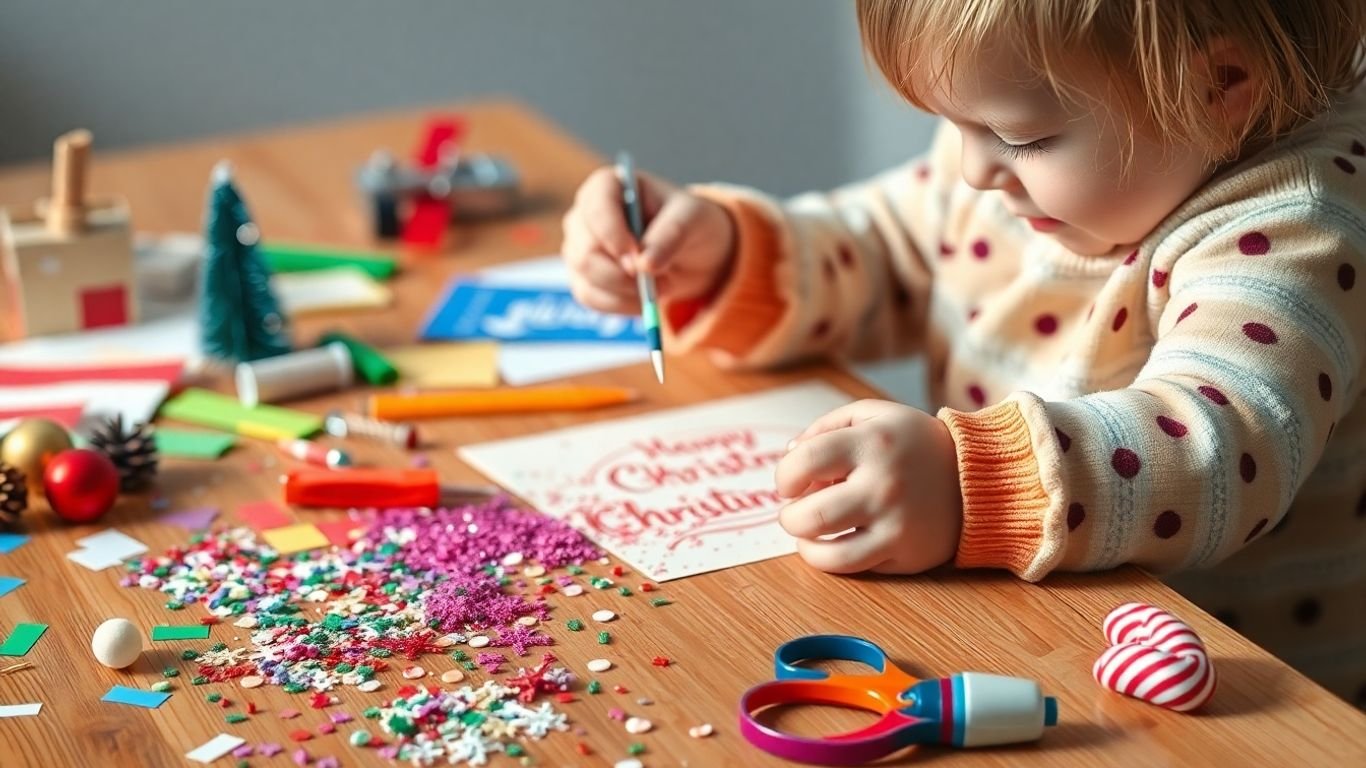
Getting crafty during the holidays is such a great way to keep little ones busy and spark their imagination. These activities are perfect for ages 3-6 and don’t require a lot of complicated supplies. Plus, they result in some really cute decorations or gifts!
3D Christmas Tree and Pop-Up Cards
Making a 3D paper Christmas tree or a pop-up card is a fun way to introduce kids to how flat shapes can become something with depth. It’s a simple concept that helps them think about space and how things fit together. You can use construction paper, scissors, and glue. For the pop-up cards, cutting a simple slit and folding can create a surprising effect when the card is opened. It’s a little bit of magic for them!
Foil Fun: Creating Dazzling Ornaments
This activity is all about sparkle! You can get pre-cut ornament shapes or cut them out of cardstock yourself. Then, kids can use colorful foil sheets to cover the ornaments. They just peel off a backing and stick the foil on. It’s a wonderfully mess-free way to create shiny decorations. Add some googly eyes or pipe cleaner hangers, and you’ve got dazzling ornaments ready to hang. It’s a great way to practice fine motor skills too.
Coffee Filter Christmas Tree STEAM Project
This one is a neat blend of art and science. Grab some coffee filters, washable markers, and a spray bottle with water. Kids can draw colorful designs on the filters. When they spray them with water, the colors bleed and blend together, creating a cool watercolor effect. Once dry, you can cut them into tree shapes. It’s a simple way to explore how colors mix and spread. You can even hang these up as decorations.
Sharpie and Alcohol Christmas Ornaments
For this craft, you’ll need some plain plastic or glass globe ornaments and Sharpie markers. Let the kids draw whatever they like on the outside of the ornament. Once they’re done, carefully add a few drops of rubbing alcohol onto the Sharpie designs. Watch as the alcohol makes the ink spread and create a beautiful, marbled, or watercolor-like effect. It’s a mesmerizing process that turns simple drawings into unique art pieces. It’s important to do this in a well-ventilated area and have an adult handle the rubbing alcohol.
These crafts are a wonderful way to spend time together, creating holiday cheer without needing screens. They help build confidence and creativity in young children. For more ideas on engaging holiday books, you might find some inspiration in Christmas read-aloud books.
Engaging Science Experiments With A Festive Twist
This holiday season, let’s turn our homes into mini science labs with some super fun, screen-free experiments. It’s a fantastic way to keep those curious minds busy and learning while celebrating. We’re going to explore some cool science concepts using everyday items and a sprinkle of Christmas magic.
Christmas Sink or Float Challenge
This is a classic for a reason! Grab a big bowl of water and a bunch of small Christmas-themed items. Think little ornaments, plastic cookie cutters, maybe a candy cane or two, some tinsel, or even a pinecone. Before you drop each item in, have your child guess if it will sink or float. It’s a simple way to get them thinking about predictions and observing what happens. You might be surprised by some of the results – that candy cane often sinks when you’d expect it to float!
Crystal Candy Cane and Gingerbread Ornaments
Who knew you could grow your own decorations? This activity is all about crystallization. You’ll need pipe cleaners shaped like candy canes or gingerbread men. Suspend these in a super-hot, super-saturated solution of borax and water. As the water cools and evaporates, beautiful crystals will start to form right on the pipe cleaners. It’s a visually stunning way to learn about solutions and how crystals grow. It’s like making edible Christmas crafts for kids but with a science twist!
Santa’s Balloon Rocket Experiment
Get ready for some physics fun! All you need is a balloon, a straw, some string, and tape. Thread the string across a room, blow up the balloon (that’s Santa’s sleigh!), and tape it to the straw that’s on the string. When you let go of the balloon, watch Santa zoom across the room! This experiment is a great way to show Newton’s Third Law of Motion – for every action, there’s an equal and opposite reaction. It’s simple, exciting, and gets kids thinking about forces and movement.
These experiments are not just about the ‘wow’ factor; they’re about sparking curiosity. The goal is to encourage questions, observations, and a bit of trial and error. It’s all part of the learning process, and the holiday theme just makes it extra special and memorable for young children.
Here’s a quick look at what you might observe:
- Sink or Float: Density plays a big role here. Heavier or denser items tend to sink, while lighter ones float.
- Crystallization: This shows how substances dissolve and then reform as conditions change, creating beautiful patterns.
- Balloon Rocket: Demonstrates how expelling air in one direction causes movement in the opposite direction.
Building And Engineering Holiday Wonders

This section is all about getting those little hands busy with some awesome building and engineering projects that fit right into the holiday spirit. It’s a fantastic way to get kids thinking like little architects and problem-solvers.
Santa’s Catapult for Snowball Launching
Let’s build a mini catapult! You can use craft sticks, rubber bands, and a small plastic spoon or bottle cap. The goal is to create a device that can launch soft “snowballs” (like cotton balls or small pom-poms) a good distance. This activity is great for understanding basic physics, like levers and force. It’s all about trial and error to see how far you can make those snowballs fly!
Gumdrop Bridge Building Challenge
Grab some toothpicks and a bowl of gumdrops (or marshmallows if you prefer!). The challenge here is to build a bridge that’s strong enough to hold a small toy or even a few coins. Kids learn about structural integrity and how different shapes can make a structure more stable. It’s a fun way to explore how things stand up and hold weight.
Santa’s Chimney Challenge
This one is a bit like building with blocks, but with a festive twist. Using materials like graham crackers, frosting, and maybe some small candies, challenge your child to build the tallest, freestanding chimney that Santa could fit down. It’s a great way to practice spatial reasoning and see how different building techniques affect stability. You might find that some chimneys are sturdier than others!
Engineering challenges like these aren’t just about the final product. They’re about the process: asking questions, imagining solutions, planning, building, and then figuring out how to make it even better. It’s a wonderful way to introduce the idea that sometimes things don’t work perfectly the first time, and that’s okay! We can always try again.
These activities are perfect for developing fine motor skills and encouraging creative thinking. Plus, they offer a wonderful screen-free way to engage with holiday themes. For more ideas on turning everyday items into STEM learning opportunities, check out simple experiments.
Developing Cognitive Skills Through Play
Christmas time is a fantastic opportunity to sneak in some learning without the kids even realizing it. It’s all about making their brains work a little harder, but in a super fun, festive way. We’re talking about activities that get them thinking, observing, and sorting, all while surrounded by holiday cheer. These playful moments are key to building a strong foundation for future learning.
Pom-Pom Sorting and Pattern Recognition
This activity is surprisingly effective for little ones. Grab a bunch of colorful pom-poms and a few containers. You can have them sort the pom-poms by color, size, or even texture. It’s a simple way to introduce basic categorization. Then, take it a step further by creating simple patterns. Think red, blue, red, blue… or big, small, big, small. This helps them start to understand sequencing and prediction, which are building blocks for math and logic. It’s amazing how much concentration they’ll put into getting the pattern just right!
Christmas ‘I Spy’ for Observation Skills
Who doesn’t love a good game of ‘I Spy’? Turn your Christmas decorations into a learning adventure. You can play the classic version: “I spy with my little eye something… red!” or “I spy something that starts with the letter ‘S’ (for star or stocking).” This game really sharpens their observation skills and helps them pay attention to details in their surroundings. It’s also a great way to practice vocabulary and letter recognition. You can even make it a bit more challenging by describing shapes or textures. This is a great way to get them engaged with their preschooler’s cognitive growth.
Merry Christmas Word Game Challenge
This one is for the slightly older end of the age range, maybe 5 and 6-year-olds. It’s a simple word-building game. You can write out Christmas-themed words like ‘SANTA’, ‘SNOW’, ‘GIFT’, or ‘TREE’ on large cards. Then, give them a set of letter tiles or cut-out letters. Their challenge is to find the letters needed to spell out the words. You can make it a race against the clock or a cooperative effort. It’s a fun way to reinforce letter sounds and spelling without it feeling like homework. It really gets them thinking about how letters come together to form words.
Play-based learning transforms any hour of the holidays into a happy, meaningful, and funny experience for learning. The emphasis should always be on having fun, and learning should be a natural process where children are interested and entertained. Celebrate small wins and switch up the games every now and then so children will be eager to challenge themselves and learn new things.
Screen-Free Digital Thinking Activities
Even without screens, kids can totally get a handle on some cool digital thinking concepts. It’s all about breaking down ideas into smaller steps and understanding how things work in a logical order. Think of it like following a recipe or building with blocks – there’s a sequence to it!
Binary Ornaments for Coding Concepts
This is a super fun way to introduce the idea of binary code, which is how computers talk. You just need two colors of beads, maybe red for ‘0’ and green for ‘1’. Kids can string them onto a pipe cleaner or a piece of yarn to spell out simple holiday words like “JOY” or “LOVE”. It’s a hands-on way to see how simple on/off signals can create messages. It’s amazing how quickly they grasp the pattern!
Christmas Algorithm Game for Sequencing
An algorithm is just a set of instructions to get something done. For this game, you can create a simple sequence for decorating a gingerbread cookie or a paper Christmas tree. Give your child step-by-step directions, like: “First, put on a red sticker. Next, add a green sticker. Then, put a sparkly sticker on top.” They have to follow the steps exactly. You can even have them create their own simple algorithms for you to follow!
Light-Up Circuit Ornament Exploration
This activity is a gentle introduction to how electricity works. With a little help from a grown-up, kids can connect a small battery to an LED light using conductive tape or wire. When they make a complete loop, the light turns on! It’s a tangible way to understand that a circuit needs to be closed for electricity to flow. It’s a neat way to make a decoration that actually does something.
These activities help children develop logical reasoning and problem-solving skills, which are building blocks for future learning in many areas, including technology. It’s about thinking step-by-step and understanding cause and effect in a playful way. This kind of thinking is useful everywhere, not just with computers. You can find more ideas on how to balance technology with free play here.
Here’s a quick look at what you’ll need:
- Binary Ornaments: Two colors of beads, pipe cleaners or string.
- Algorithm Game: Paper, crayons or markers, stickers or craft supplies.
- Circuit Ornament: Small LED lights, coin cell batteries, conductive tape or wire, and an ornament base (like cardstock or plastic).
Remember, the goal is playful exploration, not perfect results. If an experiment doesn’t quite work, it’s a great chance to talk about why and try again!
Hands-On Holiday Art and Craft Kits
Sometimes, you just want a simple, ready-to-go activity that doesn’t involve a huge mess or a trip to the craft store. That’s where these holiday art and craft kits come in handy. They’re designed to give kids a fun, creative outlet with everything they need right in the box.
DIY Christmas Wreath Making
Making a wreath is a classic holiday craft. These kits often come with a base, pre-cut shapes, and decorations like glitter glue or faux berries. Kids can arrange and stick these elements onto the wreath base to create their own festive door decoration. It’s a great way to get them thinking about design and color.
- Assemble the base: Usually, this involves attaching greenery or a ribbon to a wire or cardboard ring.
- Decorate: Kids can glue on ornaments, pinecones, or other festive shapes.
- Add a personal touch: Encourage them to draw or write a holiday message on a small tag to hang on the wreath.
Poke-in Art: DIY Christmas Decor
This type of kit is fantastic for younger children, often involving sticking colorful fabric squares or foam shapes into a pre-made board. It’s a no-mess way to create holiday decorations like stars, trees, or stockings. The result is a textured, vibrant piece of art that kids can be proud of. It’s a wonderful way to develop fine motor skills without the usual gluey chaos.
Snip, Snip! Holiday Magic Scissor Skills
For kids who are working on their cutting abilities, these kits are perfect. They usually include sturdy paper or cardstock with pre-drawn lines or shapes. Children use kid-safe scissors to cut along the lines, practicing their control and precision. Some kits even include steps for folding and gluing the cut-out pieces to create 3D figures or collages. It’s a practical skill wrapped up in holiday fun.
These kits are a lifesaver when you need a quick, engaging activity. They take the guesswork out of planning and gathering supplies, letting you focus on enjoying the creative process with your child.
Wrapping Up the Holiday Fun
So there you have it – a whole bunch of ways to keep those little hands and minds busy this Christmas without a screen in sight. From messy science experiments that sparkle to simple crafts that build skills, it’s all about making memories and learning together. Remember, the holidays are a perfect time to connect, play, and maybe even discover a new favorite activity. Have a wonderful, screen-free holiday season filled with laughter and learning!
Frequently Asked Questions
What are some simple Christmas crafts for young children?
You can make easy Christmas crafts like decorating cookies, crafting holiday cards, or building a fun indoor photo booth. Making a pretty wreath together is also a great idea!
How can I keep my kids busy and happy during the Christmas break?
To keep your kids entertained, consider getting them Christmas activity books or art kits that let them create holiday ornaments. These kinds of activities are great for keeping them busy and having fun.
What are some Christmas activities that help kids learn?
Educational Christmas activities can include reading holiday stories, making festive art projects, or trying out fun science experiments with a Christmas theme. These activities make learning exciting.
Can you suggest some creative art and craft ideas for Christmas?
Kids can get creative by making their own Christmas ornaments, designing handmade cards, or even crafting DIY Santa hats. These crafts are a wonderful way to boost their imagination and spread holiday cheer.
How do games help kids learn during the holidays?
Games are fantastic for learning because they make lessons fun! They help kids think, create, and learn new things while they’re playing, making the holiday season both enjoyable and educational.
What’s a good way to encourage kids to be creative during Christmas?
Encourage open-ended play where kids can experiment with different materials and ideas. This helps them think outside the box and develop their creativity, especially during holiday craft and building activities.


Ms. Kerri’s Corner provides a exciting virtual space for preschool learning. Through a variety of engaging activities, she exposes young minds to early math, literacy, science and social-emotional skills in a developmentally appropriate way. Centers for blocks, art, books and music allow children to explore hands-on learning at their own pace. Guided lessons subtly introduce number sense, letter sounds and narrative thinking. Careful observation gives insight into each child’s progress across domains. Viewers are also invited to participate, reinforcing that their ideas are valued. By making learning fun yet purposeful, Ms. Kerri lays the groundwork for future academic success while fostering creativity and imagination. Her program offers preschoolers valuable screen-based learning experiences.