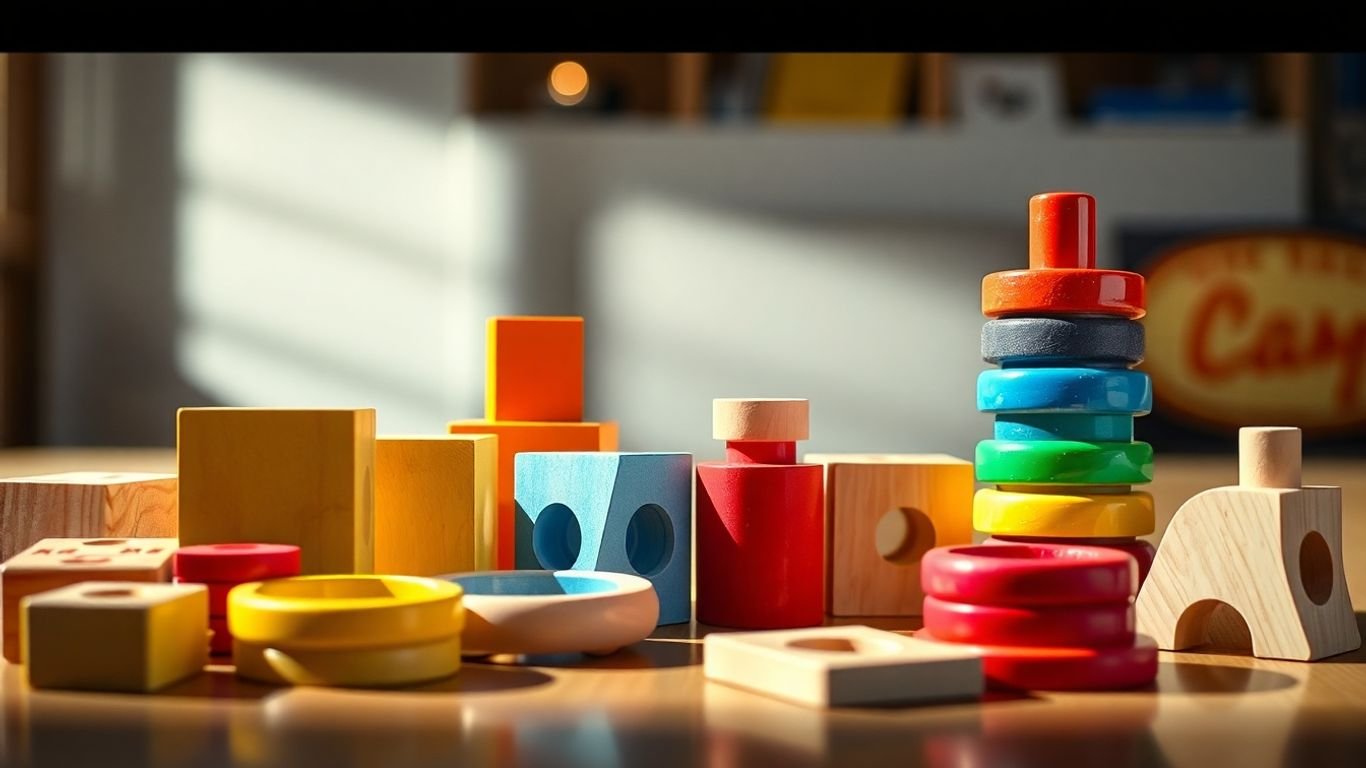
Educational Christmas Toys Kindergarten Kids Will Actually Use
Finding the right Christmas gifts for kindergarteners can be a challenge. You want something fun, but also something that helps them learn and grow. This year, skip the usual plastic gadgets and think about educational Christmas toys kindergarten kids will actually use. These kinds of toys encourage kids to think, create, and explore, building skills that last way beyond the holiday season. We’ve looked at a bunch of options to help you pick out some great presents.
Key Takeaways
- Building blocks, especially magnetic ones, help kids with engineering ideas and spatial skills.
- Logic games teach kids how to plan and solve problems, like getting cars out of a jam.
- Toys that introduce coding concepts, like Robot Turtles, make learning programming fun.
- Pretend play sets and imaginative toys let kids create their own stories and worlds without screens.
- Puzzles and STEM toys help kids develop thinking skills, pattern recognition, and a love for discovery.
Building Blocks For Future Engineers
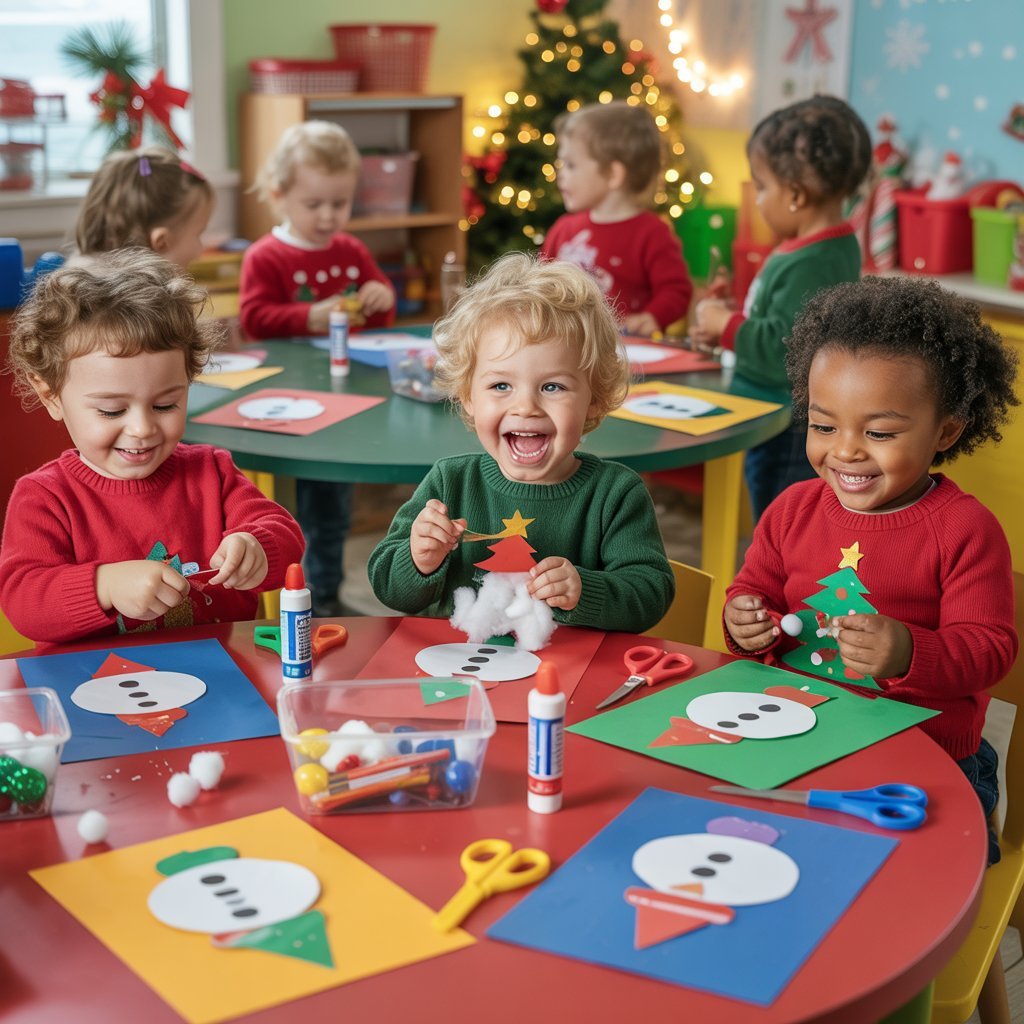
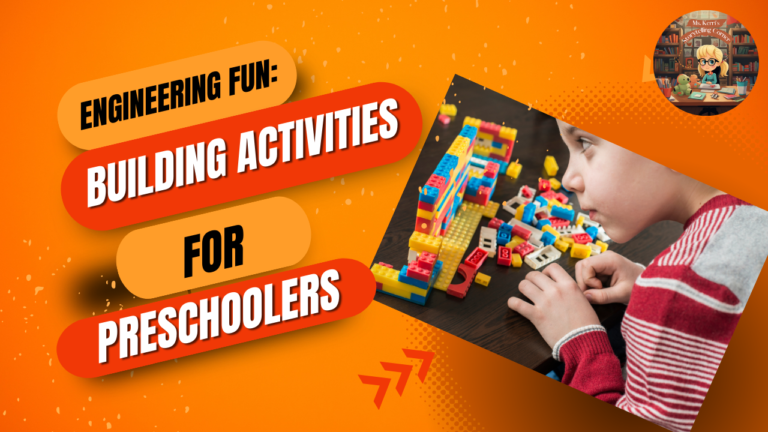
When kids get their hands on building blocks, they’re not just stacking plastic or wood; they’re laying the groundwork for some serious engineering skills. It’s amazing to watch them figure out how to make things stand up, how to balance pieces, and what happens when a structure gets too tall. These toys are fantastic for developing that spatial reasoning, the ability to picture things in three dimensions, which is super important for anyone who might want to design buildings or even just assemble IKEA furniture without a meltdown.
Magnetic Construction Sets For Creative Minds
Magnetic building sets are a game-changer. Instead of just gravity holding things together, you’ve got magnets doing the work. This means kids can build more complex shapes and structures without the frustration of pieces falling apart constantly. They can create spheres, domes, and all sorts of geometric forms that would be tricky with regular blocks. It’s a really satisfying way for them to see their ideas take shape. Plus, the pieces often come in bright colors, which is a nice bonus. These sets are great for open-ended play, letting kids experiment with different designs and see what works. You can find some really neat sets that encourage building all sorts of things, from simple houses to elaborate castles. It’s a great way to get them thinking about how things fit together and how to make them stable. Many parents find that these magnetic blocks are easy to clean up too, which is always a win. You can find a variety of magnetic building toys online that are perfect for sparking creativity.
Exploring Geometry With Block Play
Who knew playing with blocks could be a geometry lesson? When kids build with different shapes – squares, triangles, rectangles – they’re naturally learning about angles, sides, and how shapes fit together to make bigger things. Think about building a house; they need a square base, maybe some rectangular walls, and a triangular roof. They might not know the names for these shapes yet, but they’re figuring out the concepts. It’s all about visual and tactile learning. They can see how a triangle fits into a square, or how two rectangles make a longer one. This hands-on experience with shapes is way more impactful than just looking at them in a book. It helps them understand spatial relationships and how objects occupy space.
Developing Spatial Awareness Through Building
Building toys are brilliant for helping kids understand their surroundings. When they’re stacking blocks, they’re constantly thinking about where to place the next piece so it doesn’t fall. They’re learning about balance, stability, and how different shapes interact. This translates directly into spatial awareness – knowing where things are in relation to each other and to themselves. It’s like they’re building a mental map of the structure they’re creating. This skill is useful for everything from playing sports to understanding maps later on. It’s a quiet skill, but incredibly important for development.
Building blocks, especially those with magnetic connections or unique shapes, allow children to experiment with structural integrity and design principles in a low-stakes environment. They learn through trial and error, discovering what makes a tower tall and stable versus one that topples over easily. This process cultivates problem-solving abilities and a foundational understanding of physics and engineering concepts.
Logic Games For Young Problem Solvers
Sometimes, the best way to get kids thinking is through a good old-fashioned game. These aren’t just about passing the time; they’re designed to get those young minds working, figuring things out, and planning ahead. It’s pretty cool to see how a simple game can teach so much without feeling like a lesson at all.
Navigating Traffic Jam Challenges
Games like Rush Hour are fantastic for this. You’ve got a grid, some cars, and a single goal: get your red car out of the jam. It sounds easy, but it requires some serious thinking. Kids have to figure out how to move other cars out of the way, step by step. It’s a great way to introduce problem-solving by breaking down a big challenge into smaller, manageable moves. This kind of play really helps build patience and strategic thinking, skills that are useful way beyond the game board. You can find versions of these logic puzzles that work for different ages, making them a toy that can grow with your child.
Story-Based Logic Puzzles
Then there are games that add a story to the mix, like Three Little Piggies Deluxe. Here, the goal is to arrange the pigs and their houses to keep them safe from the wolf. The narrative makes it more engaging, especially for younger kids. They’re not just moving pieces; they’re helping characters in a story. These games are brilliant for developing spatial awareness and pattern recognition. Plus, they often have different difficulty levels, so kids can start simple and work their way up to more complex challenges. It’s a fun way to tackle logic without it feeling like a chore.
Developing Planning Skills With Board Games
Board games, in general, are a goldmine for developing planning skills. Games like Robot Turtles, for instance, use simple commands and symbols to guide a turtle through a maze to find jewels. This teaches kids the basics of programming logic – understanding that each command has a specific outcome. They learn to think ahead, anticipate what will happen next, and even debug their own moves if something goes wrong. It’s a playful introduction to coding concepts that can spark an interest in technology. These games are often cooperative, too, encouraging teamwork and communication as players work together to solve the puzzle. It’s amazing how much kids can learn when they’re just having fun playing educational games.
These logic games are more than just entertainment; they are tools that help children develop critical thinking, planning abilities, and a methodical approach to challenges. They encourage kids to think through consequences and explore different solutions, building a strong foundation for future learning and problem-solving.
Coding Concepts Through Play
Getting little ones started with coding might sound complicated, but it doesn’t have to be. There are tons of toys out there that introduce basic programming ideas without a single screen in sight. Think of it as teaching kids how to give instructions and understand cause and effect, just in a really fun way.
Robot Turtles: Learning Programming Basics
Robot Turtles is a fantastic board game that sneaks in some serious programming lessons. Players use cards with symbols to move their turtle around the board, trying to collect jewels. It’s all about planning your moves ahead and seeing what happens. The game is designed so kids can learn concepts like giving commands, debugging when things go wrong, and understanding the outcome of their actions. It’s great because even younger kids can play with a little help, and older kids can tackle more complex challenges on their own.
Symbol-Based Card Games For Kids
Beyond Robot Turtles, there are other card games that use symbols to teach logic. These games often involve matching, sequencing, or following a set of rules. For example, a game might ask kids to arrange cards in a specific order to tell a story or complete a pattern. This helps them think sequentially, a key part of coding. It’s like learning a new language, but instead of words, you’re using pictures and symbols to communicate instructions.
Understanding Commands And Outcomes
At its heart, coding is about telling a computer what to do and knowing what will happen next. Toys that focus on commands and outcomes help kids grasp this. This could be anything from a toy robot that moves when you press a button to a game where you have to draw a sequence of actions. The goal is for kids to connect their input (the command) with the resulting output (what the toy or game does). It builds a logical mindset that’s useful way beyond just computers.
These types of toys are brilliant because they make abstract concepts like algorithms and sequencing feel concrete and playful. Kids aren’t just playing; they’re actively problem-solving and building a foundation for future learning in a way that feels natural and exciting.
Imaginative Play For Developing Minds
Creating Worlds With Play Sets
Play sets are fantastic for letting kids build their own little worlds. Think about kitchen sets, doctor kits, or even just a collection of animal figures. These aren’t just toys; they’re tools for storytelling. When kids use these sets, they’re not just mimicking what they see; they’re actively creating scenarios, deciding who’s who, and what happens next. This kind of play helps them process their experiences and understand social roles. It’s a way for them to practice communication and cooperation, especially if they’re playing with siblings or friends. The real magic happens when a child takes a simple toy and turns it into something entirely new in their imagination.
Inspiring Creativity With Pretend Play
Pretend play is where kids really get to stretch their creative muscles. It’s about stepping into different roles – being a brave knight, a caring teacher, or a speedy race car driver. This isn’t just about dressing up; it’s about thinking outside the box. They might use a cardboard box as a spaceship one minute and a pirate ship the next. This flexibility in thinking is super important for problem-solving later on. It teaches them that there’s often more than one way to look at something or to solve a problem. It’s all about letting their minds wander and come up with unique ideas. This kind of play is a big part of how children learn about the world around them, much like scientists doing experiments, as noted by developmental psychologists. It’s a natural way for them to gather information and make sense of things.
Hands-On Fun Without Screens
In today’s world, it’s easy for kids to get glued to screens. But there’s something special about toys that let kids use their hands and their minds together. Think about simple things like play-doh, building blocks, or even just drawing supplies. These kinds of toys encourage kids to be active participants in their play. They have to figure things out, manipulate objects, and see the results of their actions right away. This direct interaction is really good for developing fine motor skills and hand-eye coordination. Plus, it gives their brains a break from the passive consumption of screen time, allowing for more active learning and exploration. It’s about engaging with the physical world in a meaningful way. These toys are great for developing key skills through play, and they offer a refreshing alternative to digital entertainment. You can find many such toys designed to align with principles that help children explore and experiment, fostering a love for learning through play, similar to Montessori education.
Puzzles That Enhance Cognitive Skills
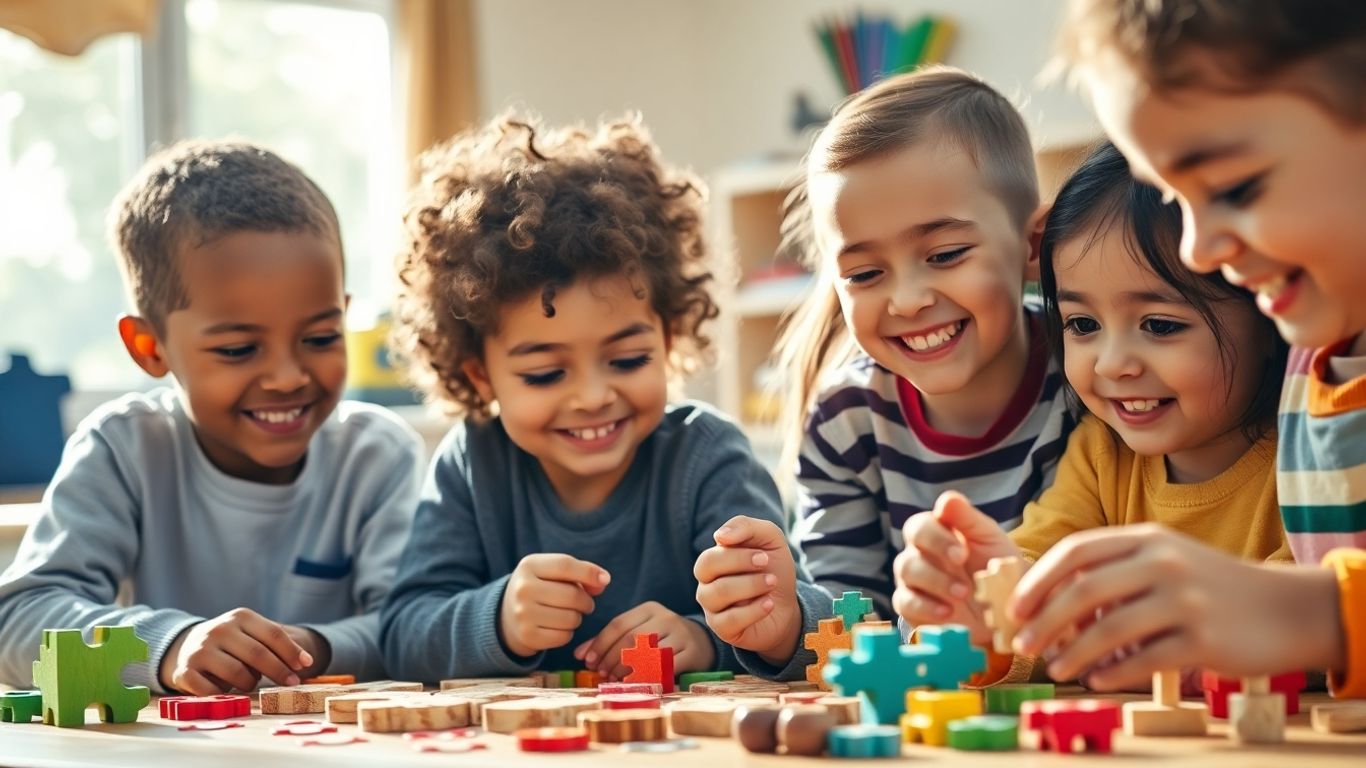
Puzzles are fantastic for little minds. They’re not just about fitting pieces together; they’re a whole workout for a child’s brain. When kids work on puzzles, they’re really learning to look closely and figure things out. It’s a quiet activity that can really help them focus.
Age-Appropriate Puzzle Challenges
Choosing the right puzzle is key. A puzzle that’s too hard can be frustrating, and one that’s too easy won’t offer much of a challenge. For kindergarteners, think about puzzles with larger pieces and fewer of them, maybe 24 to 48 pieces. As they get a bit older or show more skill, you can move up to 60 or even 100 pieces. The goal is to find that sweet spot where they feel a sense of accomplishment without getting discouraged. It’s all about building confidence, one piece at a time.
Developing Pattern Recognition
Puzzles are brilliant for teaching kids to spot patterns. They have to look at the shapes, colors, and images on the pieces and see how they connect. This skill is super useful later on, not just for more complex puzzles but for things like math and reading too. They start to understand that certain shapes fit together and that colors might form a sequence. It’s like a visual detective game where they’re looking for clues.
Boosting Critical Thinking Through Puzzles
When a child is faced with a puzzle, they’re naturally engaging in critical thinking. They have to analyze the problem, think about different strategies, and try things out. If a piece doesn’t fit, they don’t just give up; they look at it again, maybe try a different spot, or consider its shape and color more closely. This process of trial and error, and learning from mistakes, is a big part of developing problem-solving abilities. It’s a screen-free way to get them thinking logically and creatively. Many parents find that puzzles are a great way to encourage patience and perseverance, qualities that are useful in all areas of life. For a great selection of puzzles, check out children’s puzzle brand.
Puzzles help children develop patience and problem-solving skills. They learn to analyze, strategize, and persevere through challenges, building confidence with each completed section. This hands-on activity also sharpens fine motor skills and concentration, offering a rewarding, screen-free experience.
STEM Toys That Foster Lifelong Skills
Open-Ended Toys For Exploration
Sometimes, the best toys are the ones that don’t have a single “right” way to play. These kinds of toys let kids lead the way, figuring things out as they go. Think about building blocks, but maybe with magnets or gears. Kids can build a simple tower one day and a complex castle the next. It’s all about letting their imagination run wild and seeing what they come up with. This kind of play helps them learn to think for themselves and try different ideas.
Encouraging Experimentation And Discovery
Toys that let kids experiment are fantastic. They’re like mini science labs right in the playroom. Kids can try putting things together in new ways, see what happens, and learn from it. It’s not about getting the “correct” answer, but about the process of trying and learning. This hands-on approach helps them understand how things work in the real world.
- Try different combinations: See how pieces fit together.
- Observe cause and effect: What happens when you add another piece?
- Problem-solve: If it falls down, how can you build it stronger?
Fun Toys That Promote Learning
Ultimately, the most important thing is that the toys are fun. When kids are having a good time, they’re more likely to engage and learn without even realizing it. These toys aren’t just about memorizing facts; they’re about developing skills like critical thinking, figuring out problems, and being creative. These are the kinds of skills that stick with them long after they’ve put the toys away.
The goal isn’t to turn every child into a scientist or engineer, but to give them tools that help them think and learn in ways that are useful for anything they might do later in life. It’s about building confidence and curiosity.
Here’s a look at some types of toys that really hit the mark:
| Toy Type | Skills Developed |
|---|---|
| Magnetic Building Sets | Spatial reasoning, creativity, basic engineering |
| Gear Sets | Logic, problem-solving, understanding mechanics |
| Marble Runs | Planning, cause and effect, physics concepts |
| Coding Games | Sequencing, logic, problem-solving, computational thinking |
Wrapping It Up
So there you have it – a bunch of toys that are actually fun for kindergarteners and also happen to help them learn. It’s not about turning them into little geniuses overnight, but about giving them tools to explore, figure things out, and just be kids. These kinds of toys let them play in ways that spark their curiosity and build skills without them even realizing it. Plus, they’re the kind of toys that can stick around for a while, getting played with again and again. Happy gifting!
Frequently Asked Questions
What makes a toy a ‘learning toy’ for kindergarteners?
Learning toys, often called STEM toys, are great because they help kids develop important skills without them even realizing it! Think of things like building blocks that help with engineering ideas, or logic games that boost problem-solving. These toys encourage kids to think, create, and figure things out, which are super useful for school and life.
Are screen-free toys still engaging for kids today?
Absolutely! Many kids love hands-on toys that don’t involve screens. These types of toys, like pretend play sets or building blocks, let kids use their imagination and creativity to build their own fun worlds and stories. It’s a different kind of engagement that’s really valuable.
How can toys help with problem-solving skills?
Toys like logic puzzles or certain building sets are fantastic for teaching kids how to solve problems. They might need to figure out how to get a car out of a traffic jam or how to build a stable tower. These challenges teach them to think step-by-step and try different solutions, which is a skill they’ll use everywhere.
What’s the benefit of open-ended toys?
Open-ended toys are awesome because they don’t have just one way to be played with. For example, a set of magnetic building tiles can become anything a child imagines – a castle, a spaceship, a robot! This freedom lets kids explore their creativity and come up with their own ideas, rather than just following instructions.
How do coding toys work for young children?
Coding toys for kindergarteners usually introduce basic ideas of programming in a fun, game-like way. Games like Robot Turtles use simple commands and symbols to help kids understand how to give instructions and see the results, which are the building blocks of coding. It’s all about learning logic and sequences through play.
Why are puzzles good for kindergarteners?
Puzzles are more than just fun pictures! They’re great for helping kids develop important thinking skills. Putting puzzle pieces together helps them learn about patterns, shapes, and how things fit together. It also boosts their focus and patience as they work towards completing the challenge.


Ms. Kerri’s Corner provides a exciting virtual space for preschool learning. Through a variety of engaging activities, she exposes young minds to early math, literacy, science and social-emotional skills in a developmentally appropriate way. Centers for blocks, art, books and music allow children to explore hands-on learning at their own pace. Guided lessons subtly introduce number sense, letter sounds and narrative thinking. Careful observation gives insight into each child’s progress across domains. Viewers are also invited to participate, reinforcing that their ideas are valued. By making learning fun yet purposeful, Ms. Kerri lays the groundwork for future academic success while fostering creativity and imagination. Her program offers preschoolers valuable screen-based learning experiences.