📖 In This Article
- Why This Book Is a Classroom Treasure
- Story Summary and Educational Value
- STEM Activity 1: Build a Leprechaun Trap
- STEM Activity 2: Rainbow Science Experiment
- STEM Activity 3: Gold Coin Counting Math
- Wrap Up
Why Every Kindergarten Classroom Needs This Book
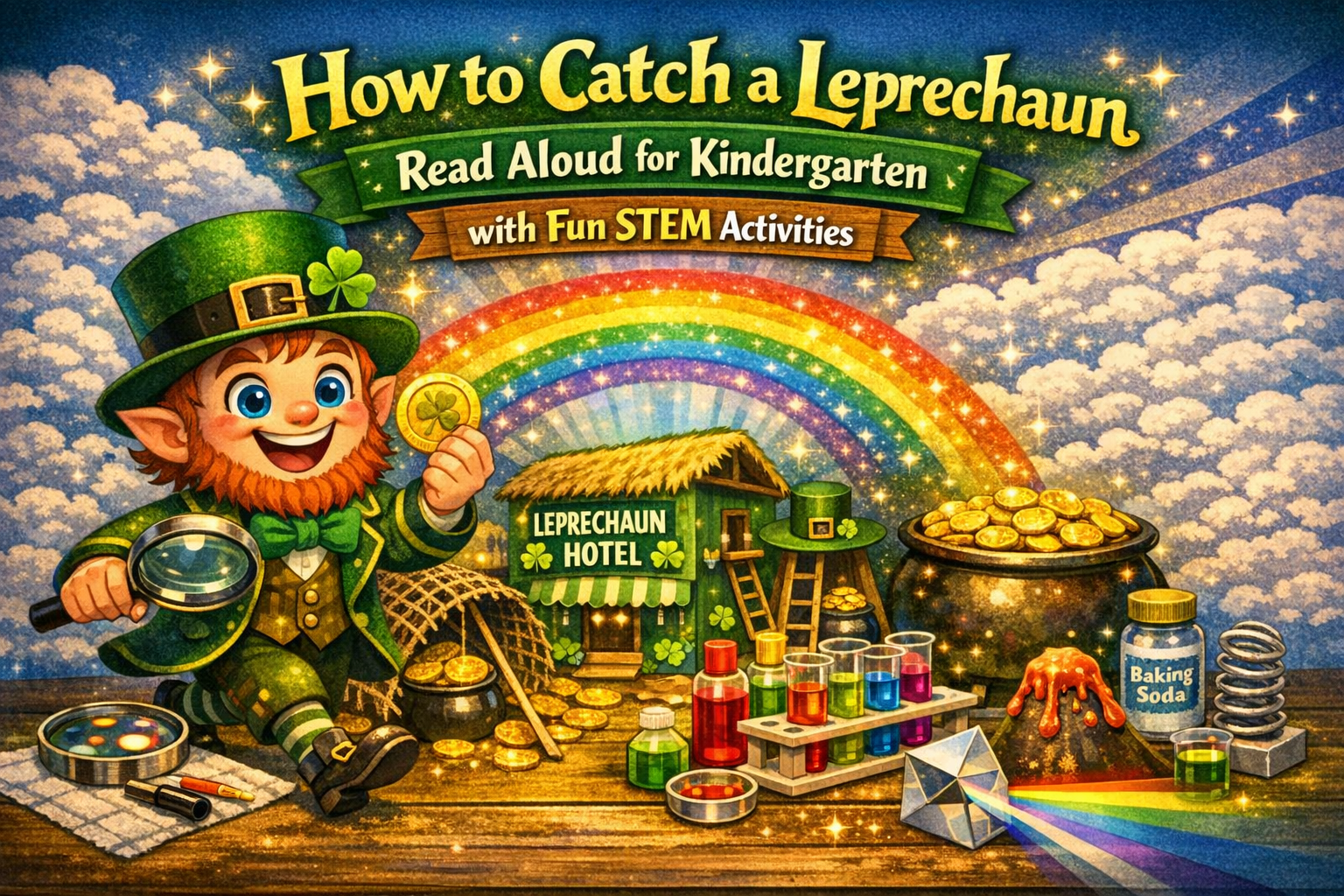
If you are planning a How to Catch a Leprechaun read aloud for kindergarten this March, you have struck gold. Adam Wallace’s hilarious, rhyme-packed picture book is one of the most beloved St. Patrick’s Day books in early childhood classrooms, and for good reason. It blends storytelling magic with STEM thinking, imaginative play, and cultural curiosity all in one vibrant package.
In this post I am walking you through everything you need for a rich, standards-aligned read aloud experience — from a quick story brief to three hands-on STEM activities your kindergarteners will absolutely love. Whether you are a classroom teacher, homeschooling parent, or afterschool program leader, these ideas are ready to go with minimal prep. And if you are thinking about how to build strong early learning habits beyond St. Patrick’s Day, be sure to check out this guide on how to prepare a 4 year old for kindergarten for year-round strategies that really work.
✨

Pro Tip: Read the book aloud once for pure enjoyment, then revisit it a second time for deeper comprehension questions. Kids always catch new details in the illustrations on the second read!
Let’s dive in — the leprechaun is waiting!
Story Summary and Educational Value
📚 About the Book
How to Catch a Leprechaun by Adam Wallace, illustrated by Andy Elkerton, follows a group of clever kids who have spent all year designing the most elaborate traps imaginable — shamrocks, pots of gold, and rainbow lures included. But their mischievous little target is faster than a wink and trickier than you would ever expect. Page after hilarious page, the leprechaun outsmarts every attempt, turning the house upside down in the process. The story ends with a challenge — a delightful invitation for young readers to engineer their own perfect trap.
If you enjoy read alouds like this one, Ms. Kerri brings stories to life with interactive storytelling sessions your kids will love. Check out the Ms. Kerri’s Read Alouds page to see what is available for your little learner.
Why It Works for Kindergarten
The book’s bouncy rhyme scheme supports phonological awareness. Its detailed, humor-filled illustrations develop visual literacy and inference skills. And the engineering challenge woven into the plot directly supports NGSS science and engineering practices — making it one of the best STEM read alouds for early learners.
🧠 What Kids Learn
Critical Thinking and Problem Solving: Each trap in the book was designed with a specific problem in mind. Talking through why each trap failed encourages kids to analyze cause and effect — a foundational comprehension skill.
Cultural Exploration: The book opens a natural conversation about Irish folklore, St. Patrick’s Day traditions, and the legend of leprechauns and their pots of gold. Pair it with a short “Fun Facts About Ireland” discussion to extend learning.
Imagination and Creative Confidence: The open-ended ending signals to kids that their ideas have value — a crucial mindset in early STEM education.
Reading Rockets: Best Read Alouds NAEYC: Early Literacy Resources
3 STEM Activities to Pair with Your Read Aloud
These three activities flow naturally from the story and cover engineering, science, and math all in one festive session. They work beautifully as classroom stations or as a full-day St. Patrick’s Day learning celebration.
1
🏗️ Engineering a Leprechaun Trap
Objective: Design and build a trap to catch a leprechaun using basic engineering principles.
Materials Needed
- Cardboard boxes
- Paper towel rolls
- String or yarn
- Glue sticks
- Safety scissors
- Markers and paint
- Gold glitter
- Craft sticks
Step by Step Instructions
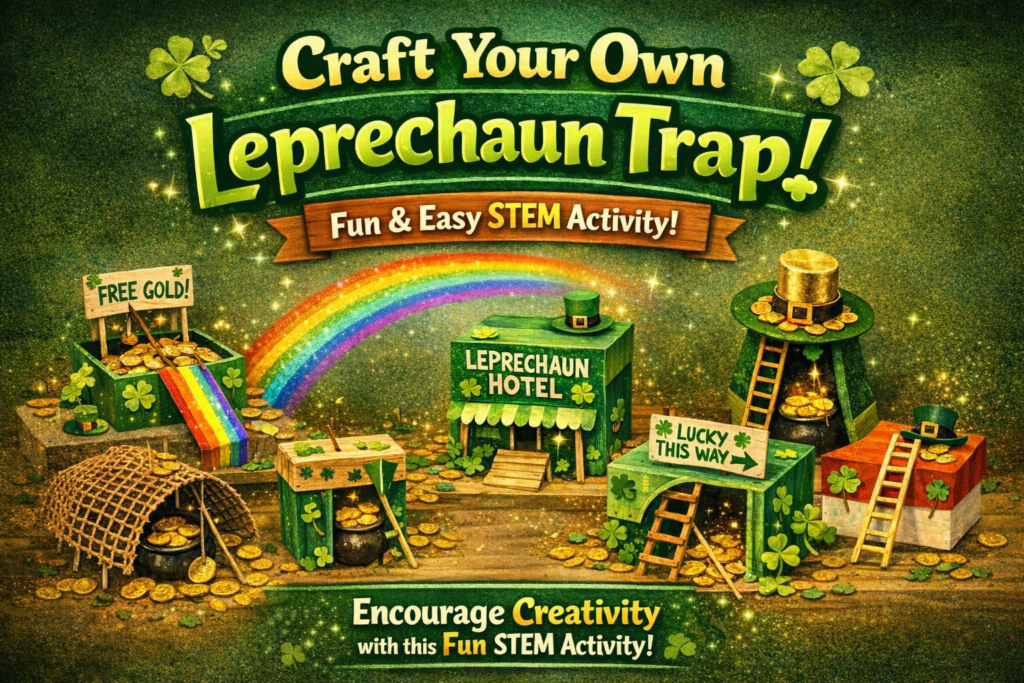
- Connect to the book. After your read aloud, ask “What made the leprechaun’s traps fail? What would YOU do differently?” Let kids share ideas in pairs.
- Sketch first. Give each child or team a simple design sheet to draw their trap before building. This introduces the engineering design cycle in an age-appropriate way.
- Build it. Students use recyclable materials to bring their sketch to life. Encourage luring elements like a piece of gold foil in the center and green construction paper shamrocks around the entrance.
- Present and reflect. Each team explains their trap to the class. Ask “How does your trap work? What would make it even better?” This oral language component is excellent for ELA standards.
💡
Send home a Leprechaun Trap family project letter a week before to let families donate recyclables. You will be amazed what kids bring in and family involvement always skyrockets engagement!
2
🌈 Rainbow Science Experiment
Objective: Understand light refraction, color mixing, and the science behind rainbows — tied directly to the leprechaun’s rainbow trail in the story.
Materials Needed
- Small mirror
- Shallow dish of water
- Flashlight
- White paper or wall
- Crayons in all colors
- Recording sheet (optional)
Step by Step Instructions
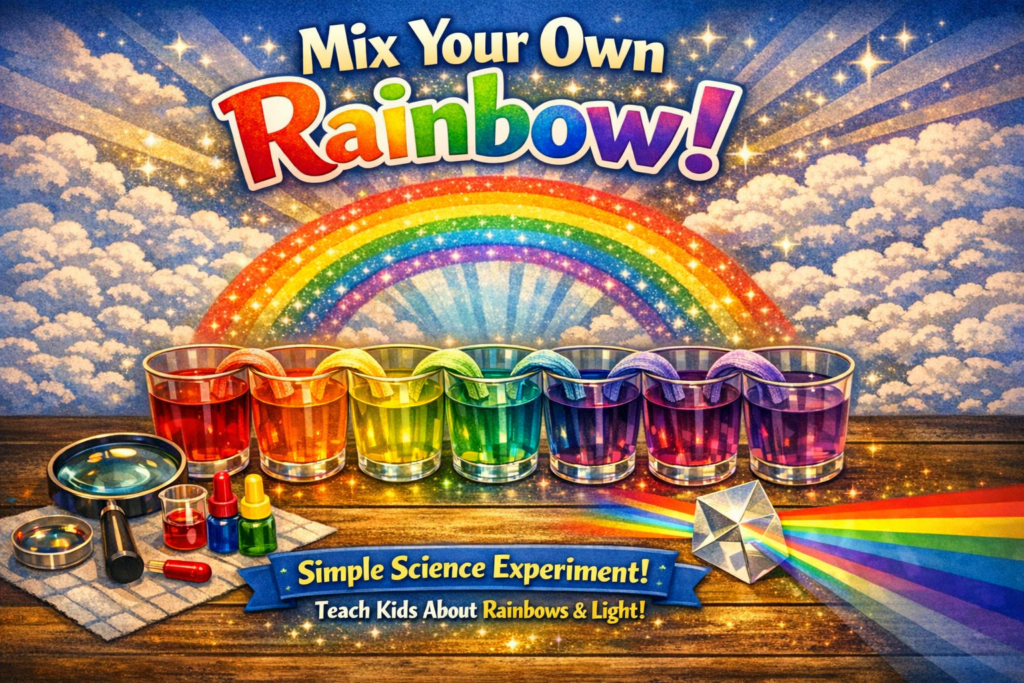
- Fill a shallow dish with water and lean a small mirror inside at an angle.
- Dim the lights. Shine the flashlight beam onto the submerged mirror.
- Hold a piece of white paper in front of the dish to catch the refracted rainbow beam. 🌈
- Ask students to identify and name each color band. Have them draw and label the rainbow on their recording sheet.
- Extend the lesson by asking “In our story, where did the leprechaun hide? How could a rainbow lead us to treasure?”
🔬
This experiment is a perfect introduction to ROYGBIV. For an extension, give kids red, blue, and yellow paint and let them discover orange, green, and purple by mixing. Instant color theory!
Science Buddies: Rainbow Science for Kids
3
🪙 Gold Coin Counting and Math Play
Objective: Practice counting, grouping, addition, and number sense using leprechaun gold coins.
Materials Needed
- Plastic gold coins
- Paper coin cutouts
- Counting mats
- Ten-frames
- Dice (1 to 6)
- Number cards
Step by Step Instructions
- Free explore (5 min). Let kids handle the coins freely. Encourage natural counting, sorting, and stacking before structured activity begins.
- Counting mats. Place coins on ten-frames and count together. Ask “How many more do we need to make 10?”
- Pattern and grouping. “Can you put the coins into groups of 2? Groups of 5? How many groups did you make?” This introduces early multiplication concepts naturally.
- Simple addition. Roll two dice. Put that many coins in each pot. Count the total — “The leprechaun left 4 coins here and 3 coins here. How much gold did he hide altogether?”
- Story connection. “If the leprechaun has 10 coins and hides half, how many are left?” Use the book’s pot-of-gold imagery to make the math feel magical.
🎲
Want more printable math activities to go with this lesson? The preschool math curriculum printables on the site are ready to download and use the same day!
Ready to Catch That Leprechaun
A How to Catch a Leprechaun read aloud for kindergarten does not have to be complicated to be meaningful. With one great book, three hands-on STEM activities, and a little bit of Irish magic, you can create a St. Patrick’s Day classroom day your students will talk about for years.
The beauty of this book is that it meets kids exactly where they are — bursting with creativity, eager to problem-solve, and ready to believe that maybe just maybe this year they will finally outsmart that tricky little leprechaun.
If you try any of these activities I would love to hear how it went! Drop a comment below or tag me on Instagram. 🍀
Happy Teaching,
Ms. Kerri · MsKerrisCorner.com
🍀 Want More Free Teaching Resources
Find read alouds, early learning activities, parenting tips, and so much more waiting for you at Ms. Kerri’s Corner.Visit MsKerrisCorner.com

Ms. Kerri’s Corner provides a exciting virtual space for preschool learning. Through a variety of engaging activities, she exposes young minds to early math, literacy, science and social-emotional skills in a developmentally appropriate way. Centers for blocks, art, books and music allow children to explore hands-on learning at their own pace. Guided lessons subtly introduce number sense, letter sounds and narrative thinking. Careful observation gives insight into each child’s progress across domains. Viewers are also invited to participate, reinforcing that their ideas are valued. By making learning fun yet purposeful, Ms. Kerri lays the groundwork for future academic success while fostering creativity and imagination. Her program offers preschoolers valuable screen-based learning experiences.