How to use read aloud lesson resources for daycare classrooms
Key Takeaways
A good read-aloud doesn’t need an elaborate setup. Choose a story that fits the children in front of you, plan one simple purpose, and leave room for their ideas.
- Match books to children’s ages, interests, and lived experiences.
- Choose one manageable learning goal for each session.
- Use pauses, questions, and repeated phrases to invite participation.
- Adapt the pacing and ways children can respond.
- Make story time a comfortable routine, then build on the story through play and conversation.
Choose resources that fit your classroom
The best read-aloud resource is one you can use with the children you have today—not an idealized group sitting perfectly still. Think about their ages, current interests, attention spans, and the range of experiences they bring to the room. A helpful resource gives you a starting point, not a script you have to follow word for word. Keep the goal simple: help children enjoy the story and take part in it.
Match stories to children’s ages and interests
Start with what children are drawn to: familiar routines, animals, silly surprises, vehicles, family life, or a new topic they have been exploring. Toddlers often respond well to sturdy books with clear images, repetition, and a manageable amount of text. Preschoolers may stay with a longer plot if the characters, humor, or problem catches their attention. Interest does not have to be a perfect match for every child; it just needs to offer a few ways into the story.
Look for engaging language, illustrations, and themes
Read a few pages before bringing a book to the group. Notice whether the sentences sound natural aloud, whether the images offer details children can point out, and whether the story gives you places to pause. Repetition, rhythm, and expressive words can make a book easier to join, even for children who are still building their spoken language. The subject matters, too: a thoughtful story can offer comfort, a laugh, or a gentle way to talk about something children are experiencing.
Check that materials support your learning goals
A resource can help you focus on vocabulary, listening, conversation, or noticing how a story unfolds. You do not need to cover every skill in one sitting. To make a choice feel less abstract, connect the goal to the kind of material and response you hope to see.
| If your goal is… | Look for… | Children might… |
|---|---|---|
| New vocabulary | Clear images and useful repeated words | Point, name, or try a new word |
| Listening and attention | A simple plot with a few surprises | Follow along and notice changes |
| Conversation | Characters with choices or feelings | Share an observation or idea |
| Story sequence | Events that build in a clear order | Recall what happened first or next |
Use the table as a quick filter, not a test of whether a book is good enough. One story may support several goals over time, but naming a single focus helps you decide what to emphasize in the moment. If you want another example of developmentally appropriate lesson planning, use it as inspiration and adjust the idea to your classroom.
Plan a read-aloud lesson
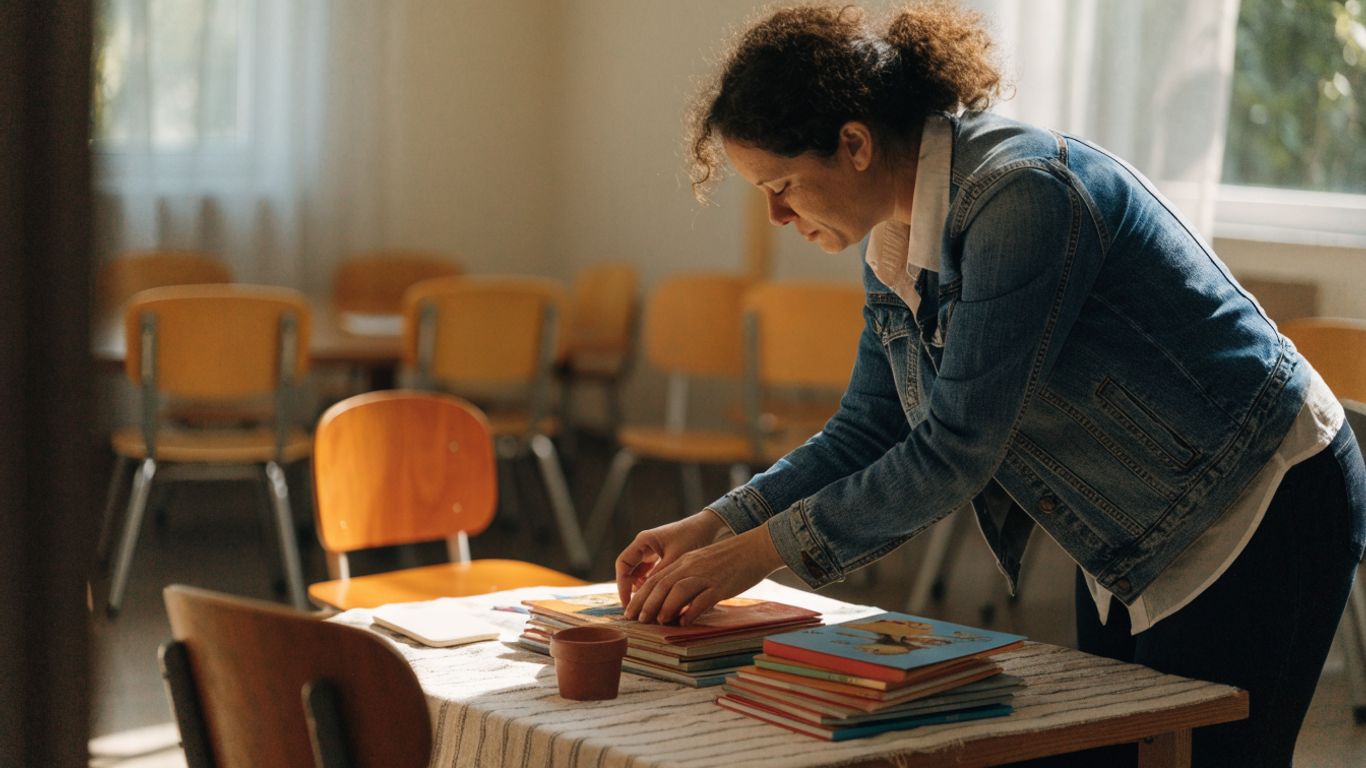
Planning can take just a few minutes, and it can save you from trying to improvise every question while also keeping a group settled. Pick one purpose, preview the book, and decide where you might pause. Then prepare the space so children can see the pictures and feel welcome to participate. A flexible plan makes it easier to respond when the group takes the story in an unexpected direction.
Set a clear goal for the session
Choose one thing you would like children to notice or try. Perhaps they will listen for a repeated phrase, name how a character feels, or talk about what might happen next. A goal is useful when it guides your choices without turning story time into a quiz. You can always set a different focus the next time you read the same book.
Preview the story and choose key moments
Read the story once to yourself and mark two or three spots where a pause might help. Look for an interesting illustration, a repeated line, a small problem, or a moment when the character’s feelings change. Decide on a few open questions, but do not feel tied to them; children’s comments may give you a better opening. A useful question often invites more than one possible answer.
Gather props and prepare the reading space
Keep props simple and connected to the book. A toy animal, a scarf, or a real object related to the story can give children something concrete to look at or handle, but the book should remain the center of attention. Before starting, arrange seating so faces and pages are visible, and keep extra materials within reach rather than spreading them all out. A small, predictable setup can help children settle without requiring a perfect room.
Make story time interactive
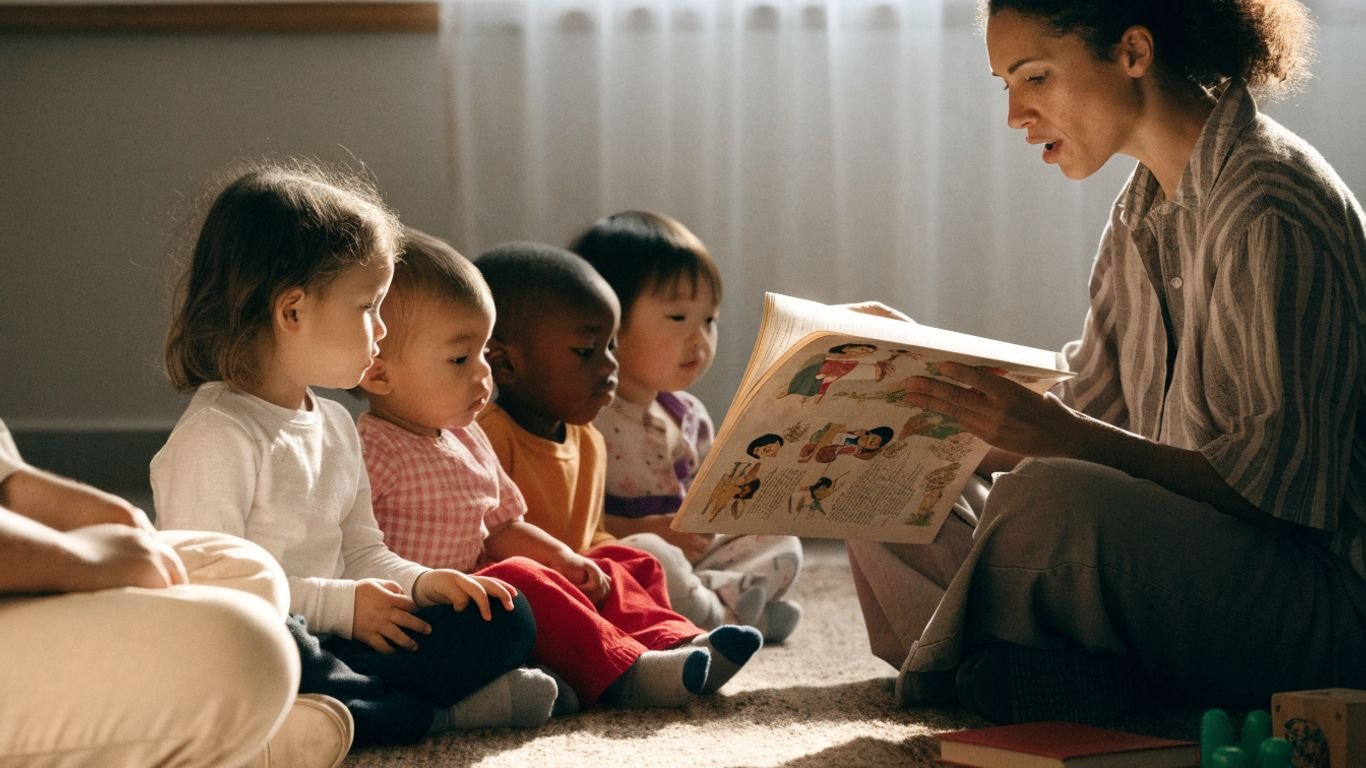
Children do not have to sit silently to be listening. They may show attention by pointing, shifting closer, repeating a phrase, or watching a page carefully. The aim is to make participation feel welcome without making every moment a demand for an answer. A few well-timed invitations can turn reading into a shared experience while keeping the story moving.
Invite predictions and observations
Pause at a moment that genuinely leaves room for wondering. Ask what a child notices in the picture, what a character might be thinking, or what could happen next. Give children time to look before filling the silence; some need a few extra seconds to form an answer or decide whether to speak. You can also acknowledge different ideas without settling every question right away.
Use expressive reading and purposeful pauses
Vary your pace and voice where it helps children follow the meaning. A quieter voice may draw attention to a tender moment; a pause before a repeated line gives children a chance to join in. A little room to respond can be more inviting than a string of questions. Keep expression comfortable for you, too—children benefit from an engaged reader, not a performance that feels forced.
Encourage children to join in with words and actions
Repeated phrases, sound effects, and simple movements offer more than one way to take part. Introduce a gesture when it fits the story, then give children time to copy it or make their own version. You can also use a familiar phrase as a group response, while allowing children to watch rather than join. For a few additional ideas about interactive story participation, borrow only the approaches that suit your group and the book you have chosen.
Adapt lessons for different ages and abilities
A read-aloud can include children with different attention spans, communication styles, and levels of familiarity with books. You do not need to create a separate lesson for every child. Small adjustments—shortening a pause, repeating a line, or allowing a child to respond with a gesture—can make the same story more accessible. Watch how children engage and adapt from there.
Adjust pacing and questions for toddlers and preschoolers
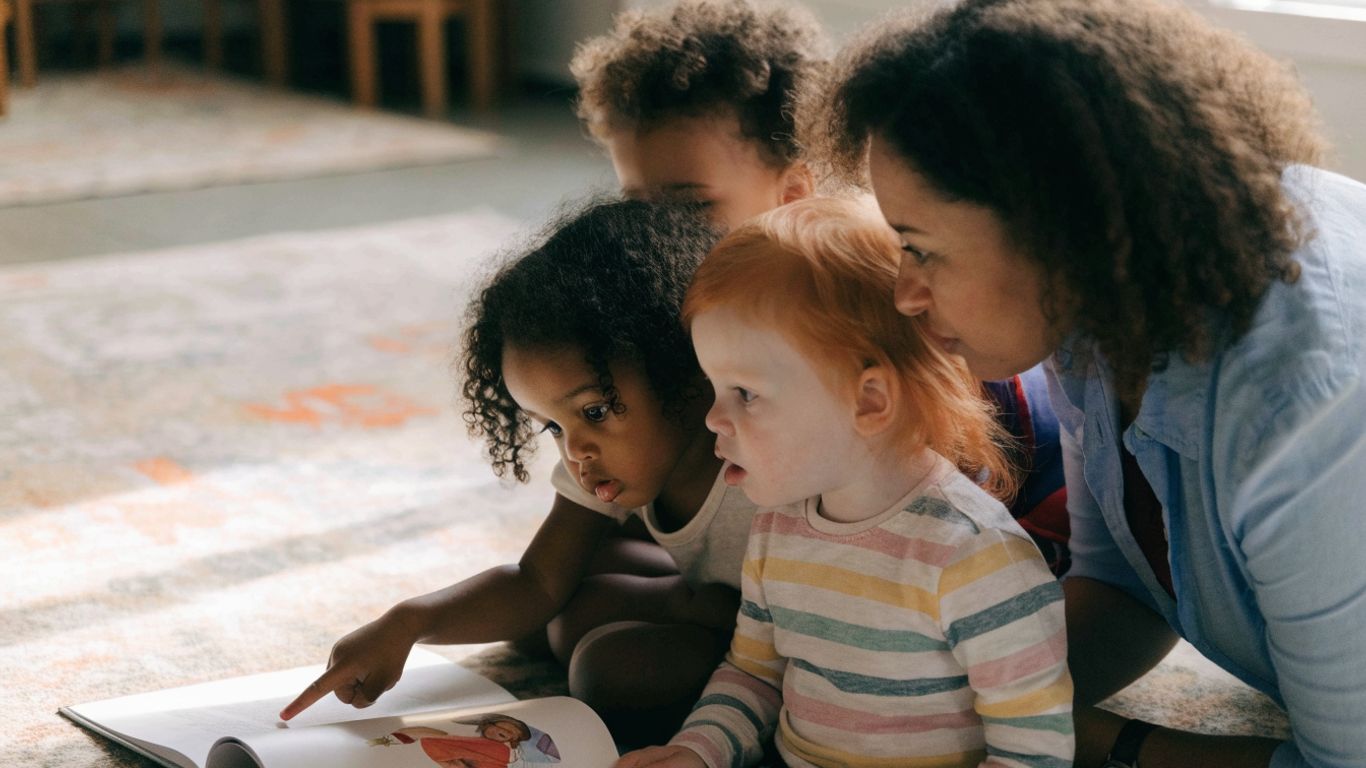
Toddlers may enjoy a brief session built around naming pictures, making sounds, and revisiting a favorite page. Preschoolers may be ready to follow a longer sequence or think about why a character acted a certain way, though individual children vary. If attention begins to drift, shorten the discussion, turn a page, or end on a satisfying moment rather than pushing through every planned question. Familiarity with the book often makes a second reading feel different and easier to join.
Support children who communicate in different ways
Spoken answers are only one form of participation. Children may point, look, gesture, use a communication device, move a prop, or respond with a sound. Make room for those responses and acknowledge them as part of the conversation. When asking a question, offer enough wait time and avoid treating silence as proof that a child has not understood; they may be listening, processing, or choosing how to respond.
Offer appropriate challenges for older or more advanced listeners
For children who are ready for more, invite them to connect events, compare characters’ choices, or notice how an illustration adds information. A challenge can be a thoughtful question, not a longer lecture. Try a small sequence of prompts that leaves room for children’s own ideas:
- What detail in the picture helped you notice that?
- What do you think the character wants right now?
- What changed from the beginning of the story?
- What might you do if you were in that situation?
Choose one prompt that fits the moment and let the conversation develop naturally. If children are eager to keep talking, follow their thinking; if they are ready to move on, return to the story. The point is to extend attention without making the book feel like an assignment.
Make read-alouds inclusive and culturally responsive
Books help children encounter both familiar parts of life and experiences beyond their own. Choosing stories with care means noticing who appears, whose point of view the story follows, and how people and families are portrayed. It also means making room for children to respond in their own ways, without asking anyone to speak for a whole culture or community. Thoughtful choices and a respectful tone matter more than trying to explain everything at once.
Choose stories that reflect children’s families and experiences
Look for books that show varied family structures, languages, abilities, traditions, and everyday experiences in ordinary, respectful ways. Representation does not need to be the lesson of the day; children can simply enjoy a character or recognize a familiar detail. A story may also introduce a setting or experience that is new to the group. When choosing, consider whether the people in the book feel like full characters rather than a single detail about their identity.
Introduce unfamiliar words and ideas with care
Pause to explain a word when children need it to follow the story, but avoid interrupting every page. A short explanation, a gesture, or a connection to something children know is often enough. If a story brings up a topic that children may understand differently, answer their questions honestly and simply. You can say that you are not sure and find out more later, rather than rushing to give a complete explanation in the middle of reading.

Support multilingual learners with visuals and repetition
Pictures, gestures, repeated phrases, and a steady pace give children several ways to connect meaning with language. Invite children to share a familiar word in another language if they want to, but do not put them on the spot as translators. Re-reading a favorite book can help the group recognize a phrase and anticipate what comes next. Keep the invitation open: some children may speak, some may point, and others may take it in quietly.
Build read-alouds into the daycare routine
A dependable story-time rhythm can make reading easier to start, even on a busy day. The routine does not need to be long or identical every time; a familiar cue and a comfortable place may be enough. Over time, stories can connect with play, art, and conversations that happen naturally around the classroom. Use what children show you to decide what to revisit, rather than trying to turn every book into a full project.
Create a consistent, comfortable story-time routine
Choose a part of the day when children have a reasonable chance to settle, and use a simple cue to signal that a story is beginning. Some groups enjoy gathering on a rug; others may do better with a smaller group or a book available in a quiet corner. Keep the routine flexible when children need movement or the day does not go to plan. Consistency comes from a familiar welcome, not from expecting every session to look exactly alike.
Extend stories through play, art, and conversation
After reading, leave a few related materials available if children seem interested. They might draw a favorite scene, act out a character’s movement, build a setting with blocks, or talk about a connection they noticed. These activities should feel like invitations rather than homework. A child who wanders off after the last page may still have enjoyed the story; an extension is an option, not a measure of attention.
Observe children’s engagement to guide future lessons
Notice what children return to: a funny line, a surprising picture, a character, or a question they keep asking. Those clues can help you choose the next book, decide whether to reread, or adjust how long the group discussion lasts. You do not need formal notes for every session; a quick mental note or brief record can be enough to spot a pattern. Let children’s responses guide the next step, and give yourself permission to change the plan.
Conclusion
Read-alouds work best when they fit the children and the realities of the classroom. Choose a story with a clear purpose, invite participation in more than one way, and keep the routine flexible enough to follow children’s curiosity. Small, thoughtful choices can make story time feel welcoming—and give children a reason to come back to the book.
Frequently Asked Questions
How long should a daycare read-aloud last?
There is no single right length. Consider the children’s ages, the book, and how the group is responding; a short, satisfying reading is often better than continuing after attention has faded.
What makes a good read-aloud book for toddlers?
Look for clear illustrations, sturdy pages when appropriate, familiar subjects, and language with rhythm or repetition. A book toddlers can revisit and respond to in their own ways is a strong choice.
How can I keep children engaged during a story?
Use expressive reading, pause for observations, and invite children to repeat a phrase or make a simple gesture. Keep invitations brief and let children participate by watching as well as speaking.
What should I do if children lose interest?
Try moving to a favorite page, shortening the discussion, or wrapping up early. You can also revisit the book another day or choose a story that better fits the group’s current interests.
Do I need a different lesson for toddlers and preschoolers?
Not necessarily. You can use the same book while changing the pacing, questions, or ways children participate. Adjust based on the children in the room rather than age labels alone.
How can children participate if they do not answer questions aloud?
Offer ways to point, gesture, look, move a prop, or use a communication device. Give children time to respond and recognize nonverbal participation as part of the shared reading.
How often should I reread the same book?
Reread it whenever children show interest or when repetition would support their enjoyment and understanding. A familiar story can offer new things to notice each time.

Ms. Kerri’s Corner provides a exciting virtual space for preschool learning. Through a variety of engaging activities, she exposes young minds to early math, literacy, science and social-emotional skills in a developmentally appropriate way. Centers for blocks, art, books and music allow children to explore hands-on learning at their own pace. Guided lessons subtly introduce number sense, letter sounds and narrative thinking. Careful observation gives insight into each child’s progress across domains. Viewers are also invited to participate, reinforcing that their ideas are valued. By making learning fun yet purposeful, Ms. Kerri lays the groundwork for future academic success while fostering creativity and imagination. Her program offers preschoolers valuable screen-based learning experiences.