What Is Play-Based Learning?
Play-based learning activities for kindergarten combine purposeful educational goals with child-led exploration and discovery. Rather than relying solely on worksheets and direct instruction, this approach encourages children to learn through hands-on experiences, imaginative play, problem-solving, and social interaction.
Young children are naturally curious. They learn best when they are actively engaged in meaningful experiences. Through play, kindergarten students build foundational academic skills while also developing creativity, communication, and confidence.
Research from the National Association for the Education of Young Children (NAEYC) consistently supports developmentally appropriate practices that incorporate play as a central component of early childhood education.
Why Play Matters in Kindergarten
Play is much more than entertainment. It is how children make sense of the world around them.
When children participate in play-based learning activities for kindergarten, they learn to:
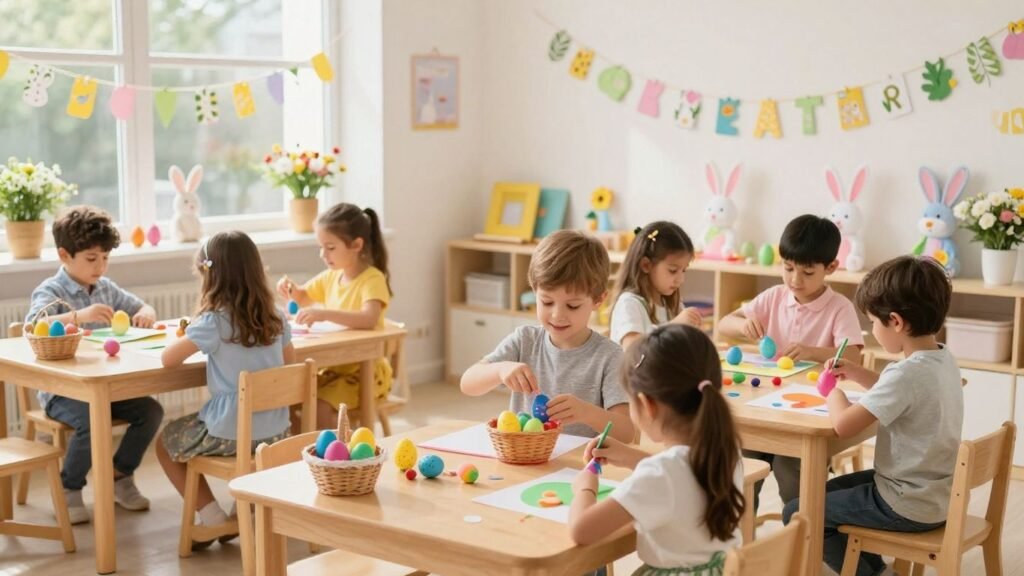
- Solve problems independently
- Cooperate with peers
- Practice language skills
- Build resilience
- Strengthen memory
- Develop creativity
Play transforms learning into an enjoyable and meaningful experience.
The Science Behind Play-Based Education
Studies show that active, hands-on learning helps children retain information more effectively than passive learning methods.
According to the Harvard Center on the Developing Child, playful interactions help strengthen brain connections that support cognitive, social, and emotional development.
Benefits of Play-Based Learning Activities for Kindergarten
Academic Benefits
Play-based learning activities for kindergarten support essential academic skills without sacrificing children’s natural desire to explore.
Benefits include:
- Improved vocabulary
- Early literacy development
- Number recognition
- Problem-solving skills
- Scientific thinking
Children often learn complex concepts more easily when those concepts are introduced through play.
Social and Emotional Benefits
Many kindergarten children are still learning how to:
- Share materials
- Take turns
- Resolve conflicts
- Express emotions appropriately
Play provides countless opportunities to practice these important life skills.
Physical Development Benefits
Movement-based activities help children strengthen:
- Fine motor skills
- Hand-eye coordination
- Balance
- Core strength
- Gross motor abilities

21 Play-Based Learning Activities for Kindergarten
Literacy Play-Based Learning Activities for Kindergarten
1. Alphabet Treasure Hunt
Hide letters around the room and encourage children to find and identify them.
2. Storytelling Puppet Theater
Puppets encourage creativity, language development, and sequencing skills.
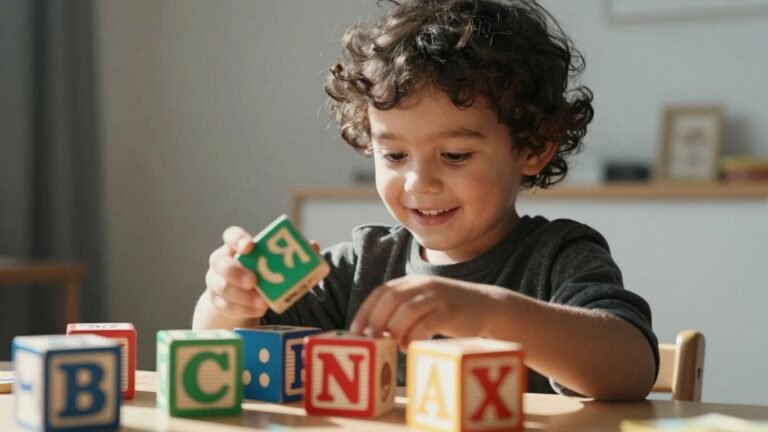
3. Letter Construction Station
Children build letters using craft sticks, blocks, or play dough.
4. Rhyming Basket Game
Match objects that rhyme to build phonological awareness.
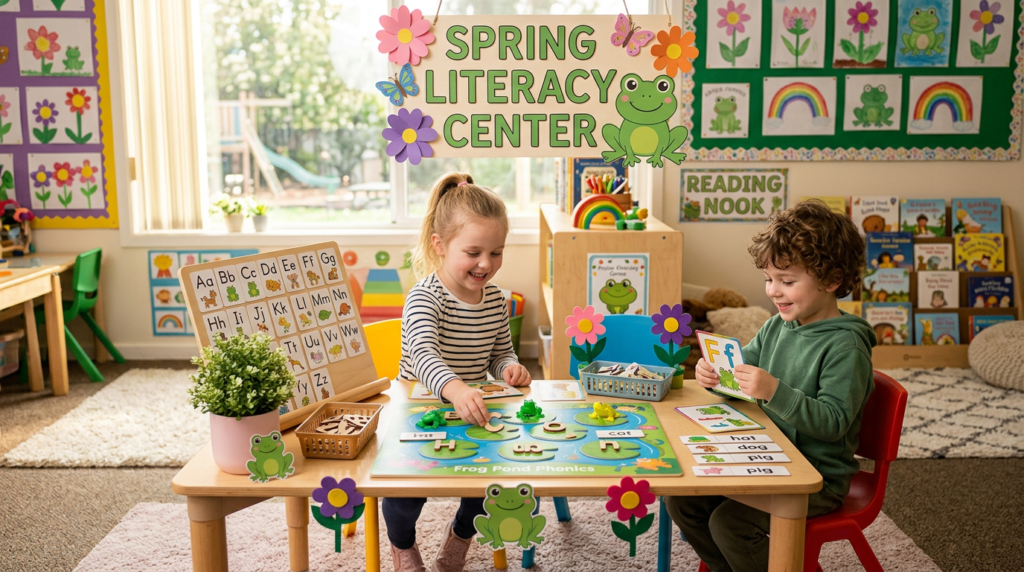
5. Interactive Reading Corner
Create a cozy reading area where children can explore books independently.
For additional literacy resources, visit MsKerrisCorner Literacy Activities for Kindergarten.
Math Play-Based Learning Activities for Kindergarten
6. Counting Nature Collections
Gather leaves, rocks, or pinecones and practice counting.
7. Shape Detective Game
Children search for shapes throughout the classroom or home.
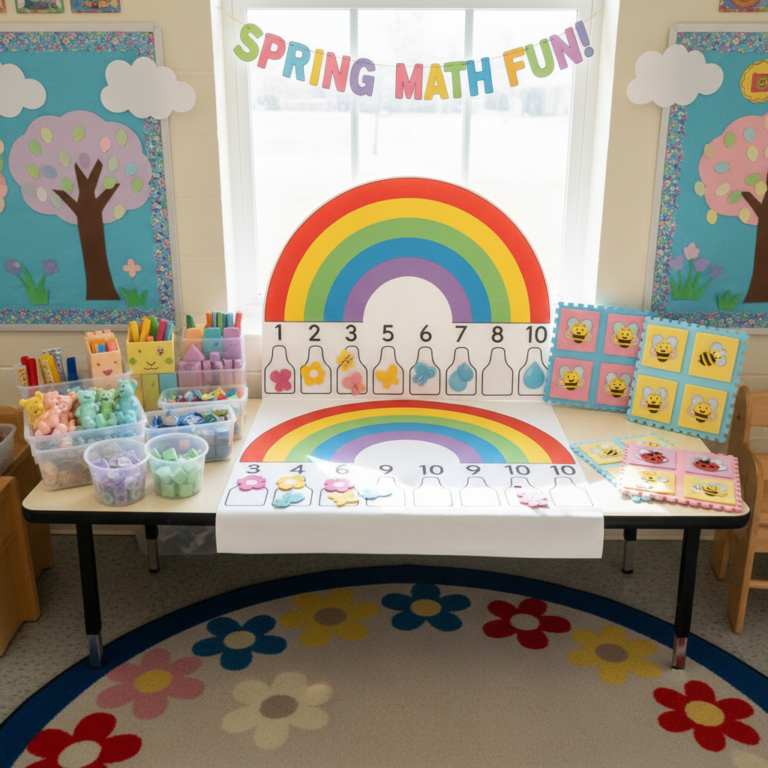
8. Pattern Building Station
Use blocks, beads, or colored objects to create patterns.
9. Store Pretend Play
A classroom store introduces counting, sorting, and simple money concepts.
10. Measurement Exploration
Compare lengths, heights, and weights using everyday objects.
Science and Discovery Activities
11. Sink or Float Experiments
Predict and test which objects will sink or float.
12. Gardening Projects
Plant seeds and observe growth over time.
13. Nature Observation Journals
Record observations about weather, plants, and insects.
14. Magnet Exploration Center
Allow children to investigate magnetic and non-magnetic objects.
15. Color Mixing Laboratory
Experiment with primary colors to discover new combinations.
Creative Arts Activities
16. Open-Ended Art Creation
Provide materials without specific instructions and encourage creativity.
17. Music and Movement Sessions
Combine rhythm, dance, and listening skills.
18. Dramatic Play Centers
Create themed areas such as restaurants, hospitals, or grocery stores.
Social Learning Activities
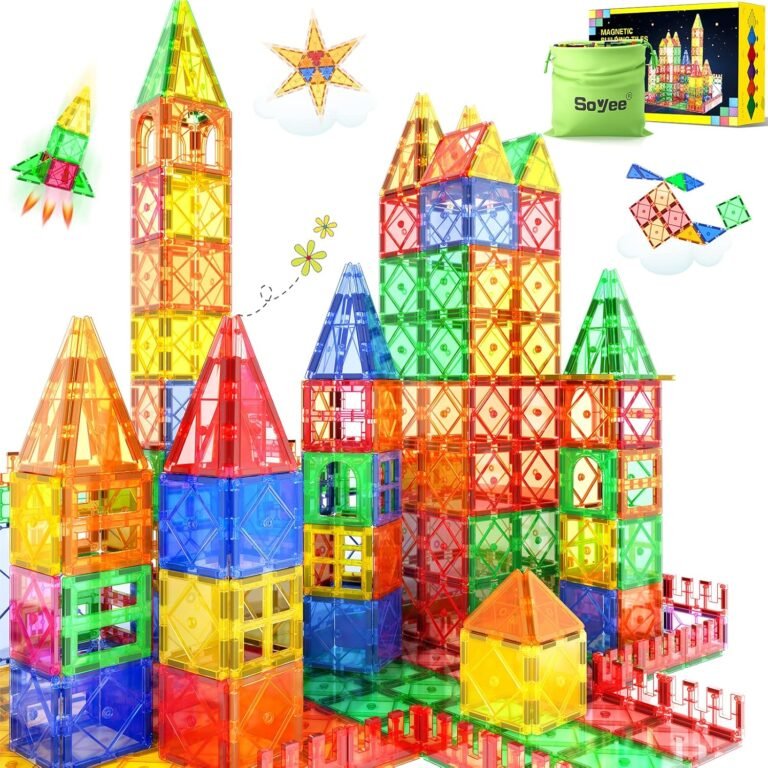
19. Cooperative Building Challenges
Small groups work together to build structures.
20. Friendship Circle Games
Children practice listening, sharing, and communication.
21. Problem-Solving Scenarios
Present simple challenges and encourage collaborative solutions.
Creating a Play-Based Classroom or Home Environment
A successful environment supports exploration while maintaining organization.
Provide Open-Ended Materials
Excellent materials include:
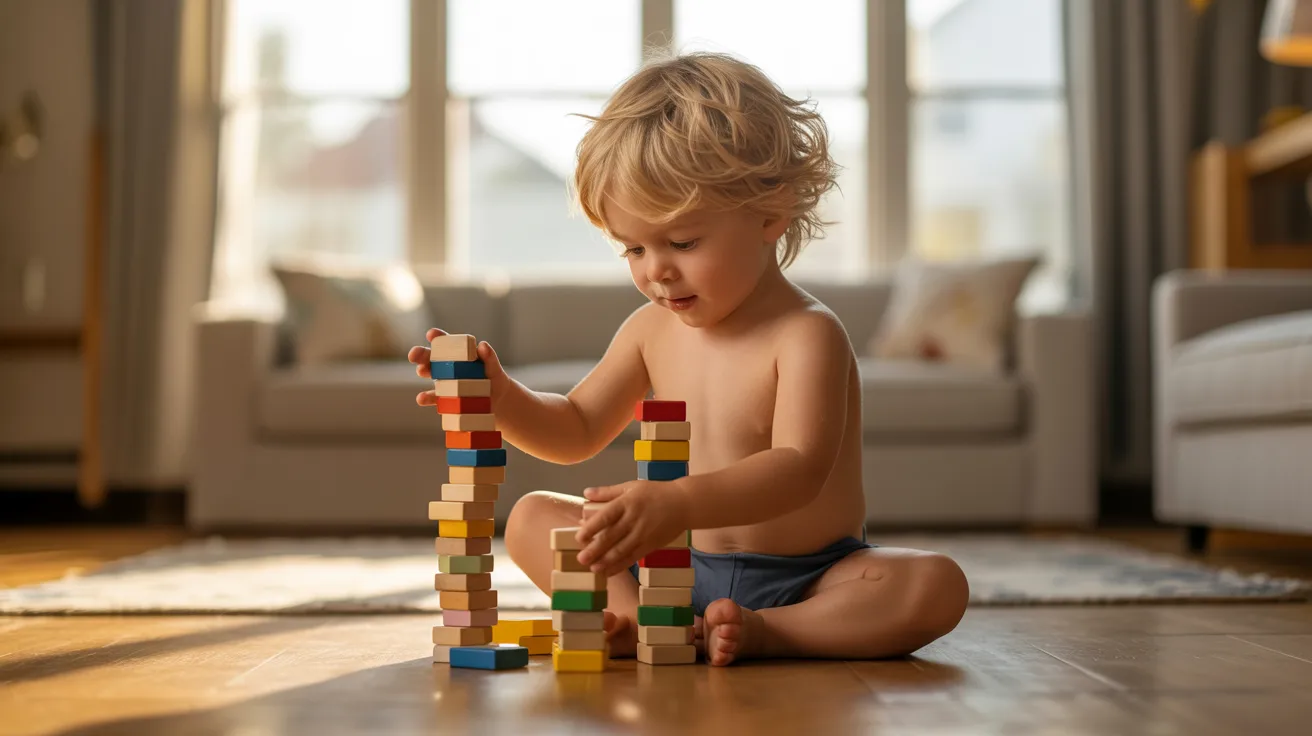
- Building blocks
- Art supplies
- Loose parts
- Play dough
- Natural materials
These resources encourage creativity and independent thinking.
Create Learning Centers
Dedicated learning areas may include:
| Learning Center | Skills Developed |
| Reading Corner | Literacy |
| Art Area | Creativity |
| Building Zone | Engineering |
| Science Center | Inquiry |
| Dramatic Play Area | Social Skills |
Encourage Child-Led Exploration
Adults should guide learning without controlling every aspect of play.
The goal is to create opportunities for discovery rather than dictate outcomes.
Common Challenges and Solutions
Balancing Play and Academics
Some adults worry that play reduces academic learning.
In reality, high-quality play-based learning activities for kindergarten often strengthen academic outcomes while maintaining engagement.
Managing Noise and Activity Levels
Play-based classrooms can be active.
Clear expectations and structured routines help maintain a productive learning environment.
Meeting Diverse Learning Needs
Every child develops differently.
Offering varied activities allows children to engage at their own developmental level.
Tips for Parents and Educators
To maximize the effectiveness of play-based learning activities for kindergarten:
Follow Children’s Interests
Interest-driven learning increases engagement and retention.
Ask Open-Ended Questions
Examples include:
- What do you think will happen?
- Why did that work?
- How could we solve this problem?
Focus on the Process
Celebrate effort, exploration, and persistence rather than perfect outcomes.
Allow Time for Exploration
Children need opportunities to investigate ideas deeply.
For more early childhood teaching ideas and kindergarten resources, visit MsKerrisCorner Early Learning Resources.
The Centers for Disease Control and Prevention Child Development Resources also provides valuable information about developmental milestones and learning expectations.
Frequently Asked Questions
1. What are play-based learning activities for kindergarten?
They are educational activities that use play as the primary method for teaching academic, social, emotional, and physical skills.
2. Why are play-based learning activities for kindergarten important?
They help children develop foundational skills while keeping learning engaging, meaningful, and developmentally appropriate.
3. Can play-based learning improve academic performance?
Yes. Research shows that children often learn literacy, math, and problem-solving skills more effectively through active, hands-on experiences.
4. How much play should kindergarten children have each day?
Most early childhood experts recommend substantial opportunities for both structured and unstructured play throughout the day.
5. Can play-based learning be used at home?
Absolutely. Parents can incorporate play into reading, math, science, and daily routines.
6. What materials are best for play-based learning?
Open-ended materials such as blocks, art supplies, loose parts, dramatic play props, and natural materials are highly effective.
7. How do teachers assess learning during play?
Teachers observe interactions, problem-solving abilities, communication skills, and completed projects to evaluate development and learning.
8. Is play-based learning suitable for all children?
Yes. Play-based approaches can be adapted to accommodate diverse learning styles, interests, and developmental needs.
Conclusion
Play-based learning activities for kindergarten provide a powerful foundation for lifelong learning. Through purposeful play, children develop academic knowledge, social competence, emotional resilience, creativity, and critical thinking skills.
By creating environments rich in exploration, discovery, and imagination, parents and educators can support children’s natural curiosity while helping them master essential kindergarten skills. The result is a learning experience that is engaging, effective, and developmentally appropriate.
When children learn through play, they don’t just acquire knowledge—they develop a lasting love of learning that can benefit them throughout their educational journey.


Ms. Kerri’s Corner provides a exciting virtual space for preschool learning. Through a variety of engaging activities, she exposes young minds to early math, literacy, science and social-emotional skills in a developmentally appropriate way. Centers for blocks, art, books and music allow children to explore hands-on learning at their own pace. Guided lessons subtly introduce number sense, letter sounds and narrative thinking. Careful observation gives insight into each child’s progress across domains. Viewers are also invited to participate, reinforcing that their ideas are valued. By making learning fun yet purposeful, Ms. Kerri lays the groundwork for future academic success while fostering creativity and imagination. Her program offers preschoolers valuable screen-based learning experiences.