7 Fun Spring Centers for Kindergarten That Boost Learning and Keep Kids Engaged
Spring brings a special kind of energy into the kindergarten classroom. After months of indoor recess and chilly weather, students are ready to move, explore, and discover the world around them. Teachers often notice that children become more curious, more talkative, and much more active during this time of year.
That’s exactly why spring centers for kindergarten work so well.
They combine hands-on learning with movement, creativity, and seasonal fun. Instead of asking students to sit still for long periods, spring centers allow children to rotate through exciting activities that strengthen important academic skills while matching their natural energy levels.
The best part? Spring-themed activities feel playful, but they still support meaningful learning before students head into first grade.
Why Spring Centers Work So Well in Kindergarten
Spring learning centers help children stay focused because they make learning feel fresh and exciting. Seasonal themes like flowers, insects, rainbows, gardens, frogs, and weather instantly grab students’ attention.
Centers also encourage:
- Independent learning
- Fine motor development
- Social interaction
- Problem-solving skills
- Reading and math review
- Creativity and communication
During spring, kindergarten students are often more confident learners than they were earlier in the school year. They can follow routines better, complete simple tasks independently, and work cooperatively with classmates.
That makes spring the perfect time to introduce more interactive center activities.
1. Rainbow Number Match Center
One of the easiest and most effective spring math activities is a rainbow number matching center.
In this activity, students match:
- Numbers
- Ten frames
- Base ten blocks
- Counting pictures
This simple center strengthens number sense while adding colorful spring visuals that children love.
Ways to Use It
- Pocket chart activity
- Small group practice
- Independent work station
- Partner memory game
Students stay engaged because they are actively touching, matching, and moving pieces around instead of simply filling out worksheets.
2. Flower Counting and Addition Center
Flowers are one of the most popular spring classroom themes. A flower math center can help students practice counting, addition, and number recognition in a fun way.
Simple Setup Ideas
Use:
- Flower cutouts
- Plastic flowers
- Pom-poms
- Mini erasers
- Counting mats
Students can:
- Count flower petals
- Build addition problems
- Compare numbers
- Create patterns
Hands-on math activities help young learners visualize numbers more clearly.
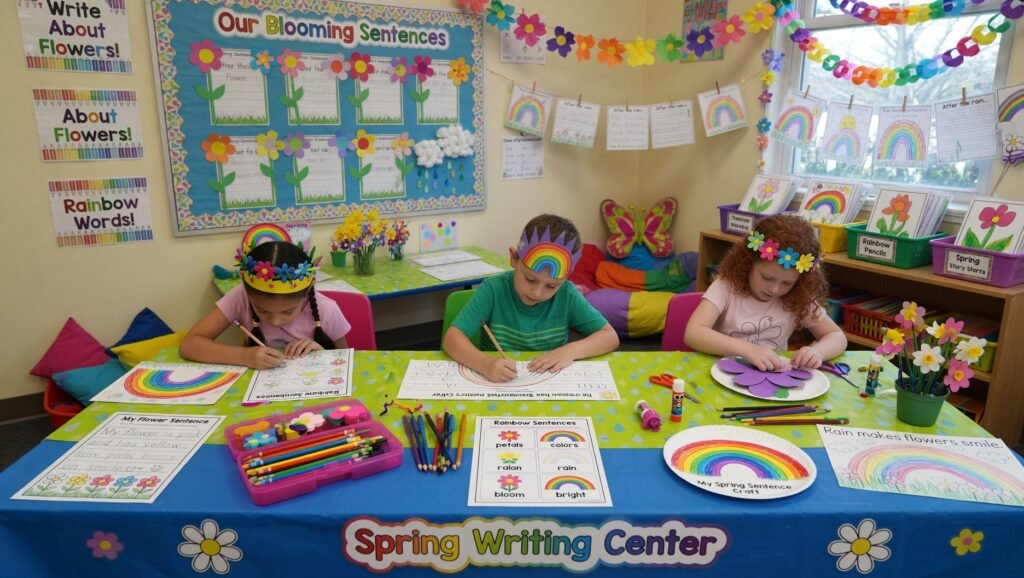
3. Spring Writing Center
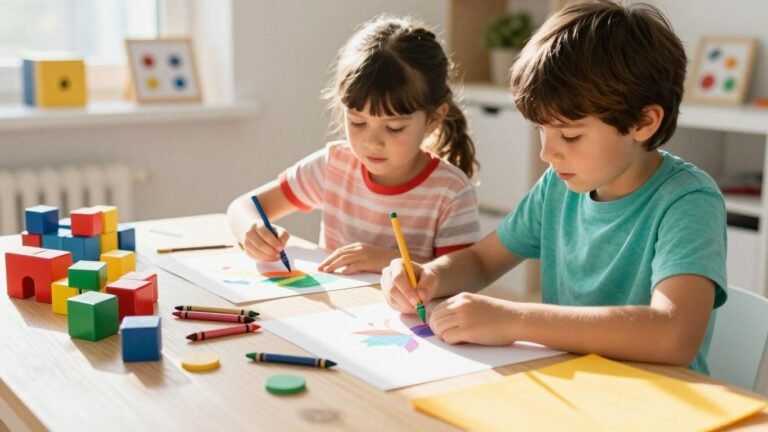
Spring is often when kindergarten writing skills begin to bloom. Students start creating longer sentences, adding details, and expressing their ideas more confidently.
A spring writing center can include:
- Seasonal vocabulary cards
- Picture prompts
- Sentence starters
- Writing paper with spring borders
Popular Writing Topics
- My favorite spring activity
- What I see outside
- If I planted a garden
- A rainy day adventure
- Butterfly life cycles
Adding stickers, markers, or colorful paper can make writing feel even more exciting.
4. Outdoor Sight Word Activities
Sometimes the best classroom strategy is simply changing the location.
Taking learning outdoors gives students movement while helping them stay focused.
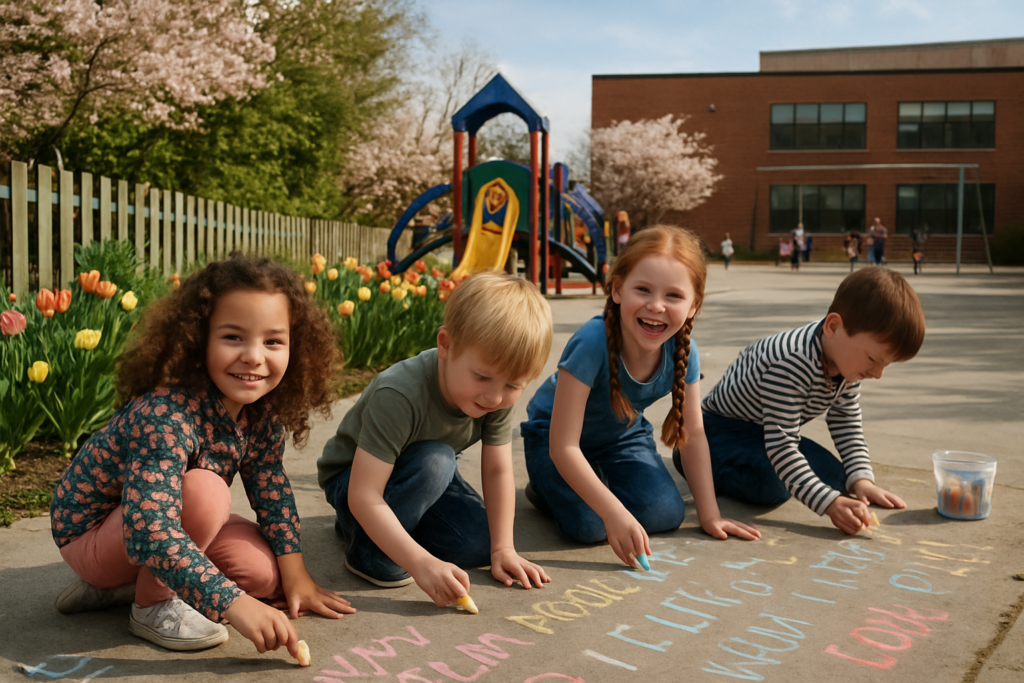
Outdoor Literacy Ideas
- Write sight words with sidewalk chalk
- Create alphabet scavenger hunts
- Practice spelling with water and paintbrushes
- Read spring books outside
Fresh air and movement often improve student participation and attention.
Outdoor learning also creates memorable experiences that children talk about long after the lesson ends.

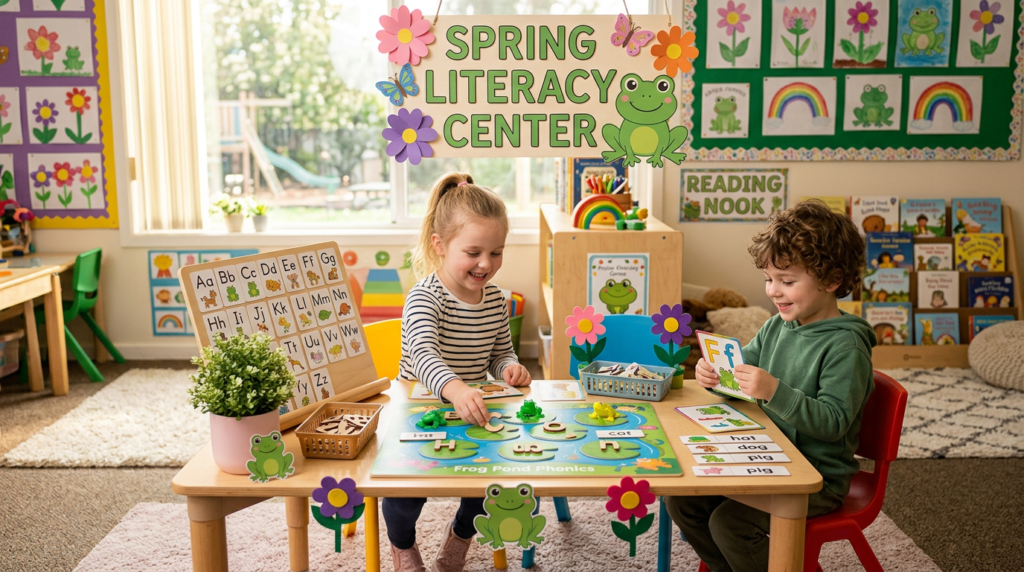
5. Frog Beginning Sounds Center
Frog-themed literacy activities are always a hit during spring.
In this center, students identify beginning letter sounds by matching picture cards to the correct letter.
Skills Practiced
- Phonemic awareness
- Letter recognition
- Sound identification
- Vocabulary building
You can make the activity more interactive by adding:
- Spinners
- Frog counters
- Lily pad mats
- Sensory bins
Kindergarten students learn best when they can touch, move, and explore materials.
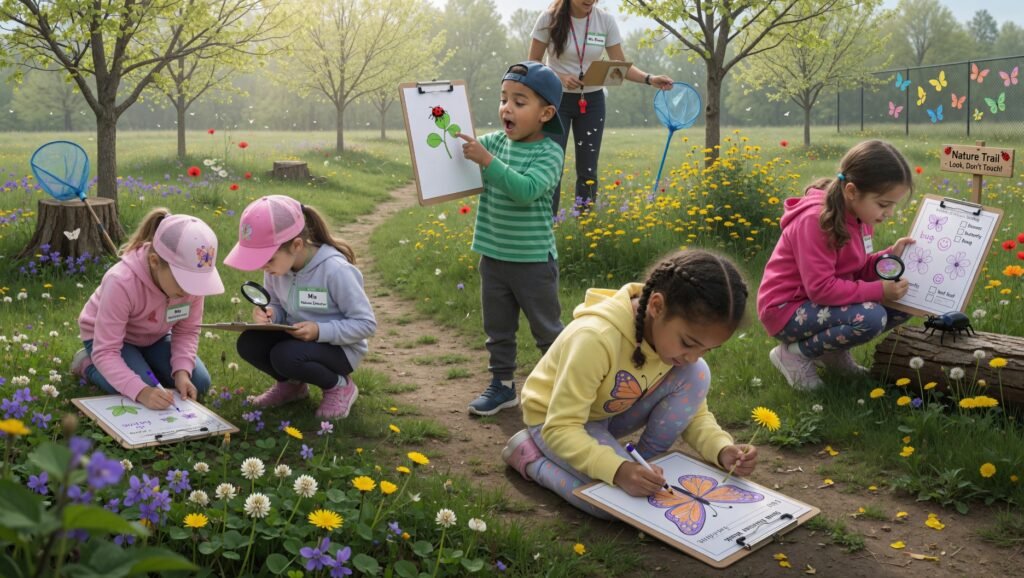
6. Spring Nature Walk and Observation Center
Spring is full of opportunities for real-world learning.
Nature walks encourage students to:
- Observe carefully
- Ask questions
- Describe what they see
- Build vocabulary
Things Students Can Look For
- Flowers
- Bugs
- Birds
- Clouds
- Trees
- Rain puddles
After the walk, students can:
- Draw pictures
- Write observations
- Sort items
- Create class charts
Nature-based learning combines science, literacy, and creativity all in one activity.
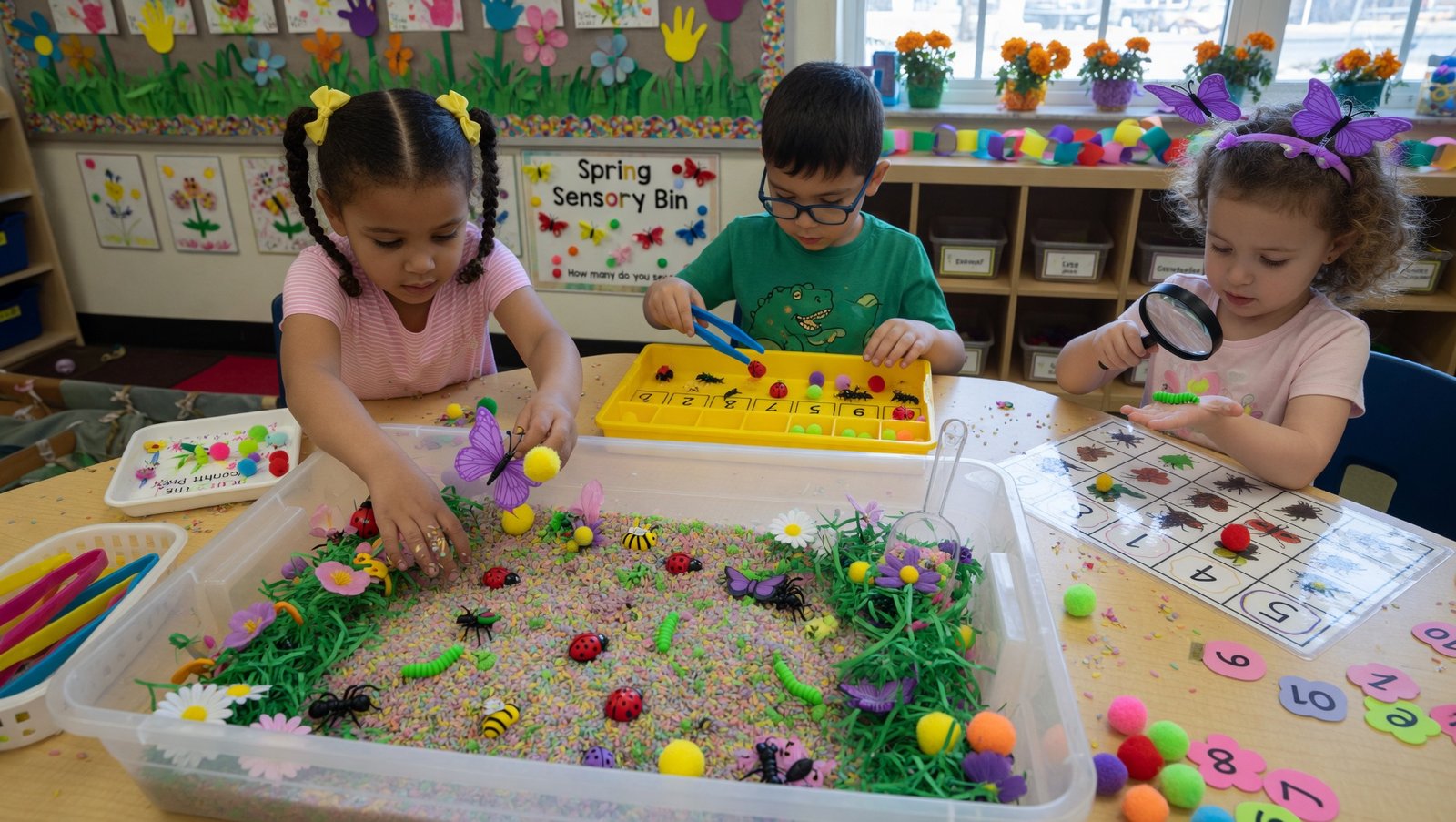
7. Spring Pattern and Sorting Center
Patterns and sorting activities help students strengthen critical thinking skills.
A spring-themed sorting center can use:
- Plastic insects
- Flower colors
- Weather pictures
- Bunny shapes
- Rainbow items
Skills Developed
- Pattern recognition
- Categorizing
- Comparing objects
- Fine motor practice
These activities may look simple, but they build strong foundational math skills.

Tips for Successful Spring Centers for Kindergarten
Keep Materials Organized
Use bins, zipper pouches, or labeled baskets so students can access materials independently.
Rotate Activities Weekly
Changing centers regularly keeps students interested and prevents boredom.
Add Movement Whenever Possible
Children naturally need more movement during spring. Activities that involve standing, walking, sorting, or building work especially well.
Use Bright Seasonal Themes
Rainbows, flowers, bugs, and gardens instantly increase engagement.
Differentiate Activities
Offer easier and more challenging versions so all learners feel successful.
Benefits of Spring-Themed Learning
Spring centers do more than entertain students. They support important developmental skills that prepare children for first grade.
Students Improve:
- Reading fluency
- Counting skills
- Writing confidence
- Social skills
- Independence
- Focus and attention
Most importantly, spring centers help children enjoy learning.
When students are excited and engaged, classroom management becomes easier and learning becomes more meaningful.
Conclusion
Spring is one of the most exciting times in a kindergarten classroom. Students are growing academically, socially, and emotionally every single day.
Using engaging spring centers for kindergarten allows teachers to channel that extra seasonal energy into meaningful learning experiences.
Whether students are matching rainbow numbers, writing about flowers, practicing beginning sounds with frogs, or exploring nature outdoors, spring centers create joyful moments that children remember.
With the right mix of creativity, movement, and hands-on learning, your classroom can stay productive while fully embracing the fun and excitement of spring.
FAQs
What are spring centers for kindergarten?
Spring centers are hands-on learning stations with seasonal themes like flowers, bugs, rainbows, and weather that help students practice literacy and math skills.
Why are spring centers important?
They keep students engaged, active, and motivated while reinforcing important academic concepts.
How long should kindergarten centers last?
Most kindergarten center rotations work well between 15–25 minutes depending on student attention spans.
Can spring centers be used outdoors?
Yes! Many spring activities work perfectly outside using clipboards, chalk, manipulatives, and simple supplies.
What skills do spring centers teach?
They support reading, phonics, counting, writing, sorting, patterning, fine motor development, and social skills.
How do I keep centers organized?
Use labeled bins, visual instructions, and consistent routines so students can work independently.


Ms. Kerri’s Corner provides a exciting virtual space for preschool learning. Through a variety of engaging activities, she exposes young minds to early math, literacy, science and social-emotional skills in a developmentally appropriate way. Centers for blocks, art, books and music allow children to explore hands-on learning at their own pace. Guided lessons subtly introduce number sense, letter sounds and narrative thinking. Careful observation gives insight into each child’s progress across domains. Viewers are also invited to participate, reinforcing that their ideas are valued. By making learning fun yet purposeful, Ms. Kerri lays the groundwork for future academic success while fostering creativity and imagination. Her program offers preschoolers valuable screen-based learning experiences.