How Children Actually Learn And What You Can Do About It
Nobody hands you a manual when you become a parent or a teacher. You figure it out as you go, mostly through trial and error, and occasionally through a moment of clarity where something just clicks. This is a collection of those moments — the things that genuinely matter when it comes to helping children grow.
Start here: kids need to feel safe before they can learn anything
This sounds obvious, but it’s worth saying plainly. A child who doesn’t feel secure — emotionally, physically, relationally — is a child whose brain is in survival mode. And a brain in survival mode isn’t available for learning.
What this means in practice: showing up consistently. Responding when they call out. Offering comfort without conditions. This isn’t about being a perfect parent or teacher; it’s about being predictable. Children who have at least one adult in their life who reliably shows up for them are dramatically more resilient than those who don’t. Everything else in this article builds on that.
Words are everything — so use a lot of them
The gap between children who arrive at school with strong language skills and those who don’t is enormous. And it opens up years before anyone sets foot in a classroom.
The fix is deceptively simple: talk to your kids, constantly. Not just instructions (“put your shoes on,” “eat your vegetables”), but actual conversation. Narrate what you’re doing. Ask them what they think. Read to them every day. Sing songs that are a little ridiculous. Point at things and name them.
Back-and-forth conversation, even with babies who can’t respond yet, builds the architecture for language in ways that no app or educational toy can replicate. The quantity and variety of words children hear in their earliest years has a direct relationship to their vocabulary, reading ability, and school performance later. You don’t need special curriculum for this. You need presence and a willingness to talk.
Don’t underestimate play. Seriously.
There’s a temptation, especially as children get closer to school age, to swap unstructured play for something that looks more like learning. Worksheets, structured activities, educational screen time.
Resist this.
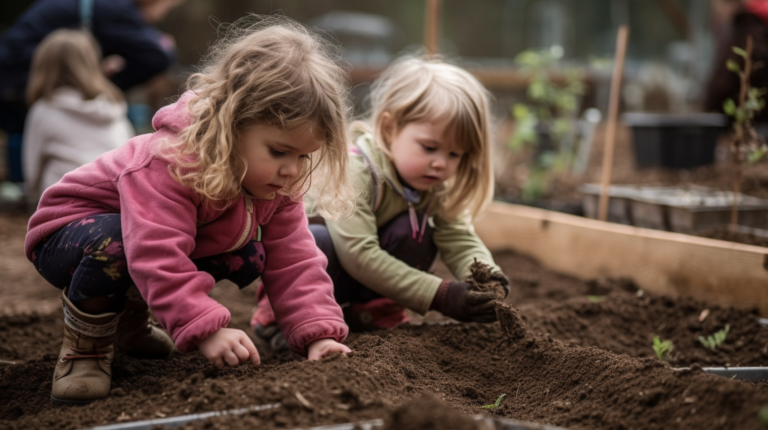
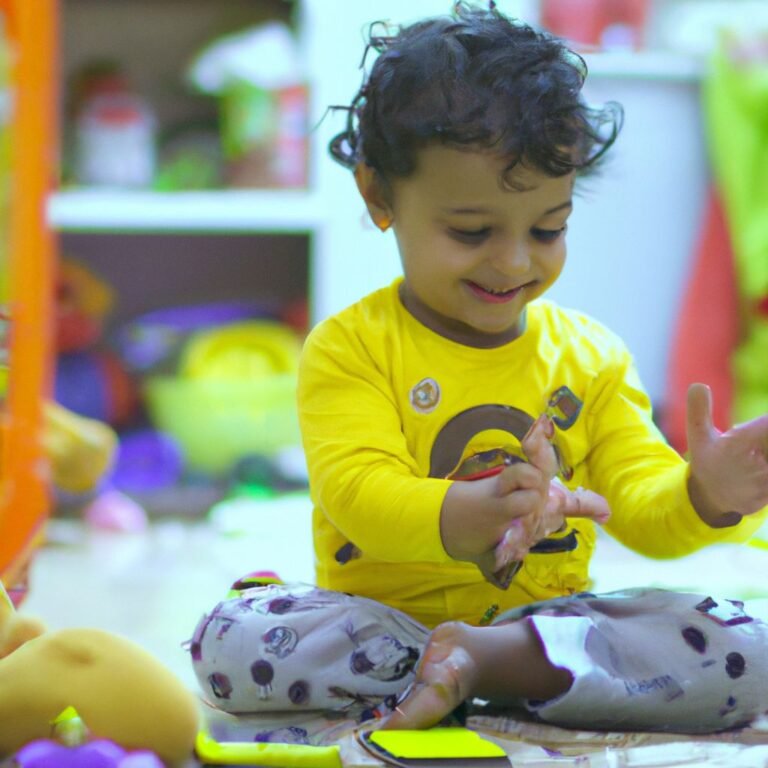
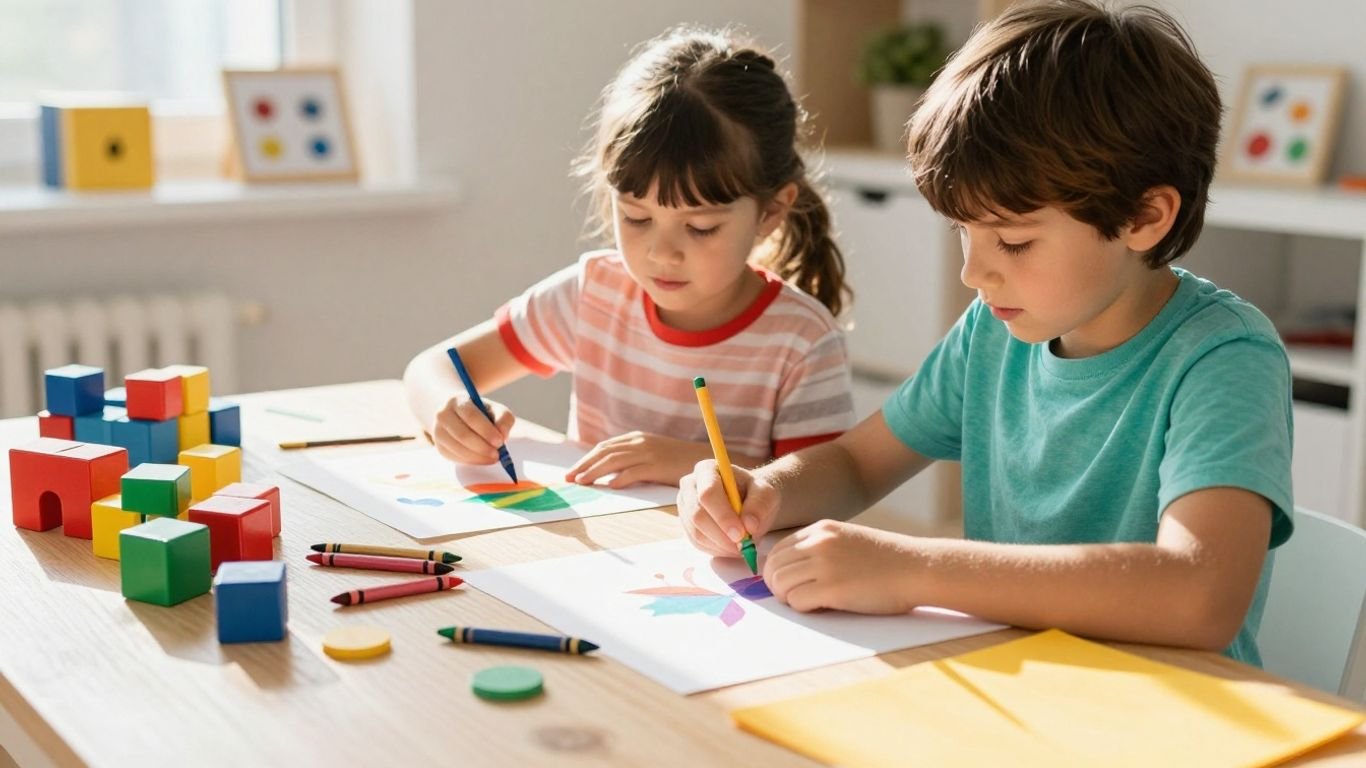
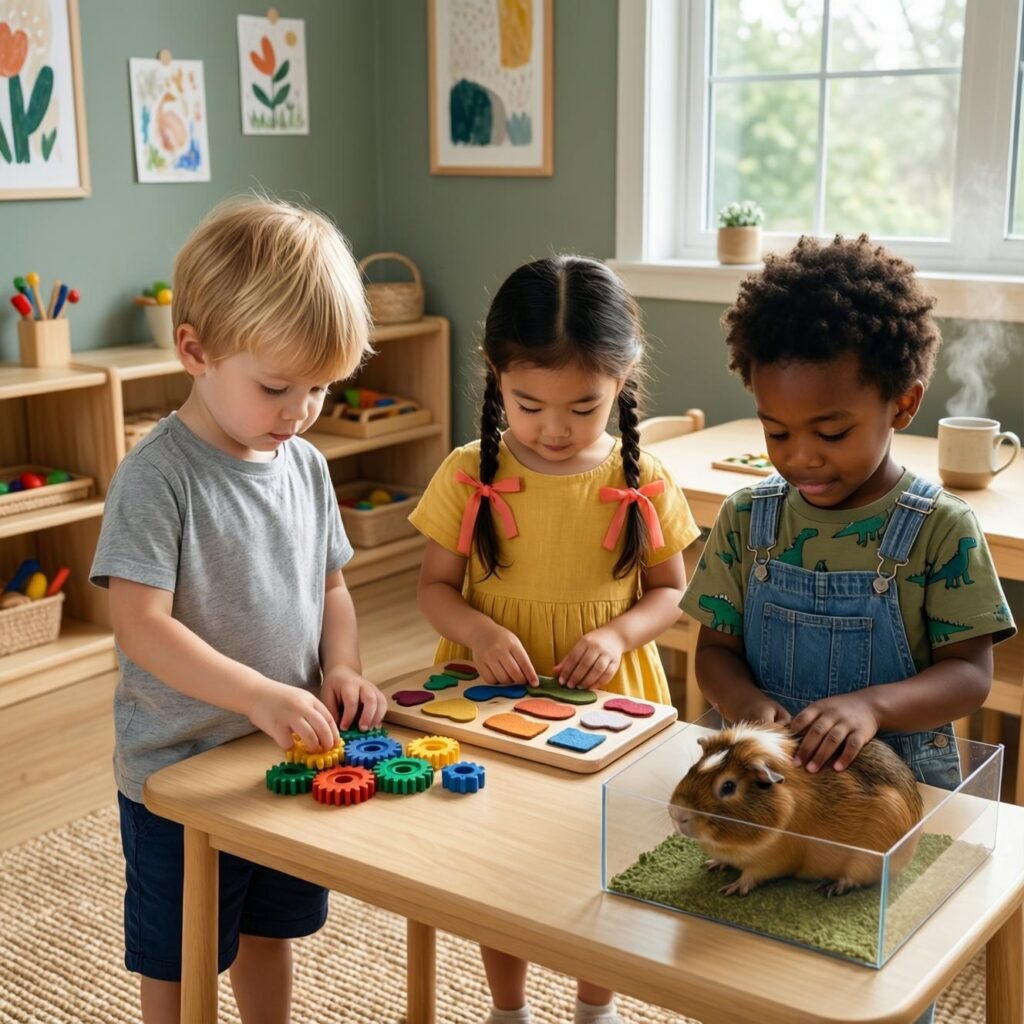
When a child builds a block tower that keeps collapsing, they’re learning physics, patience, and persistence. When they play pretend doctor or run a pretend café, they’re practicing empathy, narrative thinking, and social negotiation. When they argue with a friend over the rules of a made-up game, they’re learning conflict resolution. Play is learning — it’s just learning that doesn’t look like work.
The physical side matters too. Running, climbing, and rolling around aren’t just energy burners — they’re building the large muscle coordination and body confidence that children carry with them forever. The small stuff matters as well: playdough, puzzles, and crayons are building the fine motor control that will make writing possible.
Screen time isn’t a substitute. It can have its place, but it doesn’t offer the sensory richness, social complexity, or physical engagement that real play does.
Your involvement changes the outcome
Research on this is remarkably consistent: when parents are actively involved in their children’s lives and education, children do better. Not slightly better — meaningfully better, across academics, emotional health, and social skills.
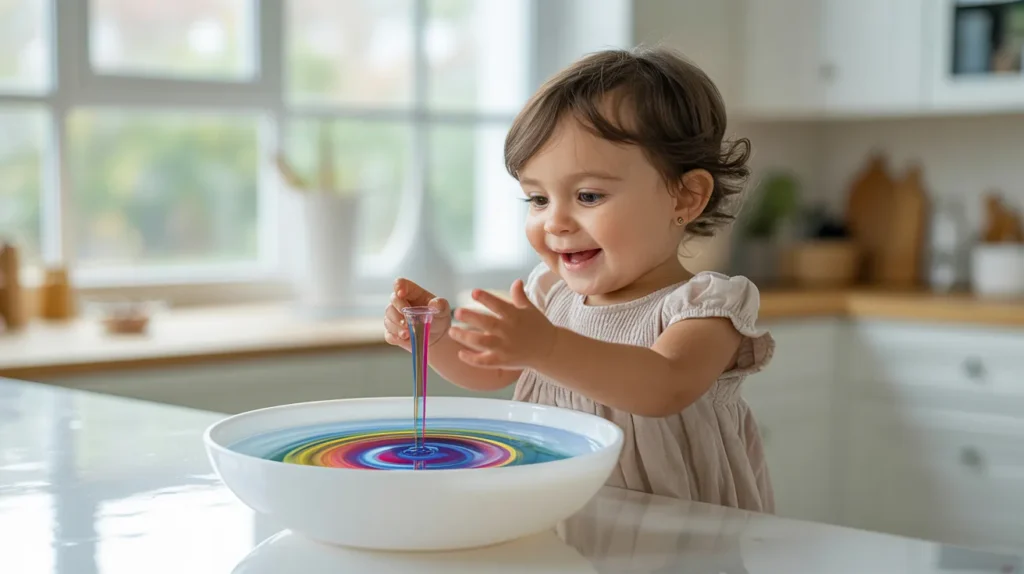
This doesn’t mean hovering or micromanaging homework. It means:
- Asking genuine questions about their day (not just “how was school?”)
- Reading together, even after they can read on their own
- Showing up to school events, not as a chore but as a signal to your child that their world matters to you
- Playing games that make them think, even simple ones
- Letting them see you curious about things
Children whose parents treat learning as something interesting and worthwhile tend to treat it that way themselves. You’re modeling an orientation toward the world, not just supervising activities.
What a good learning environment actually looks like
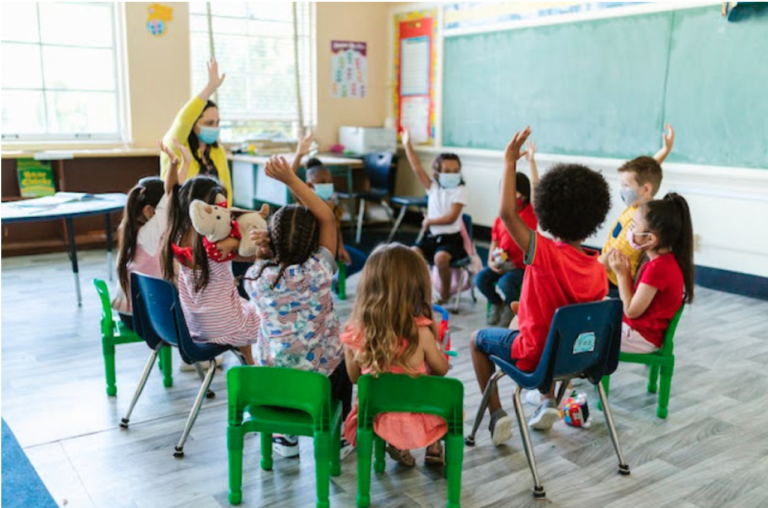
Whether it’s a classroom or a living room, the environment a child learns in shapes how much they’re willing to try.
The non-negotiables: kids need to feel respected, they need to trust the adults around them, and they need to believe that mistakes are survivable. A child who’s afraid of getting things wrong stops taking the intellectual risks that learning requires.
Good teachers — and good parents — give real feedback, not just grades or praise. They let children make choices about their learning when possible. They connect lessons to things that actually matter to the child’s life. And they teach social and emotional skills explicitly, because a child who can’t manage frustration or work through conflict isn’t in a position to absorb much else.
Schools that pay attention to culture and relationships — not just test scores — consistently produce better outcomes. That’s not soft or sentimental. It’s just true.
If something seems off, act early
Developmental timelines aren’t rigid, and kids grow at their own pace. But if something feels off — a child isn’t talking when peers are, is struggling with movement or coordination, or seems to be hitting walls that others aren’t — early action matters enormously.
Early intervention programs exist for exactly this reason. Speech therapists, occupational therapists, and developmental specialists can work with young children in ways that dramatically close gaps — and the younger the child, the more plastic and responsive the brain is to that support.
The key thing families often miss: these programs are for you too. Therapists don’t just work with the child for an hour a week and hand them back. They teach parents how to support their child at home, which multiplies the impact significantly. If your instincts are telling you something needs attention, trust them and find someone to talk to. Getting it looked at early is almost never the wrong call.
Let them do hard things
One of the most counterintuitive parts of supporting a child’s development is knowing when to step back.
When you let a child struggle with something age-appropriate — figuring out how to open a container, navigating a disagreement with a friend, deciding what to wear — you’re giving them something no amount of instruction can provide: the experience of solving something themselves. That experience, repeated over time, builds genuine confidence.
Instead of fixing things, try asking questions. What do you think you could try? What happened when you did that? This isn’t about withholding help — it’s about positioning the child as someone capable of figuring things out, which is one of the most powerful things you can do for them.
The Secret to Teaching Kids to Write? Make It Feel Like Play
Here’s something most people get backwards about teaching children to write: they think the goal is to get kids sitting still with a pencil, forming letters correctly, as soon as possible.
But the children who become confident, enthusiastic writers? They almost never got there through worksheets. They got there through sand trays and story stones and made-up superhero names and labeling their toy bins and writing “menus” for their stuffed animal restaurants.
Play isn’t the warm-up to learning. For young children, it is the learning.
What writing actually looks like before it looks like writing
Before a child writes a single legible letter, they’ve been writing for a long time — they just don’t know it yet.
It starts with scribbles. Then pictures that tell stories. Then shapes that look a little like letters. Then actual letters, wildly misspelled words, phonetic approximations of language that only a parent can decode. Each stage is real progress, and each one needs to be treated that way.
The mistake adults make is jumping straight to “that’s not right.” The better move is recognizing where a child actually is in this journey and meeting them there. A child who scribbles and calls it a story isn’t behind — they’re on step one of a process that, with the right support, leads somewhere remarkable.
Why play is the perfect vehicle for this
When children are playing, their brains are in the best possible state for learning: curious, engaged, emotionally safe. There’s no fear of failure because it’s just play. Which makes it the ideal time to sneak in some writing.
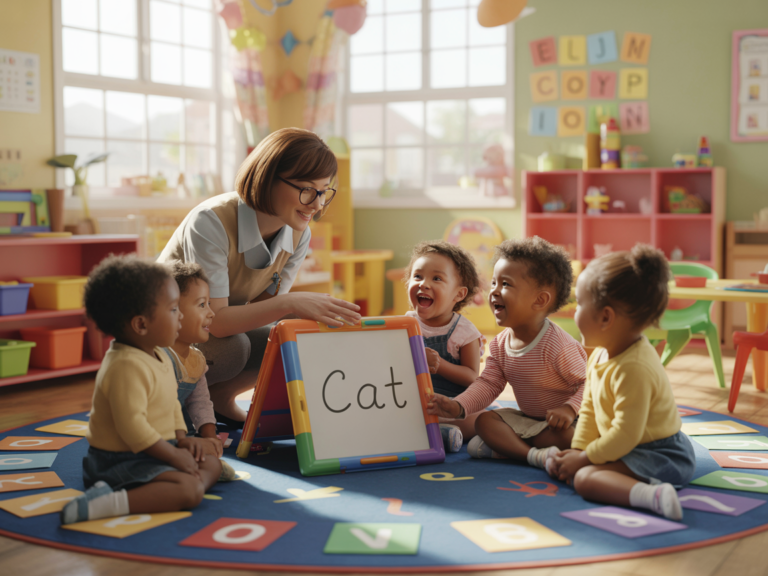
Think about a child playing shop. They grab a scrap of paper and scrawl something to be a receipt. Or they play restaurant and make a “menu.” They’re writing — purposefully, independently, without being asked — because in the context of play, writing does something. It communicates. It makes the game more real.
That’s the insight to hold onto: when children understand that writing is for something, not just an exercise, they want to do it.

Activities that actually work
Let them feel the letters
Before a pencil ever enters the picture, children can learn letter shapes through their hands. Fill a shallow tray with sand, salt, or rice. Let them trace letters with a finger. Write on a foggy mirror after a bath. Form letters out of playdough. Squish them into shaving cream.
This tactile approach does two things. It builds the muscle memory and fine motor skills writing will eventually require. And it removes the pressure — there’s no “wrong” in a sand tray. You just smooth it out and try again.
Story stones and visual prompts
Take a handful of smooth rocks painted with simple images — a sun, a dog, a house, a boat, a dragon. Let a child pull three or four at random and make up a story connecting them. You’ll be amazed what they come up with.
This is brilliant for building narrative thinking — understanding that stories have characters, settings, things that happen, and some kind of ending. Once a child can tell a story, writing it down is the natural next step. Start by asking them to tell you the story while you write it, then gradually invite them to write words or sentences themselves.
Write together
Shared writing — where an adult and child write something together, taking turns holding the pen — is one of the most effective early literacy tools there is. It shows children in real time how spoken words become written words. You ask: “What should we write next? How do you think that word starts?” They answer. You guide.
Label things around the house together. Write a shopping list. Make a birthday card. Leave a note for someone. These aren’t just cute activities — they’re showing children that writing is a real-world tool that does real-world things.
Connect it to what they love
If a child is obsessed with sharks, they should write about sharks. If they’re into space, their first story should have astronauts in it. If they love a particular TV show, ask them what happens next — and then write it down.
The subject doesn’t matter. The engagement does. A child who’s excited about what they’re writing about will push through the hard parts. A child who’s bored won’t.
Once they’re going, let them fly
When a child starts to get comfortable with writing, the temptation is to correct everything — spelling, punctuation, letter formation. Resist this as long as you can.
Free writing, where the rules are temporarily suspended and they can just get ideas on paper, is incredibly powerful. Some children who freeze up when asked to “write correctly” produce astonishing things when you tell them to just write whatever comes. The purple elephant who decides to bake a cake. The talking dog who solves mysteries. The recipe for making a rainbow.
This is where voice develops. Where personality shows up on the page. Fixing the spelling comes later; killing the enthusiasm would be a much bigger mistake.
Some prompts that tend to unlock something:
- Invent a character and describe them — what do they look like, what are they terrible at, what’s their biggest wish?
- Rewrite the ending of a story you know. What if it went differently?
- Write a review of your favorite food, like you’re a very serious food critic.
- Write instructions for something impossible, like how to catch a cloud.
Every child is different — including the way they write
Some kids want to see the letters. Some need to touch them. Some learn better by hearing words out loud and talking through what they want to say before writing it. The activities that work beautifully for one child will bore another.
Mix it up. Alphabet blocks one day, letter songs the next, pipe-cleaner letters after that. Watch for what makes a particular child lean in rather than check out.
For children learning English alongside another language, this matters even more. Let them write in their home language. Provide picture dictionaries. Show them how “thank you” looks in English and in Spanish. Celebrate the fact that they’re navigating two linguistic worlds at once — that’s genuinely impressive — and make sure your approach reflects that their home language is an asset, not an obstacle.
How to celebrate without creating pressure
Progress in early writing is easy to miss if you’re only looking for conventional correctness. So look for different things.
Did they add a letter to their scribble and say it was their name? Enormous deal. Did they try to write the first sound of each word in a sentence? Celebrate it. Did they write a two-word label and stick it on their toy box without being asked? That’s a writer in the making.
What works:
- “You worked so hard on that — I can see it.”
- “I love the story you wrote. Tell me more about this part.”
- Hanging their writing on the wall like it matters. Because it does.
What doesn’t work: focusing on what’s wrong before acknowledging what’s there.
Home and school, working together
The most effective writing development happens when the same messages are coming from both directions. When a teacher is doing interactive writing at school and a parent is writing shopping lists together at home — when both adults treat writing as a normal, useful, interesting thing that people do — children absorb that.
You don’t need a curriculum for this. You need a grocery list. A thank-you note. A silly story told at the kitchen table and written down on the back of an envelope.
These small, ordinary moments accumulate into something significant: a child who sees writing not as a school task but as a way of moving through the world.
That’s the real goal here. Not neat handwriting. Not correct spelling at age five. A child who believes they have something worth saying — and who reaches for a pencil to say it.


Ms. Kerri’s Corner provides a exciting virtual space for preschool learning. Through a variety of engaging activities, she exposes young minds to early math, literacy, science and social-emotional skills in a developmentally appropriate way. Centers for blocks, art, books and music allow children to explore hands-on learning at their own pace. Guided lessons subtly introduce number sense, letter sounds and narrative thinking. Careful observation gives insight into each child’s progress across domains. Viewers are also invited to participate, reinforcing that their ideas are valued. By making learning fun yet purposeful, Ms. Kerri lays the groundwork for future academic success while fostering creativity and imagination. Her program offers preschoolers valuable screen-based learning experiences.