What Kids Teach Us About Real Inclusion
You know, sometimes the simplest lessons come from the smallest people. Kids, with their straightforward ways, often show us what real inclusion looks like without even trying. They haven’t learned all the complicated rules we adults have. They just see another kid and want to play. It makes you think about how we handle diversity and build community, especially in those early years. Let’s look at what preschool social skills and a bit of empathy can teach us about making everyone feel welcome, not just on the playground, but everywhere.
Key Takeaways
- Kids naturally see differences as interesting, not as barriers. They focus on the person, not labels, showing us that true inclusion means looking past categories.
- Early childhood community thrives on simple acts like sharing and taking turns. These preschool social skills are the building blocks for understanding fairness and cooperation.
- Empathy is learned through watching friends. Seeing someone upset and wanting to help is a powerful lesson in compassion and understanding feelings.
- Inclusion isn’t always about grand gestures; it’s about making sure everyone gets a chance. This means looking out for the shy kid and celebrating small wins together.
- Playgrounds are naturally diverse spaces. Kids show us that different backgrounds are just part of the mix, and these differences can actually make things more fun and stronger.
The Unfiltered Truth About Inclusion: Kids Don’t Care About Your Labels
Why ‘Different’ Is Just Another Word for ‘Interesting’
Honestly, have you ever seen a group of kids playing? They’re not poring over HR manuals or debating DEI initiatives. They’re just… playing. And in their world, ‘different’ isn’t a red flag; it’s a curiosity. That kid with the bright pink shoes? Fascinating. The one who talks a little funny? Intriguing. They don’t see a list of characteristics to categorize people into neat little boxes. They see a new person, a potential playmate, a source of novel interaction. It’s like they’ve got this built-in radar for what’s new and exciting, and our adult-imposed labels just get in the way. We spend so much time trying to define and refine what inclusion means, when maybe we should just be watching how children naturally gravitate towards each other, drawn by shared giggles and the sheer joy of discovery. It’s a refreshing perspective, isn’t it? They’re not trying to achieve inclusion; they’re just being inclusive.
The Magic of Seeing People, Not Categories
Think about it. When a child meets someone new, do they ask about their job title or their preferred pronouns right off the bat? Nope. They ask, “What’s your name?” and “Can I play with your truck?” It’s beautifully simple. They’re looking at the whole person, the potential for fun, the shared interest in building a magnificent block tower. We, on the other hand, have become masters of the quick scan, the mental checklist, the immediate pigeonholing. We see a person and our brain immediately starts filing them away based on a thousand external factors. Kids, bless their little hearts, bypass all that noise. They see the sparkle in someone’s eye, the way they move, the sound of their laugh. It’s a pure, unadulterated form of connection that we adults often struggle to recapture. This natural inclination to see individuals is a powerful lesson in how we can approach diversity and anti-bias education in our own lives.
When ‘Fitting In’ Is Overrated
We’re often told that inclusion means making sure everyone feels like they fit in. But kids? They’re not always aiming for a perfect blend. They’re perfectly happy being their own unique selves, and they’re usually okay with others doing the same. The pressure to conform, to smooth out all the interesting edges, that’s largely an adult construct. Children understand that everyone has their own way of doing things, their own pace, their own brand of weirdness. And that’s not just okay; it’s often what makes playtime interesting! Imagine a playground where everyone was exactly the same – how boring would that be? The real magic happens when we allow space for individuality, where being different isn’t something to be overcome, but something to be appreciated. It’s about creating an environment where everyone feels safe to be themselves, not just a watered-down version for group harmony. This is something educators can help with, empowering students to challenge stereotypic expectations.
Preschool Social Skills: The Original Diversity Training
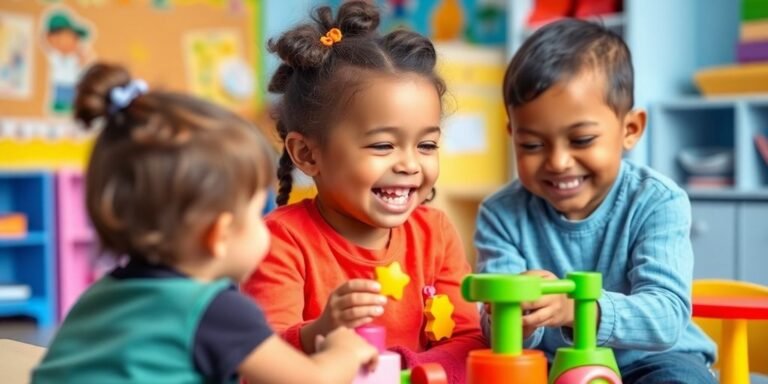
You know, sometimes I think we adults overcomplicate things. We talk about diversity and inclusion like it’s some kind of advanced calculus, but then I watch a bunch of four-year-olds at the playground, and it hits me: they’ve already got it figured out. Preschool is basically the original diversity training, and it’s way more effective than any corporate seminar I’ve ever sat through. They’re not worried about backgrounds or labels; they’re just trying to figure out how to share a bright red shovel.
Why ‘Different’ Is Just Another Word for ‘Interesting’
Think about it. A kid who talks funny? Or one who’s really quiet? Or the one who’s obsessed with dinosaurs and can name every single one? To a preschooler, these aren’t reasons to exclude. They’re just… facts. It’s like, ‘Oh, you like blue? I like blue too!’ or ‘Wow, you can build a tower really high!’ The natural curiosity of children means they often see differences as fascinating, not frightening. They’re not programmed with the baggage we carry. They’re more likely to ask questions and try to understand, which is a pretty solid foundation for any kind of community building, really. It’s about seeing people, not just categories.
The Magic of Seeing People, Not Categories
This is where the real magic happens. In a preschool setting, the focus is on the doing. Are you playing? Are you sharing (or at least attempting to share)? What are you building? The ‘who’ you are, in terms of labels we adults love to slap on people, often takes a backseat to the ‘what’ you’re doing. It’s about the shared experience of building a magnificent block castle or chasing a runaway ball. This is where we can learn so much about fostering empathy and friendship skills. They’re not thinking about your job title or your zip code; they’re thinking about whether you’re going to help them finish the sandcastle before the tide comes in.
When ‘Fitting In’ Is Overrated
Honestly, the pressure to ‘fit in’ can be a real creativity killer. Kids, bless their hearts, are often too busy being themselves to worry about conforming. They’ll wear mismatched socks with pride, invent elaborate games that make no sense to anyone else, and generally just do their own thing. And you know what? It’s brilliant. This is where we see the power of peer models in action, where kids learn from each other’s unique approaches. They don’t need to be carbon copies of each other to play together. They just need a common ground, like a shared interest in a particularly bouncy ball or the universal desire to be the one who gets to push the swing. It’s a beautiful, messy, and wonderfully inclusive dance.
Empathy: The Secret Sauce of Early Childhood Community
The Tears of a Friend: A Masterclass in Compassion
Kids, bless their little hearts, are often the first to notice when someone’s feeling down. You know, the way they’ll stop mid-game to ask, “Are you okay?” It’s not some learned behavior from a parenting book; it’s just… there. They see a friend crying over a dropped ice cream cone, and suddenly, their own fun seems less important. This raw, immediate response to another’s distress is the bedrock of genuine connection. It’s like they have a built-in radar for sadness, and their default setting is to try and fix it, even if all they can offer is a wobbly hug or a shared crayon. It’s a beautiful, messy thing to witness, this unfiltered care. We could all learn a thing or two about showing up for each other from these tiny humans. Praising these moments helps them understand and repeat these behaviors, building a stronger sense of community. Focus on acknowledging and celebrating when they show understanding and care for others’ feelings.
Understanding Feelings: It’s Not Always About You
This is where things get interesting, and frankly, a bit challenging even for adults. Little kids are still figuring out that the world doesn’t revolve solely around their immediate wants and needs. But when they start to grasp that their actions have an impact on others’ emotions – that their grabbing the toy might make someone else sad – that’s a huge leap. It’s the beginning of understanding perspective. They might not articulate it perfectly, saying things like, “He’s mad because you took his truck,” but the recognition is there. It’s a slow burn, this whole empathy thing, and it requires a lot of gentle guidance. We often forget that learning to consider others’ feelings is a skill, not an innate talent that just appears fully formed. It’s a process, and sometimes it looks like a toddler having a meltdown because their sibling is upset, and they can’t quite connect the dots.
Building Bridges, One Hug at a Time
Think about the playground. It’s a microcosm of society, really. You see kids sharing snacks, helping someone up after a tumble, or even just sitting quietly with a friend who’s feeling left out. These aren’t grand gestures; they’re small, everyday acts of kindness that weave the social fabric together. It’s the quiet kid offering their favorite dinosaur to the new one who looks lost, or the boisterous group making room for someone hesitant to join in. These moments, often overlooked by us busy adults, are the building blocks of a truly inclusive environment. They show us that inclusion isn’t about elaborate programs; it’s about the simple, consistent practice of looking out for one another. It’s about recognizing that everyone, no matter how different, deserves a bit of kindness and connection. Praising their empathetic actions helps them understand and repeat these behaviors.
When Inclusion Means Everyone Gets a Turn on the Swing
The Tyranny of the ‘First Come, First Served’ Rule
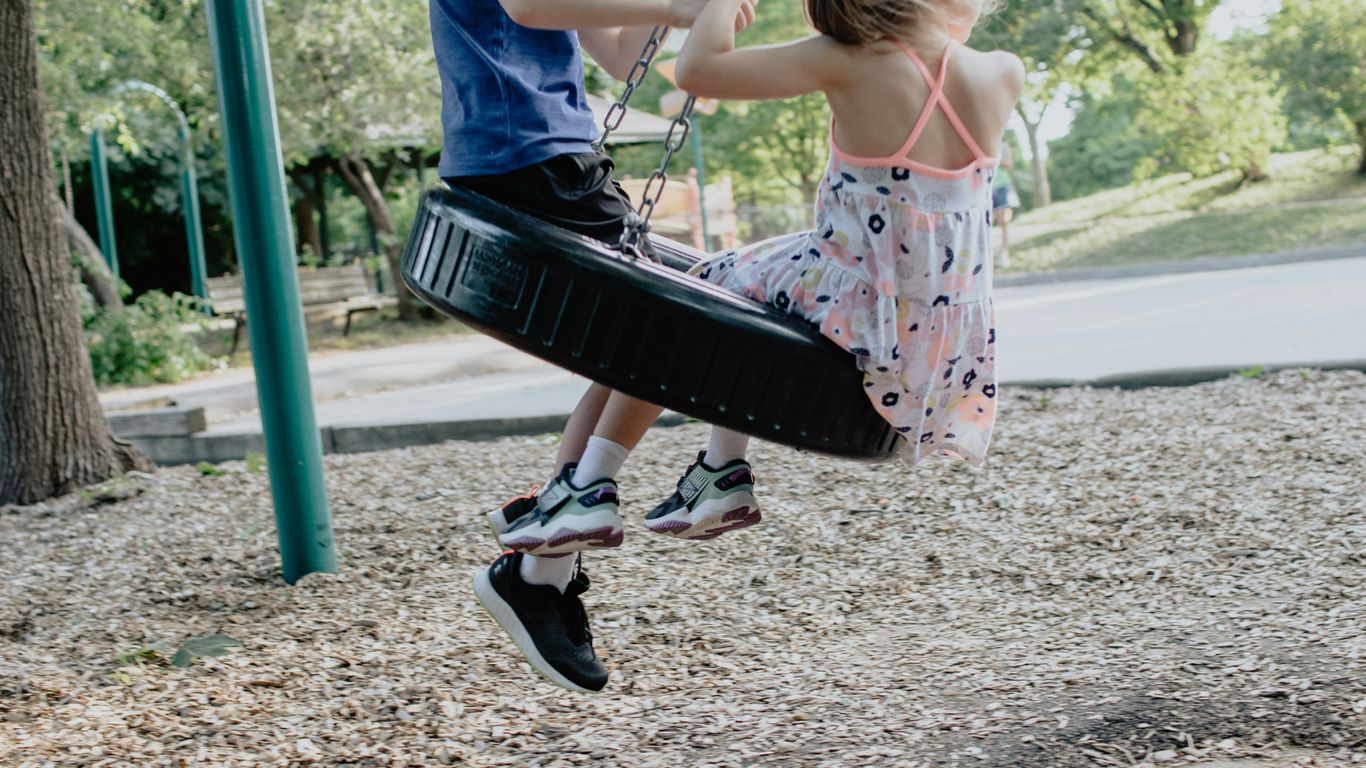
Okay, let’s talk about the playground. It’s basically a miniature society, right? And sometimes, the unspoken rule of ‘first come, first served’ can feel like the law of the land. You know the drill: the swing is occupied, and the next kid in line just has to wait. For adults, this is usually fine. We get it. We can distract ourselves, check our phones, or just, you know, wait. But for a little kid whose entire world revolves around that one wobbly swing, it can feel like an eternity. It’s not about being unfair; it’s about a fundamental lack of understanding of time and patience when you’re knee-high to a grasshopper. We need to remember that for them, the world operates on a much more immediate timeline. Sometimes, the most inclusive act is simply pausing the ‘me first’ mentality.
Making Space for the Shy Kid
Think about the kid who hovers at the edge of the group, clutching a worn-out teddy bear. They aren’t necessarily unhappy, but the boisterous energy of the main play area can be a bit much. They might want to join, but the thought of barging into a game already in progress is terrifying. This is where we, the grown-ups, can be the quiet facilitators. It’s not about forcing them into the spotlight, but about creating little entry points. Maybe it’s suggesting a two-person game that the shy kid can join without feeling overwhelmed, or simply acknowledging their presence with a smile and a nod. It’s about recognizing that not everyone thrives in the center of the action, and that’s perfectly okay. Creating spaces where everyone feels seen, even if they aren’t the loudest, is a big deal. It’s about building a sense of community where every child can play and belong, fostering a sense of shared enjoyment e.g. inclusive playgrounds.
Celebrating Every Small Victory Together
Did the kid who usually sits alone actually share a crayon? Did the two children who were arguing over a toy figure out a compromise all by themselves? These aren’t just minor events; they are massive wins for inclusion. We tend to focus on the big, flashy achievements, but the real magic happens in the small, everyday moments. Acknowledging these little triumphs, even with a simple “Wow, that was really kind of you!” or “Great job working that out!”, reinforces positive behavior and shows all the children that cooperation and kindness are noticed and valued. It’s about building bridges, one hug at a time, and recognizing that every step towards understanding and sharing is a victory worth celebrating. It’s about supporting children with autism by fostering social play, where they can interact, share equipment, and problem-solve as a team like on inclusive school playgrounds.
The playground is a microcosm of life. The rules we learn there, the ways we interact, the patience we develop – it all sticks with us. Making sure those early lessons are about sharing, empathy, and making space for everyone isn’t just good for playtime; it’s good for building better humans.
Diversity Is Just How the Playground Rolls
Different Backgrounds, Same Desire to Play
Walk onto any playground, and you’ll see it. Kids aren’t checking résumés or asking for proof of citizenship before they decide if someone looks fun. They’re just… playing. A kid who speaks three languages might be chasing a ball with a kid who’s only ever known one. Another might be sharing a snack with someone whose family eats completely different foods. It’s a beautiful, messy, unfiltered snapshot of humanity. They don’t see ‘different backgrounds’; they see another potential playmate. The desire to connect, to share a laugh, to conquer the monkey bars together – that’s the universal language. It’s amazing how quickly they can find common ground, often faster than we adults can even process the perceived differences. It’s a reminder that our own hang-ups about diversity are often just that – our hang-ups, not theirs. They’re just trying to figure out who wants to play tag.
The Beauty of a Multilingual ‘Hello!’
Ever heard a playground erupt in a chorus of ‘hello’ in about five different languages? It’s pure magic. Kids are naturally curious, and when they encounter someone who communicates differently, it’s not a barrier; it’s an invitation to learn. They might point, gesture, or try out a new word they just heard. This isn’t about forced integration; it’s about organic connection. It’s about realizing that communication is more than just words. It’s about shared smiles, enthusiastic nods, and the universal language of a game of chase. These moments are the building blocks of a truly inclusive world, where differences aren’t just tolerated but celebrated. It’s like finding a secret code that everyone wants to crack. We could all learn a thing or two about embracing new languages from these little humans.
When Differences Become Strengths
Think about it: a child who’s a bit quieter might be an incredible observer, noticing details others miss. A child who’s physically smaller might be surprisingly agile and quick. A child who’s always asking ‘why?’ might be the one who figures out how to build the most epic fort. On the playground, these aren’t seen as deficits; they’re just part of the unique toolkit each child brings. We adults tend to categorize and label, often boxing people in. Kids, on the other hand, are more likely to see how those unique traits can actually help the group. Maybe the quiet observer is the best lookout during hide-and-seek, or the ‘why’ kid is the one who solves the puzzle of getting the kite unstuck from the tree. It’s a constant, low-stakes experiment in collaboration, proving that variety isn’t just the spice of life; it’s the engine that makes things happen. Designing spaces that allow these strengths to shine is key, and there are some fantastic ideas for inclusive play spaces out there.
We often complicate inclusion by overthinking it. Kids just see other kids. They see potential for fun, for shared experiences, and for learning. Their default setting is acceptance, and it’s up to us to keep it that way.
The Grown-Up Guide to Kid-Level Inclusion
Stop Overthinking, Start Observing
Look, we adults have a tendency to complicate things, don’t we? We get bogged down in policies, jargon, and the sheer terror of saying the ‘wrong’ thing. Kids, bless their little hearts, just do. They see a new face, a different way of playing, or a kid struggling to join in, and they react. Sometimes it’s awkward, sure, but it’s usually honest. Our job is to get back to that honest place. Instead of crafting elaborate inclusion plans that would make a project manager weep, try just watching. See who’s on the fringe, who’s dominating, and who’s just quietly observing. What are the actual dynamics playing out, not the ones you wish were playing out? It’s like trying to fix a leaky faucet; you can read all the manuals, but sometimes you just need to look at the pipes to see where the water’s actually coming from. We can learn a lot from practical strategies for inclusive classrooms by simply paying attention to the real-time interactions.
Model the Behavior You Want to See
Kids are little sponges, soaking up everything we do, even when we think they aren’t paying attention. If you want them to be kind, curious, and welcoming, you’ve got to be that person. It’s not about grand speeches; it’s about the everyday stuff. It’s about how you greet the new neighbor, how you talk about people who are different from you, and how you handle disagreements. Are you the one who rolls your eyes, or are you the one who asks a question? Are you the one who makes space, or the one who guards your territory? Your actions are their curriculum. Think about it: if you’re always rushing, always stressed, and always focused on your own bubble, what do you think your kids are learning? They’re learning that’s how the world works. But if they see you genuinely engaging with people from all walks of life, asking about their experiences, and showing real interest, that’s the lesson that sticks. It’s about showing up with an open heart and mind, just like you’d want them to.
Let Them Figure It Out (Mostly)
This one’s tough for us helicopter parents, I know. We want to swoop in and fix everything, smooth over every bump, and prevent any hint of discomfort. But here’s the thing: kids are remarkably resilient and capable of figuring out social puzzles if we give them a little breathing room. When two kids are arguing over a toy, resist the urge to immediately mediate. Instead, try a gentle prompt: “How can you both play with it?” or “What’s another game you could play together?” They might bicker, they might get frustrated, but they’ll also learn negotiation, compromise, and problem-solving skills that no adult lecture can replicate. It’s in those messy, imperfect moments that real social growth happens. We don’t need to engineer every interaction; sometimes, the best thing we can do is step back and trust their ability to learn, much like how adults can create inclusive learning environments by allowing space for exploration and discovery. It’s about letting them build their own social muscles, even if it means a few scraped knees along the way.

We often try to shield children from the complexities of social interaction, but in doing so, we rob them of the opportunity to develop their own social intelligence. Allowing them to navigate minor conflicts and differences, with gentle guidance, builds a stronger foundation for future relationships than constant adult intervention ever could.
Making sure everyone feels included is super important, and it’s not as hard as you might think! Our “Grown-Up Guide to Kid-Level Inclusion” breaks down how to make sure all kids feel welcome and valued. Ready to learn simple ways to boost inclusion in your home or classroom? Visit our website for easy tips and ideas!
Frequently Asked Questions
Why do kids seem naturally good at including others?
Kids often see people for who they are, not for labels or differences. They’re curious about what makes someone unique, which naturally leads them to include everyone. They don’t get caught up in what makes someone ‘different’ in a negative way; instead, they see it as interesting.
How can sharing toys teach us about inclusion?
When kids share toys, they’re learning how to share resources. This is like a small version of how we share things in the real world. It teaches them that everyone can have a turn and that playing together is more fun than playing alone.
What’s the big deal about kids learning to say ‘sorry’?
Learning to apologize and mean it is a huge part of getting along. It shows they understand they might have hurt someone’s feelings and want to fix it. This ability to say sorry is key to making up after disagreements and keeping friendships strong.
How do kids handle disagreements on the playground?
Kids learn to negotiate playtime by taking turns or finding ways for everyone to join in. They might not always get their way, but they learn to compromise and understand that everyone deserves a chance to play, even if it means waiting a bit.
Can empathy really be learned from watching kids?
Absolutely! When a child sees a friend crying, they often feel sad too and want to help. This shows a natural ability to connect with others’ feelings. It’s a powerful reminder that understanding and caring about how others feel is what builds a strong community.
What’s the best way for adults to be more inclusive like kids?
The simplest way is to stop overthinking and just watch how kids interact. Try to be like them by focusing on people, not labels. Show them what good behavior looks like by being inclusive yourself, and let kids lead the way sometimes – they often know how to figure things out naturally.


Ms. Kerri’s Corner provides a exciting virtual space for preschool learning. Through a variety of engaging activities, she exposes young minds to early math, literacy, science and social-emotional skills in a developmentally appropriate way. Centers for blocks, art, books and music allow children to explore hands-on learning at their own pace. Guided lessons subtly introduce number sense, letter sounds and narrative thinking. Careful observation gives insight into each child’s progress across domains. Viewers are also invited to participate, reinforcing that their ideas are valued. By making learning fun yet purposeful, Ms. Kerri lays the groundwork for future academic success while fostering creativity and imagination. Her program offers preschoolers valuable screen-based learning experiences.