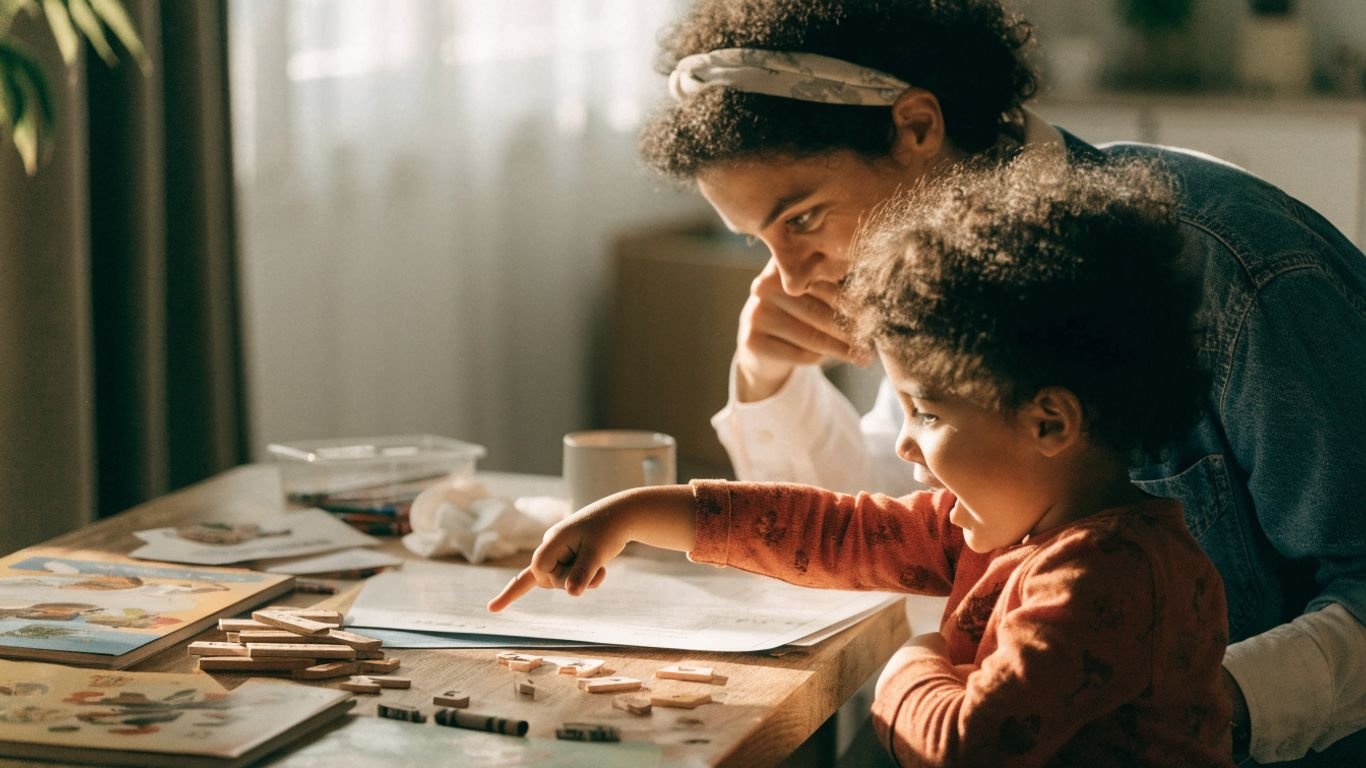
Phonics activities for parents and young children: A practical guide to learning at home
Key Takeaways
Phonics practice can happen in small, ordinary moments at home. A few playful activities are often enough to help a child notice sounds, connect them with letters, and build confidence at their own pace.
- Talk about the sounds you hear in familiar words.
- Introduce a small number of letters and their common sounds at a time.
- Use simple games, household objects, songs, and movement to make practice playful.
- Bring sound and letter noticing into read-alouds without interrupting the story too often.
- Keep practice short, follow your child’s interest, and adjust when they need an easier or harder step.
Start with the sounds in everyday life
Children can begin noticing how words sound long before they read them on a page. A familiar walk, a favorite snack, or the clatter of toys can offer a reason to listen closely and talk about language. These small exchanges are not tests; they are chances to make sounds worth noticing.
Help your child notice sounds in words
Choose words your child already knows, such as their name, a pet’s name, or a favorite food. Say one slowly and invite them to listen for a sound at the beginning or end. If they are not sure, simply model it: “Mmm, moon starts with /m/.” There is no need to ask question after question; one clear example can be enough for the moment.
Play listening and sound-matching games
Listening games give children a chance to compare sounds before they need to connect sounds with written letters. You might make a quiet sound behind your back and ask your child to guess what made it, or take turns finding things that sound alike. This playful preschool practice can stay simple: the point is to listen, notice, and enjoy trying an idea together.
A few quick prompts can help you choose a game that fits what is happening around you:
| Moment | Try asking | What your child can notice |
|---|---|---|
| Walking outside | “What do you hear?” | Differences between nearby sounds |
| Putting toys away | “Which two sounds alike?” | Similarities in spoken words |
| Sharing a snack | “What sound starts apple?” | A word’s first sound |
| Getting ready for bed | “Can you think of a word that rhymes with moon?” | End sounds in familiar words |
Keep the conversation light, and accept an answer that is close. If a prompt feels difficult, give an example and move on; listening together still counts as useful practice.
Explore rhymes, syllables, and beginning sounds
Rhymes and syllables make word sounds easier to play with because children can hear a pattern or tap out a word’s parts. Try a familiar rhyme, clap the beats in a name, or stretch the first sound in a word like “sun.” A child might enjoy one kind of sound play more than another, and that preference can guide what you try next.
Keep activities playful and age-appropriate
Young children do not need to sit still for a formal lesson to learn from words. Let a game end while it is still fun, and avoid turning every conversation into a chance to quiz. Curiosity matters more than getting it right in the first try; when you model a sound warmly, your child can listen and join in when ready.
Build letter-sound connections
After a child has opportunities to listen to words, you can begin connecting some of those sounds with letters. Keep the first steps modest: a few familiar letters are easier to revisit than a whole alphabet introduced at once. Let your child see, say, hear, and handle letters in different ways, without expecting instant recall.
Introduce a few letters at a time
Start with letters that matter to your child, perhaps the first letter in their name or one they often see in a favorite book. Show the letter in uppercase and lowercase, then return to it on another day. Revisiting a small set gives a child time to recognize each shape and sound without making practice feel like a race.
Pair letter names with their most common sounds
A letter has a name, and it can also represent a sound in a word. You can say both simply: “This is M. It says /m/ in milk.” Use a clear sound rather than adding an extra vowel after it, and give your child a moment to listen before inviting them to repeat. One familiar example is plenty; some letters have more than one sound, so there is no need to explain every possibility right away.
Use household objects to find sound matches
An object hunt gives the letter-sound connection something concrete to attach to. Pick a letter sound your child has met already, then look for a few objects whose names begin with it. Before you begin, make the sound aloud and explain that you are listening for the first sound in each object’s name.
You could look around the room for items like these, choosing only what is easy to find:
- A mug for /m/
- A sock for /s/
- A book for /b/
- A cup for /k/
When you find an item, say its name naturally and repeat the opening sound if it helps your child hear the match. Some objects may have names your child uses differently, and that is fine; use the word your family actually says and keep the game moving.
Practice forming letters with hands-on materials
Children can explore letter shapes with a finger in flour, a finger on a foggy window, or a line of play dough. As your child forms a letter, name it and, when useful, repeat its familiar sound. These materials let little hands make big movements before a child is expected to manage a pencil precisely. Stop when interest fades; a few minutes of relaxed exploration is enough.
Try simple phonics games at home
Games can bring a little structure to practice without making the activity feel like a lesson. Choose one simple idea, use words and objects your child knows, and let them take a turn being the leader. If a game falls flat, that is useful information about what your child wants to do right now, not a reason to push harder.
Play I spy with beginning sounds
Instead of giving a color clue, try a sound clue: “I spy something that starts with /t/.” Your child can look around and guess, and then you can swap roles. If the sound is hard to identify, offer a familiar example such as “/t/ like table” before giving another clue. Keep the search area small so the game stays manageable.
Make a sound-and-picture matching game
Draw a few quick pictures or use pictures from familiar materials, then say the name of each one slowly. Invite your child to pair two pictures whose names start with the same sound, or match a picture to a letter they already know. The goal is to hear a match, not to make polished cards. A small number of pictures keeps the choices clear.

Sort objects by their starting sounds
Sorting works well when children can pick up and move the objects themselves. Choose two sounds your child has practiced, gather a few easy-to-name objects, and make a place for each group. Show how to say an object’s name and listen to the beginning before your child takes a turn. A little modeling can help them understand what the game asks.
Let your child sort just a handful of objects, then look at the groups together. If one item is confusing, say its name and decide where it belongs together rather than treating it as a mistake. You can try a different pair of sounds another day, once the first game feels familiar.
Use songs and movement to reinforce sounds
A song can make it easier to repeat a sound without repeating the same instruction. Try clapping the beats in a familiar name, stepping once for each syllable, or making a movement each time you hear a chosen sound in a short rhyme. Children who enjoy moving may stay engaged longer when their bodies have a part in the game. Keep the rules simple enough that you can sing and play without preparing special materials.
Connect phonics practice to books
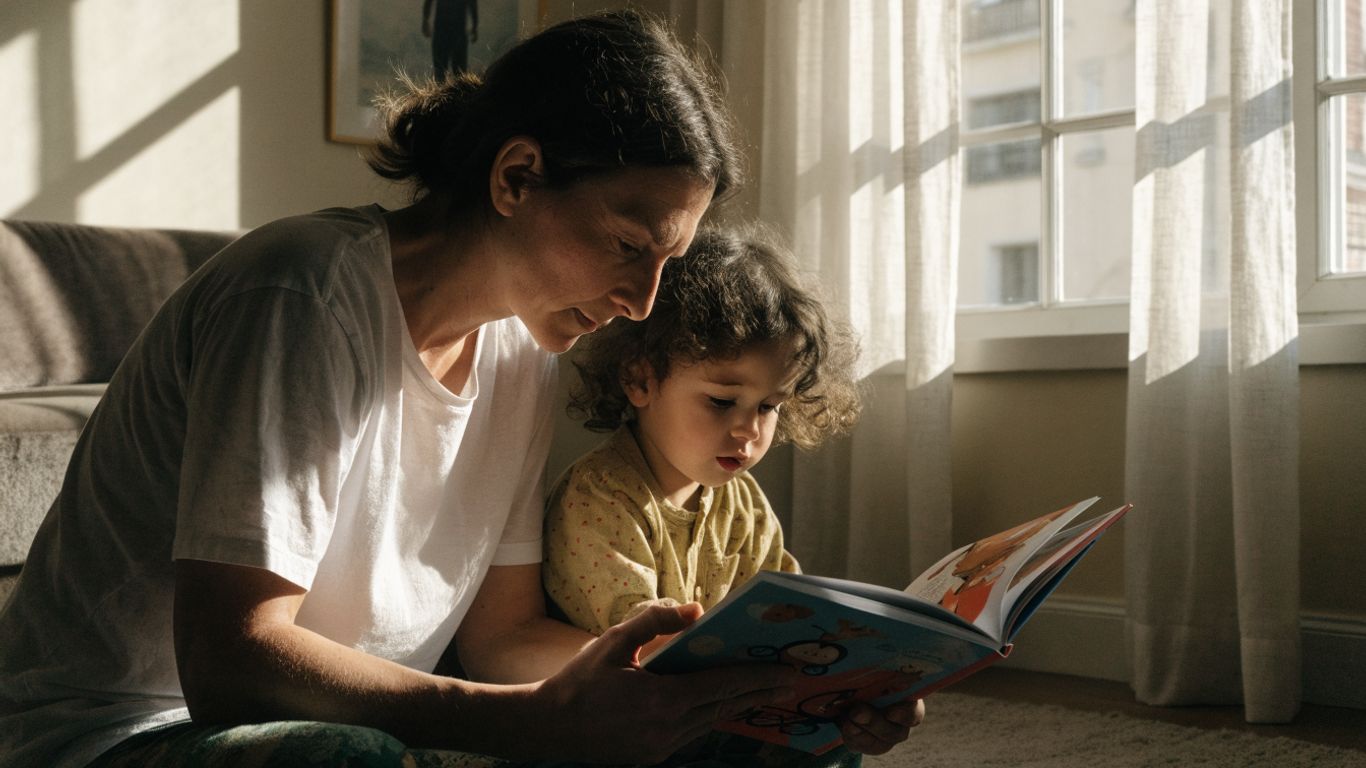
Books give children a natural place to hear words and notice the letters that stand for sounds. The story still comes first, so there is no need to stop on every page to point things out. A brief comment or question at a good moment can make a sound pattern stand out while keeping read-aloud time enjoyable.
Choose books with repetition and rhyme
Look for a book your child enjoys, especially one that repeats a phrase or plays with rhyming words. Repetition lets a child join in when they know what comes next, and rhyme offers a reason to listen to the ends of words. You do not need a book designed as a phonics lesson. A well-loved story can provide plenty of chances to hear and enjoy language.
Pause to notice letters and sounds
When a familiar letter appears, point it out briefly and connect it with a word on the page: “There’s M in moon.” Then return to reading. A child may want to talk about the picture instead, and that is a perfectly good direction for the conversation. A few meaningful pauses tend to fit a read-aloud better than a long string of questions.
Invite your child to predict a rhyming word
If the book has a predictable rhyme, leave a small pause before the last word and invite your child to guess what might come next. They may offer a word that rhymes but is not the one in the story; notice the sound match and then read the printed line. This keeps the focus on listening and prediction, rather than making a correct guess the price of joining in.
Follow your child’s interest during read-alouds
Your child may want to linger over one illustration, repeat a funny line, or skip to a favorite page. Follow that interest when you can. A question about a character or a picture is still a useful conversation, and you can return to sounds when a word naturally catches your attention. Shared reading does not have to follow a script to support early literacy.
Support early blending and reading
When a child begins to recognize some letter sounds, you can gently show how the sounds come together in a short word. Keep the examples familiar and choose simple words that use sounds your child has already encountered. Some children want to try blending soon; others benefit from more time with letters and listening games first. Either path is normal.
Model how to stretch and blend simple words
Choose a short word such as “sun” and say each sound slowly: /s/, /u/, /n/. Then bring the sounds together at a natural pace: “sun.” You are demonstrating how a word can be sounded out, not asking your child to perform on cue. If they want to join, let them; if not, model it once and continue with the activity.
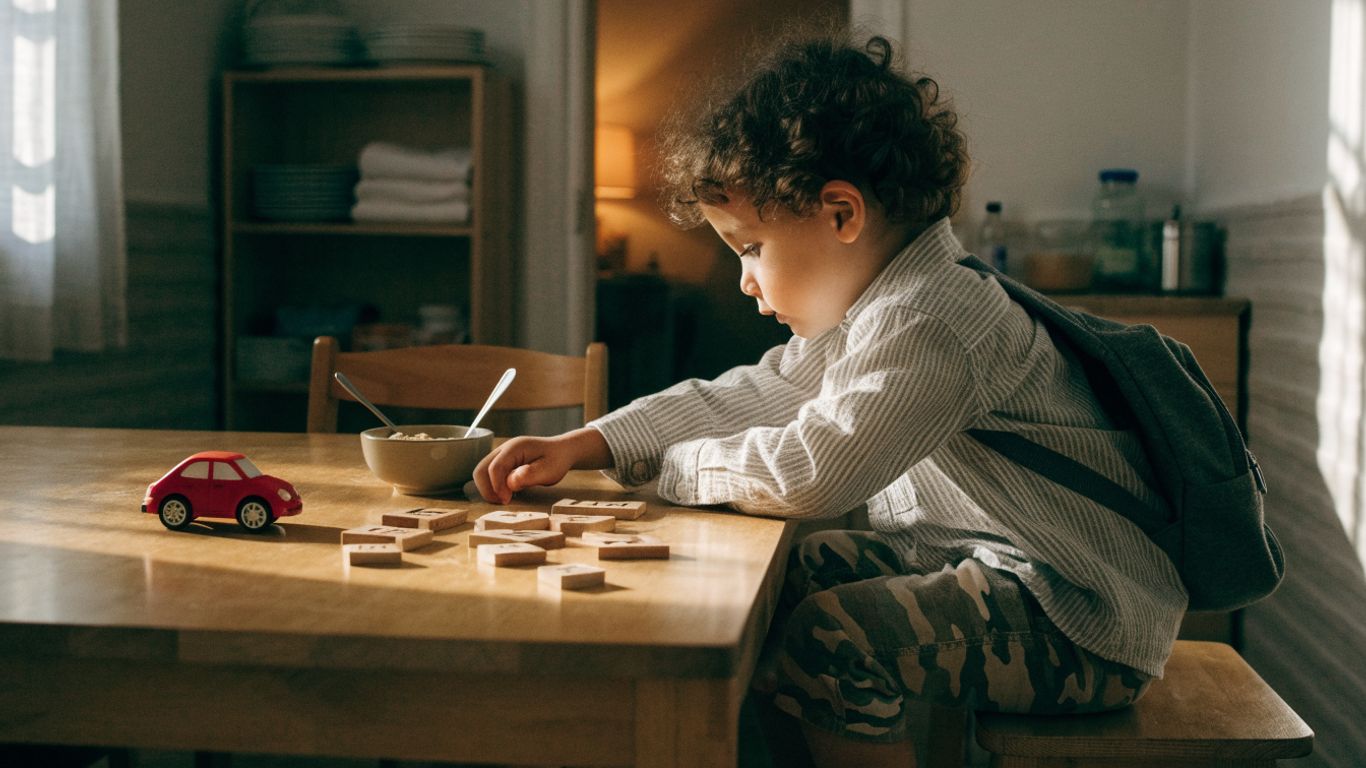
Use letter tiles to build short words
Letter tiles or cards can make the parts of a word easy to move and see. Build one simple word with sounds your child knows, point to each letter as you say its sound, then slide your finger under the letters as you blend them. Change one letter at a time only when your child is comfortable with the first word. Keeping the materials limited can make the process easier to follow.
Encourage attempts without pressuring for accuracy
A child may say a word that starts with the right sound but does not match the letters, or may guess from a picture. Respond calmly: say the word together, draw attention to one sound, and offer another chance if your child seems interested. Avoid asking them to repeat a word again and again after they have moved on. Feeling safe to try matters more than completing a set number of examples.
Know when your child is ready for the next step
Look for signs of interest, not a perfect score: your child may notice a familiar letter, ask what sound a word starts with, or want to build another short word. If the activity brings frustration, return to an easier game or simply read together for a while. Children develop at different paces, and a pause can be the right next step. For more ideas about practicing letter sounds and early reading at home, see this beginning-reader phonics guide.
Make practice fit your family’s routine
A useful routine is one you can actually keep, not an extra block of work that adds pressure to a busy day. Phonics activities for parents and young children can fit into a brief moment with a book, a toy, or a conversation you were already having. Some days you may have more energy than others; the practice can change with you.
Keep sessions short and consistent
Try a few minutes of sound play at a time, and stop before your child gets worn out. Returning to a small activity on different days can help it feel familiar without needing a long session. You do not need to track every sound or letter your child knows. Notice what feels easy, what sparks interest, and what might be worth repeating.
Adapt activities for different ages and attention spans
A toddler may enjoy hearing a rhyme or tapping along to a song, while an older preschooler may want to match letters with objects. Those are examples, not rules: children’s interests and skills vary. For a child who has trouble staying with one game, make the activity shorter or add a movement. For a child who wants more, offer another turn rather than adding a complicated new rule.
Use everyday moments for quick practice
Ordinary routines provide plenty of opportunities to notice words without setting up a separate activity. A short exchange is enough; you can choose one moment that already fits your day:
- At breakfast, notice the first sound in a familiar food.
- While walking, listen for words that start alike.
- During tidy-up, name a few objects and stretch their first sounds.
- At story time, repeat a rhyming line your child enjoys.
These small invitations can blend into a routine and end as quickly as they began. If your child is busy or uninterested, leave it for another time; practice should not turn every part of the day into a lesson.
Adjust the challenge when an activity feels too easy or hard
If your child answers quickly and wants another turn, try a new familiar word or let them choose the next letter. If they seem unsure, simplify the game: give two choices, model the answer, or return to a sound they already know. Keep an eye on how your child responds, not just whether they get the answer. The right level is one that leaves room to participate without making the activity feel like a struggle.
Conclusion
Phonics practice at home does not need to be elaborate or perfect. A sound noticed on a walk, a letter explored with play dough, or a favorite rhyming book can all become a small opportunity to learn together. Keep it short, follow your child’s lead, and return to the activities that make language fun to share.
Frequently Asked Questions
What is phonics?
Phonics is the connection between letters and the sounds they represent in words. Children can explore that connection by listening to sounds, recognizing letters, and, as they become ready, blending sounds to read simple words.
When should I start phonics activities with my child?
You can begin with sound play whenever your child enjoys it, including rhymes, songs, and noticing familiar words. Keep activities suited to your child’s interest and avoid expecting a specific skill by a certain age.
How long should phonics practice last at home?
A few minutes can be enough, especially for a young child. End while the activity is still comfortable, and return to it another day if it remains enjoyable.
What if my child does not want to play a phonics game?
Let the game go for now and try again another time, or choose a different activity such as reading a favorite book together. A child does not need to participate in every suggested activity to keep learning.
Should I correct my child when they make a sound mistake?
You can model the sound or word gently, then continue without making the moment feel like a test. If your child wants another try, invite one; if not, move on.
Do I need special materials for phonics activities?
No. Books, toys, household objects, songs, and simple letter shapes made with play dough or a finger in flour can all support playful practice. Choose materials you already have when possible.
How can I tell whether an activity is too easy or too hard?
Notice whether your child seems interested, comfortable, and willing to try. Add a small challenge when they want more, or simplify and model the activity when they seem unsure or frustrated.

Ms. Kerri’s Corner provides a exciting virtual space for preschool learning. Through a variety of engaging activities, she exposes young minds to early math, literacy, science and social-emotional skills in a developmentally appropriate way. Centers for blocks, art, books and music allow children to explore hands-on learning at their own pace. Guided lessons subtly introduce number sense, letter sounds and narrative thinking. Careful observation gives insight into each child’s progress across domains. Viewers are also invited to participate, reinforcing that their ideas are valued. By making learning fun yet purposeful, Ms. Kerri lays the groundwork for future academic success while fostering creativity and imagination. Her program offers preschoolers valuable screen-based learning experiences.