How to Help a Young Child Build Early Reading Skills: A Practical Guide
Key Takeaways
Early reading skills grow through ordinary, shared moments—not through pressure or perfect routines. Small, enjoyable experiences with books, talk, sounds, and print can add up over time.
- Read aloud regularly, following your child’s interests and attention span.
- Use conversation, stories, and new words throughout the day.
- Play with rhymes, syllables, and sounds without turning them into tests.
- Explore letters and print in books, play, and familiar places.
- Make reading welcoming, and ask for support if concerns persist.
Make reading aloud a daily habit
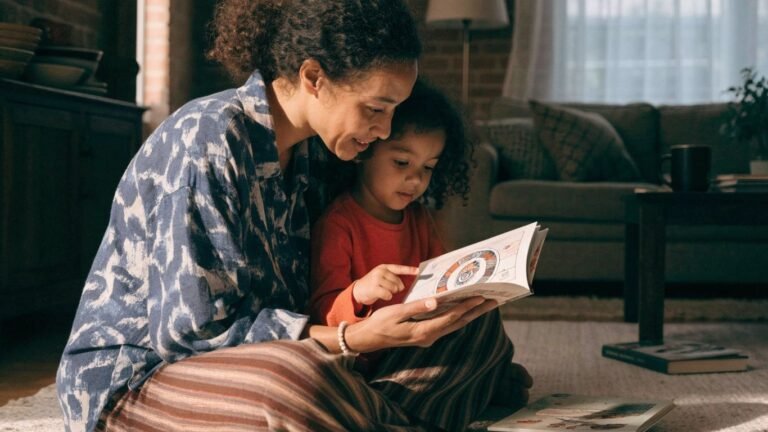
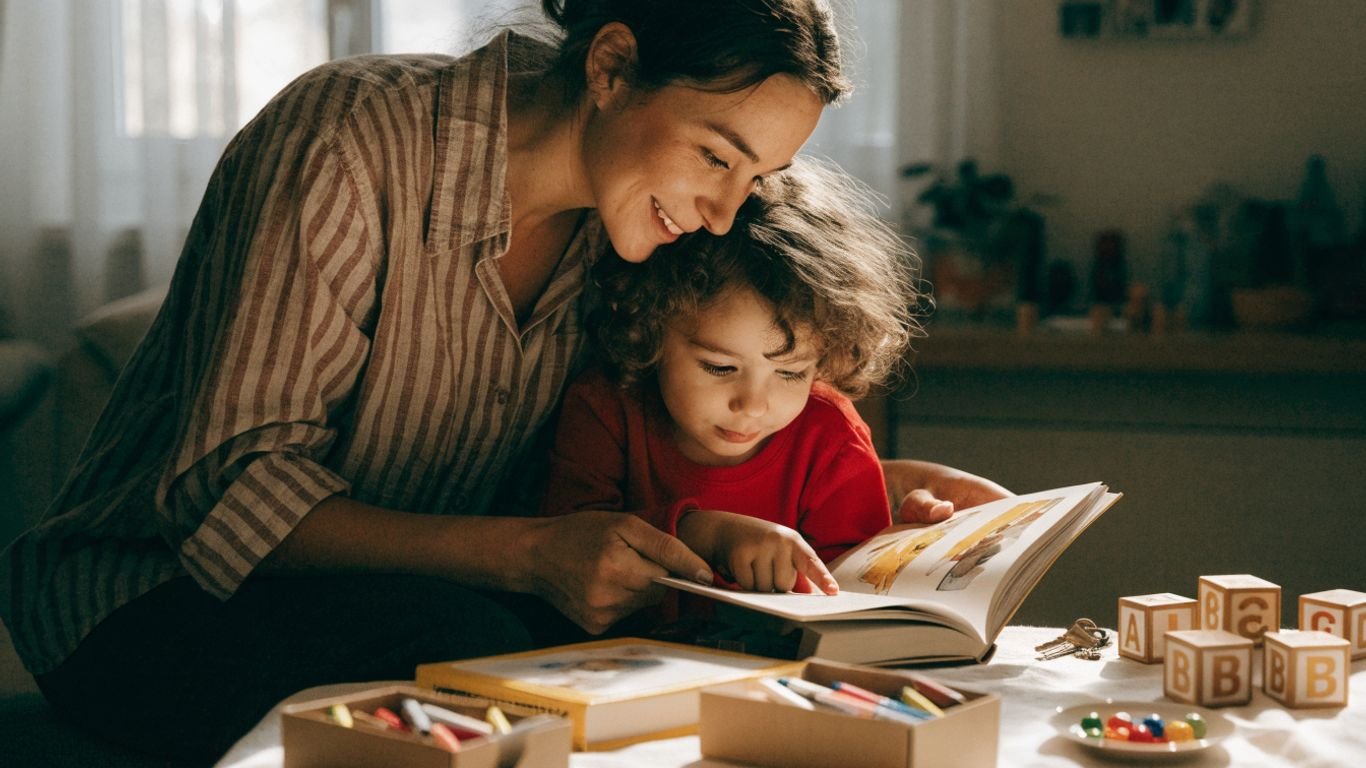
Shared reading can fit into a busy day without becoming another task to get exactly right. Even a short read-aloud gives you a chance to enjoy a story together and let your child hear language in context. The aim is connection and curiosity, not finishing every page.
Choose books that match your child’s interests and attention span
A book about trucks, animals, or a favorite character may hold your child’s attention more readily than the one you hoped they would choose. Let them browse and pick, even if that means returning to a familiar topic. For a wiggly child, a few pages may be plenty; you can always come back later.
Pause to talk about pictures, characters, and predictions
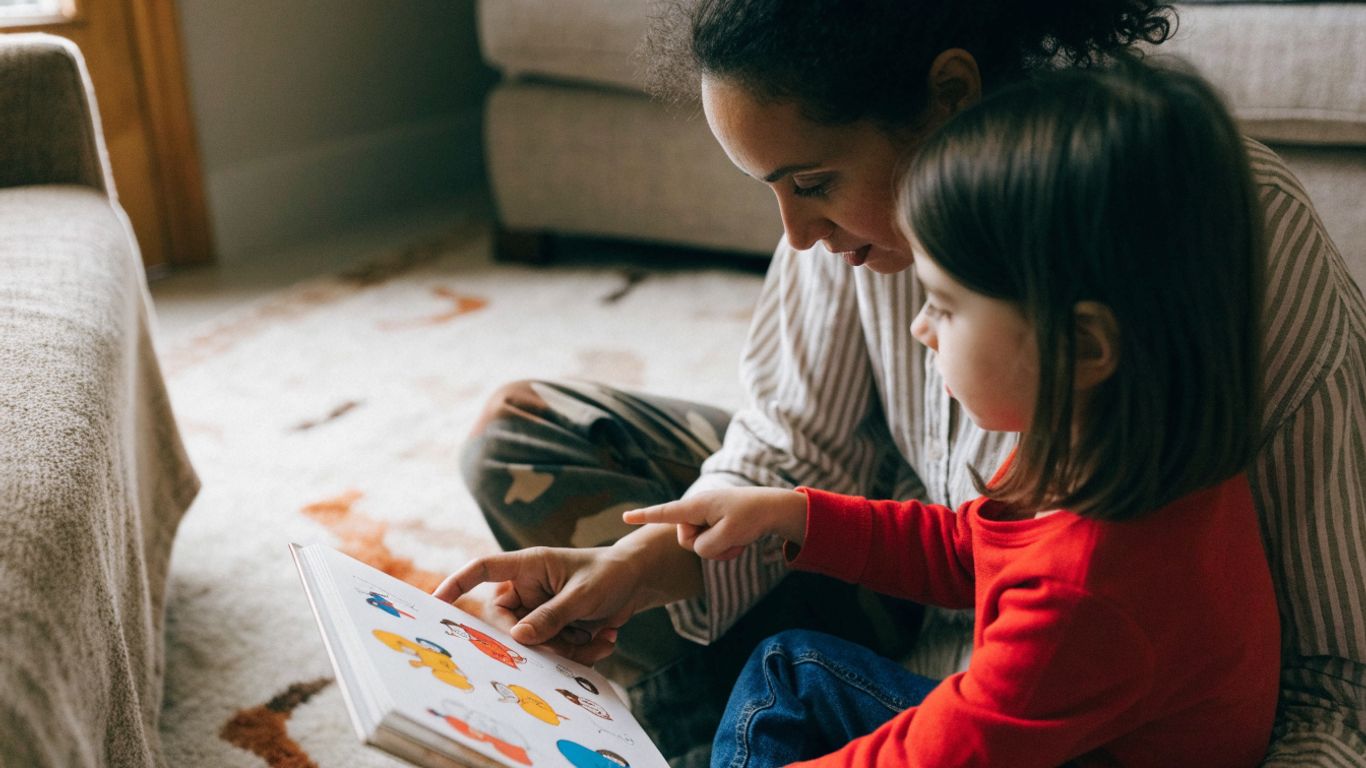
A read-aloud can include plenty of looking and talking, not just listening to every printed word. Try a simple prompt such as, “What do you notice in this picture?” or “What do you think might happen next?” Give your child room to answer in their own way, then follow their lead instead of rushing to the next page.
Reread favorites to build familiarity and confidence
When a child asks for the same story again, it can feel like a test of your patience. But rereading gives them time to notice details, anticipate what comes next, and join in with a familiar phrase. You might change your voice for a character or pause so your child can supply a word; there is no need to make every reread a lesson.
Keep read-alouds relaxed and enjoyable
Some days your child will settle in; other days they may listen while stacking blocks or leave before the story ends. That does not mean the moment was wasted. A warm, low-pressure routine makes it easier to return to books, so stop while it still feels pleasant and try again another time.
Build language through everyday conversation
Children hear and use language all day—in the car, at meals, while getting dressed, and during play. Those ordinary exchanges offer many chances to listen, explain, wonder, and tell stories together. You do not need a special activity or a perfect question to make a conversation worthwhile.
Use open-ended questions during routines and play
Questions that invite more than yes or no can help a child share what they are thinking. During a routine, you might ask, “What should we put in the bag?” or “How could we make this tower taller?” Keep the question connected to what is happening, and treat a gesture, a short answer, or a longer story as a real response.
A few everyday moments can make it easier to think of prompts in the moment. The examples below are starting points, not a script you have to follow word for word.
| Moment | A simple prompt | What it invites |
|---|---|---|
| Getting dressed | “Which shirt should we wear today?” | Naming and choosing |
| Preparing a snack | “What do you think we should do next?” | Predicting and explaining |
| Playing with toys | “Tell me about what’s happening here.” | Describing and storytelling |
Choose one that feels natural, then listen for what your child wants to add. A follow-up like “Tell me more” can keep the exchange going without making the moment feel like a quiz.
Introduce new words and explain them in context
When a new word comes up, connect it to something your child can see, do, or remember. If a puddle is “shallow,” you might explain that it is not very deep and show how the water barely covers your shoe. Children do not need a dictionary-style definition every time; a brief explanation in the moment is often enough.
Take turns telling stories about shared experiences
Talk about something you did together, such as a visit to the park or a walk to the store. You can start with one detail—“The wind blew my hat off”—and invite your child to add what happened next. If they remember it differently or focus on a tiny detail, let their version become part of the story.
Give your child time to respond and express ideas
A pause can feel long when you are waiting, but your child may need a moment to gather words or decide what to say. Resist the urge to answer your own question right away. If they are stuck, offer a gentle choice or describe what you notice, then leave space for them to take the next turn.
Help your child notice sounds in words
Children can play with the sounds in spoken language before they know how to read or spell words. Songs, rhymes, and playful listening make those sounds easier to notice without requiring formal lessons. Try a few moments when the mood is light, and leave the activity if your child loses interest.
Play with rhymes, songs, and word patterns
Sing a familiar song, make up a silly rhyme, or notice words that sound alike in a book. You might say, “Cat and hat rhyme—can we think of another word that sounds like them?” Real words and made-up ones can both make the game fun. Singing, talking, reading, writing, and playing are also simple ways to bring early literacy into everyday family life, as described in these early literacy practices.
Clap or count syllables in familiar names and objects
Try clapping the parts of a name or a familiar object: “Ba-na-na” has three beats, while “cup” has one. Keep it casual, perhaps while putting groceries away or waiting for a bath to run. If your child claps a different number, you can model the word again rather than correcting them sharply.
Listen for beginning sounds during everyday activities
Point out an initial sound when it comes up naturally: “Mmm, milk starts with the sound in your name, Maya.” You can also look for objects that begin with the same sound while walking around the room. Keep your attention on the sound you hear, rather than asking your child to name letters they may not know yet.
Keep sound games playful rather than test-like
A quick game can be enough. For example, you could take turns finding words that start like “sun,” or make up a silly string of rhyming words. A few easy ways to keep the play going are:
- Let your child choose the first word or sound.
- Use names, toys, foods, or other familiar things.
- Laugh together at made-up words and surprising rhymes.
- Stop when the game stops being fun.
The point is to notice and enjoy language together, not to get every answer right. If your child would rather move on, there will be another chance to play later.
Explore letters and print together
Letters and words are all around a child—in books, on packages, and on signs along the way. You can draw attention to print briefly without expecting your child to memorize it. Let interest set the pace, and treat marks, scribbles, and early letter shapes as part of exploring how writing works.
Point out letters in books, signs, and familiar labels
Notice a letter on a page or a label you see often, especially if it appears in your child’s name. You might say, “There’s the M from Maya,” and then keep going with what you were doing. A small observation is enough; you do not need to turn every walk or meal into a letter hunt.
Connect letters with the sounds they commonly represent
When your child is curious about a letter, connect its name and shape with the sound it commonly represents. For instance, you might say, “This is the letter S. It often makes the sound at the start of ‘sun.’” Keep the example familiar and simple, and avoid suggesting that a letter always makes only one sound.
Show how to follow words from left to right
As you read, occasionally move a finger beneath a line of print from left to right. This lets your child see how the words on the page relate to the story you are saying aloud. There is no need to track every word or insist that your child follow along; a brief demonstration is plenty.
Invite your child to write, draw, and experiment with letters
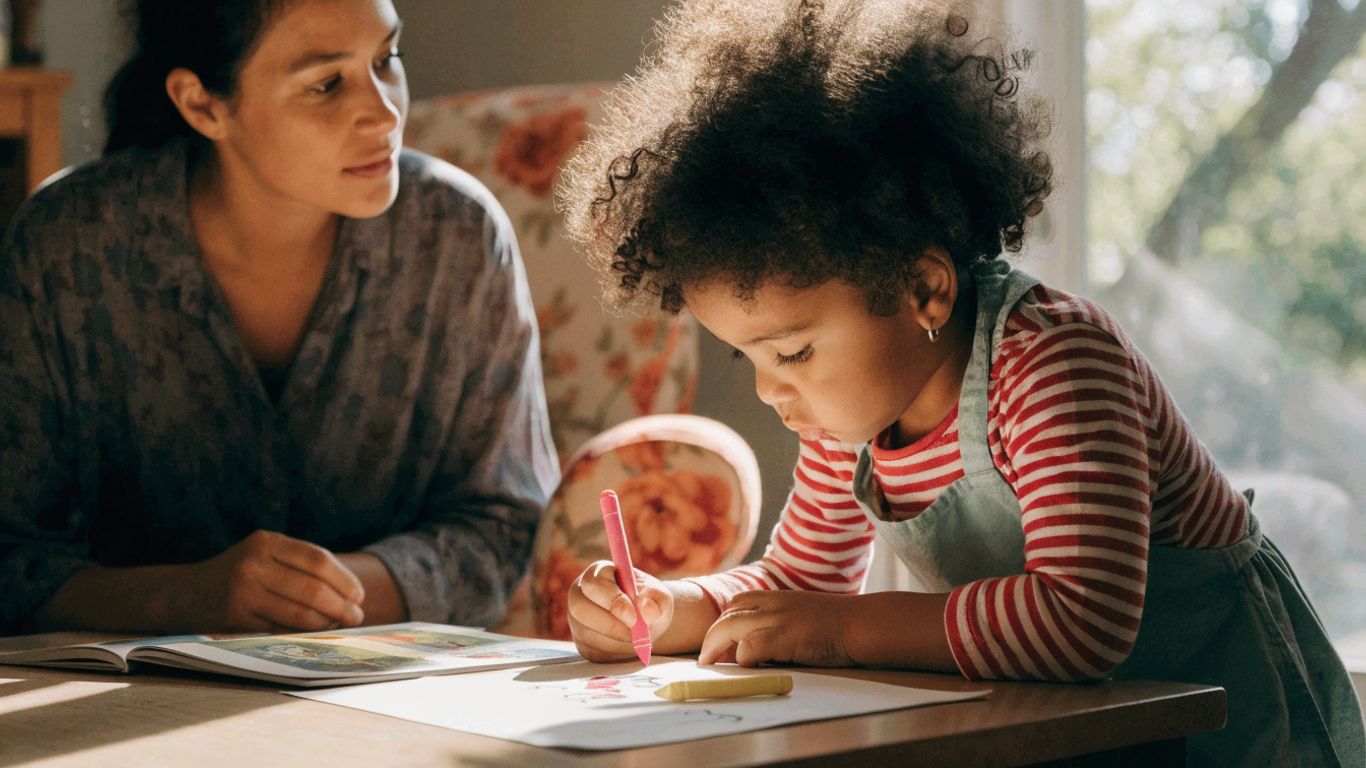
Offer paper and crayons, and let your child decide what to make. A drawing, a row of marks, or a letter-like shape can be a way to explore writing before conventional spelling. If they tell you what the marks mean, write their words nearby or ask them to tell you about the picture.
Create a reading-friendly home environment
A welcoming reading space does not need a dedicated room, shelves of new books, or a carefully managed schedule. A few accessible books and a comfortable place to pause can make reading easier to choose. The feeling matters more than the setup: books belong in everyday life, and your child is welcome to explore them.

Make books easy for your child to reach
Keep a small selection where your child can see and handle it, such as a low shelf or a basket in a shared room. Rotate books now and then if the collection starts to feel stale, but keep familiar favorites available too. A book that gets picked up and reread has already earned its place.
Visit the library and let your child help choose books
A library visit can be a low-cost way to explore different subjects and formats. Let your child browse, choose a book that catches their eye, or simply enjoy the space together if they are not ready to sit and read. You can help them find books that fit their current interests, while staying open to an unexpected pick.
Set aside a comfortable place for shared reading
Choose a spot where you can sit together for a few minutes—a couch, a bed, or a cushion on the floor. Some families like a regular time, while others read when a quiet moment appears. Either can work; the routine should fit the household you actually have.
Make room for print in play, such as menus and pretend signs
Pretend play gives children a reason to make and use print. Offer paper for a pretend menu, a sign for a block-built shop, or a list for a stuffed animal’s picnic. The marks do not have to be conventional words for the activity to be meaningful; the child is exploring how print can carry an idea.
Follow your child’s pace and offer support
Children vary in what catches their attention and in how they approach early reading activities. One may want to hear a book repeatedly, while another prefers songs, drawing, or conversation. Pay attention to what brings your child back, and remember that progress does not require turning every moment together into instruction.
Notice which books, activities, and topics hold their interest
Watch for the subjects your child chooses, the songs they repeat, or the stories they tell again and again. Use those interests as a doorway to more conversation, books, and playful language. If a particular activity falls flat, it is information about that moment—not a verdict on your child or your effort.
Adjust activities to your child’s age and attention span
Keep activities short when your child is tired, young, or ready to move. A toddler might enjoy naming one picture, while an older preschooler may want to predict the ending or tell the story back. Follow what your child can manage that day, and save longer activities for another time if needed.
Encourage effort without pressuring your child to read early
Notice curiosity and effort: “You looked carefully at that picture,” or “You remembered what happened next.” Avoid making reading aloud a performance or comparing your child with someone else. Shared books, talk, and play offer plenty to explore without requiring a child to read independently before they are ready.
Ask a teacher or specialist about ongoing concerns with language or literacy
If you have ongoing concerns about how your child hears, understands, or uses language—or about their interest in books and print—bring them up with your child’s teacher or a qualified specialist. Describe what you notice and ask what support or next steps may be helpful. Getting another perspective can help you decide what to do without having to figure everything out alone.
Conclusion
Helping a young child build early reading skills is less about adding a perfect lesson to every day and more about making room for books, conversation, sounds, and playful print. Keep the moments manageable, follow your child’s curiosity, and come back to what feels enjoyable for both of you.
Frequently Asked Questions
When should I start reading aloud to my child?
You can begin sharing books when your child is a baby, but it is never too late to make reading together part of your routine. Keep it brief and comfortable, and let your child respond by looking, touching, listening, or moving around.
How long should a read-aloud last?
There is no required length. A few pages or minutes can be enough, especially for a young child with a short attention span; stop or take a break when either of you needs one.
What if my child asks for the same book every day?
Rereading a favorite is a normal way for children to enjoy a story and become familiar with its words and events. You can keep reading it, invite your child to join in, or occasionally offer another choice alongside it.
Do I need special materials to support early reading?
No. Books, songs, conversation, paper, and things you already encounter during the day can all provide opportunities to explore language and print. Choose what is easy and enjoyable to use.
Should I correct my child when they get a sound or letter wrong?
You can model the sound or word calmly without turning it into a test. A brief example gives your child another chance to hear it, while keeping the exchange relaxed.
Is it okay if my child does not sit still for stories?
Yes. Some children listen while they move, play quietly, or look at only a few pages. Follow their attention and try again at another time rather than insisting they sit through the whole book.
When should I ask someone about my child’s literacy development?
If you have ongoing concerns, share what you have noticed with your child’s teacher or a qualified specialist. They can help you consider whether additional guidance or support may be useful.

Ms. Kerri’s Corner provides a exciting virtual space for preschool learning. Through a variety of engaging activities, she exposes young minds to early math, literacy, science and social-emotional skills in a developmentally appropriate way. Centers for blocks, art, books and music allow children to explore hands-on learning at their own pace. Guided lessons subtly introduce number sense, letter sounds and narrative thinking. Careful observation gives insight into each child’s progress across domains. Viewers are also invited to participate, reinforcing that their ideas are valued. By making learning fun yet purposeful, Ms. Kerri lays the groundwork for future academic success while fostering creativity and imagination. Her program offers preschoolers valuable screen-based learning experiences.