Daycare classroom activities for early literacy: A practical guide for playful learning
Key Takeaways
Early literacy grows through warm, everyday interactions—not worksheets or pressure to read before a child is ready. Small invitations to talk, listen, notice print, and tell stories can fit into an ordinary daycare day.
- Keep books, writing tools, and storytelling props easy for children to reach.
- Make read-alouds interactive with pauses, questions, and playful retellings.
- Explore rhymes, syllables, letters, and print through low-pressure games.
- Treat drawing, pretend writing, and dictated stories as meaningful communication.
- Adapt activities to children’s ages, interests, abilities, and home languages.
Build a literacy-rich daycare classroom
A literacy-rich room doesn’t need to look like a library or be covered in posters. Children benefit when books and print are easy to find and connected to things they already do. A few thoughtful choices can make language and storytelling feel like part of play rather than another task.
Set up inviting book and storytelling areas
Choose a comfortable corner where children can browse books without waiting for an adult to hand one over. A low shelf, a soft place to sit, and a small basket of familiar stories can be enough. Keep the arrangement simple so children can return books themselves and recognize favorites. These print-rich room ideas can help you think about how the space invites children to explore.
Make labels and signs part of everyday play
Labels work best when they help children do something: find the blocks, put away art materials, or choose a pretend-play role. Pair a short word with a familiar object or picture, and point to it naturally as you talk. There’s no need to quiz children; seeing print used for a real purpose is the point. Refresh labels when the room changes so they stay useful rather than becoming background decoration.
Rotate print, writing, and storytelling materials
A small rotation can renew interest without requiring a full classroom makeover. Try changing one or two materials at a time, while leaving favorite items available. This quick guide can help you choose a swap that fits the play already happening:
| If children are drawn to… | Try adding… | Keep it useful by… |
|---|---|---|
| Building and construction | Simple maps or building plans | Letting children draw their own routes |
| Pretend cooking | Menus, order pads, and recipe cards | Offering blank paper alongside examples |
| Animals and nature | Picture books and small notebooks | Inviting children to sketch what they notice |
The goal is not to fill every surface with print. Watch what children pick up, then adjust the materials so words, pictures, and marks have a reason to be there.
Choose books and props that reflect children’s lives
Stories feel closer when children recognize familiar routines, places, family structures, and ways of speaking. Include books with a range of characters and experiences, and offer simple props that help children act out a story or make up their own. A scarf, a toy animal, or a cardboard box can become enough to get a story moving. Choosing materials with care helps each child find a point of connection without asking anyone to explain or represent a whole group.
Use read-alouds to grow language and comprehension
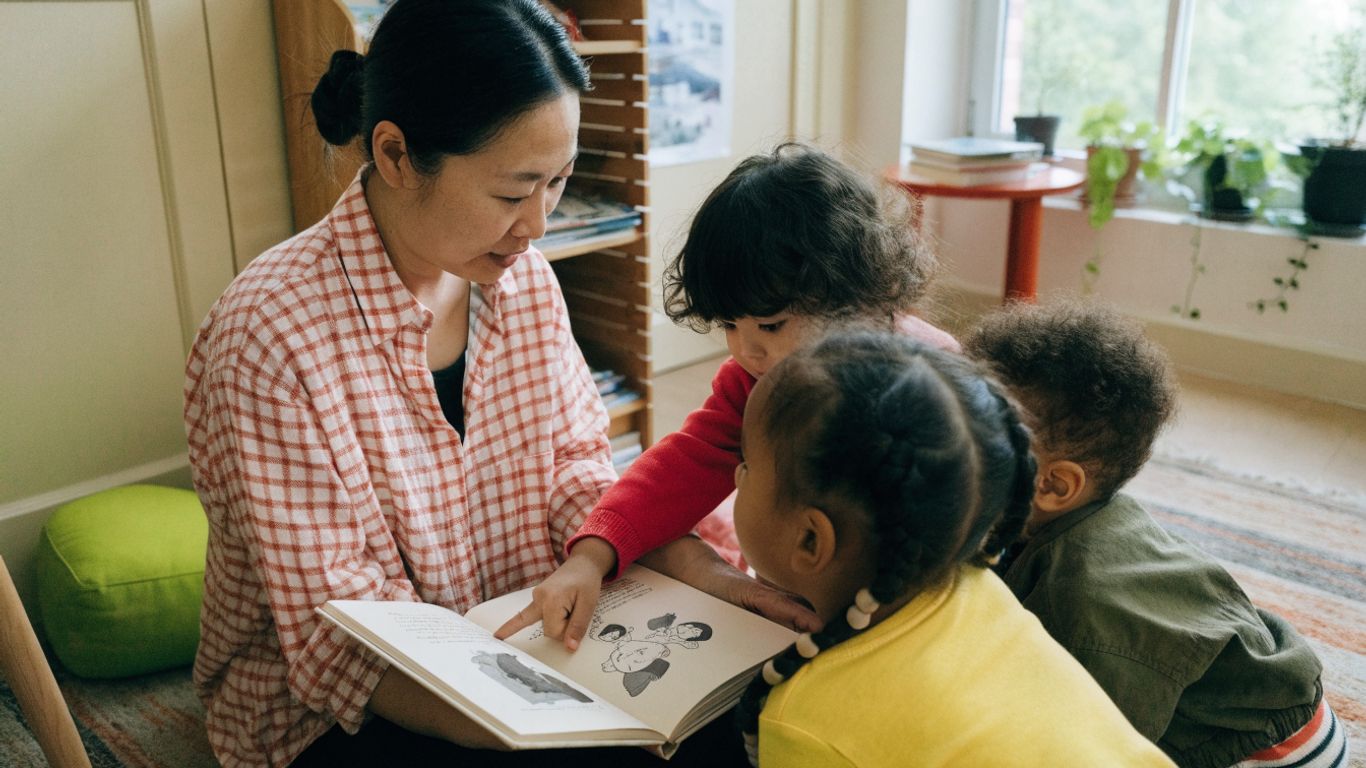
A read-aloud is not a performance that has to go perfectly. Children may listen, fidget, comment, or leave and return; conversation can be part of the experience. Read-alouds build on everyday talking and singing, giving children a chance to hear language, share ideas, and make sense of a story together.
Choose stories that invite participation
Pick books with clear illustrations, repeating phrases, or events children can anticipate. A familiar refrain gives everyone a way to join in, including children who would rather listen than answer a question. Pause when a picture prompts a reaction, but don’t feel obliged to stop on every page. A story children want to revisit is often a better choice than one that seems impressive but doesn’t hold their attention.
Pause for predictions, questions, and conversation
A few well-timed pauses make room for children to notice details and connect them to their own experiences. Try simple, open invitations such as, “What do you think might happen next?” or “What do you notice in this picture?” Accept a gesture, a word, or a longer explanation as a response. These exchanges are about shared attention, not checking whether children remember the “right” answer.
Use props to bring story events to life
Props can help children follow a story when they’re ready to move, touch, or act something out. Choose just a few objects connected to the plot—a small basket, a toy figure, or a piece of fabric—and introduce them as the story unfolds. Children can take turns using them or simply watch. Keeping the set small prevents the props from taking over the book.
Revisit favorite books in different ways
Repetition is welcome: a favorite story often offers something new when children hear it again. After a read-aloud, let the group choose how to return to it. A few low-preparation options are:
- Retell a scene with toys or simple props.
- Draw a favorite character or moment.
- Act out a repeated phrase together.
- Tell the story again using the pictures as prompts.
These approaches let children participate at different levels and make the book part of play. You can also explore more hands-on literacy play when you want a fresh activity to try.
Explore sounds and rhymes through play
Children hear patterns in language long before they need to read words on a page. Songs, rhymes, and playful listening games make those patterns easier to notice. Keep the mood light: joining in, listening, or simply enjoying the rhythm all count as participation.
Play with rhyming words during songs and transitions
Songs make rhyme feel natural because children hear the same sound patterns again and again. Try a familiar song during cleanup or a transition, then leave a pause for children to supply a word or sound if they want. You can also make up silly rhymes around a child’s name or a favorite toy. If the rhyme turns into laughter, the activity is doing its job.
Help children notice syllables in names and familiar words
Clapping or tapping the beats in a name can turn a sound pattern into a small group game. Say a familiar name slowly and invite children to tap along, then try everyday words such as “banana” or “backpack.” Children may hear the parts differently, and that’s fine; model the word again without correcting or turning it into a test. Start with words everyone knows so the listening stays playful.
Use sound games without pressuring children to read
Sound play is about listening and experimenting, not asking young children to decode written words. You might gather a few objects that begin with a similar sound and talk about what children hear, or make a silly alliteration together. Let children respond in whatever way is comfortable. A short, cheerful game can be enough; there is no need to keep going once interest fades.
Adapt listening activities for different ages and abilities
Some children will copy a rhyme or tap a beat; others may prefer to listen, move, or watch. Offer a clear model, keep directions brief, and allow more than one way to participate. For children who are still developing spoken language, gestures, movement, and repeated listening can make the activity accessible. Adjust the pace to the group rather than expecting every child to respond at once.
Build letter and print awareness into daily routines
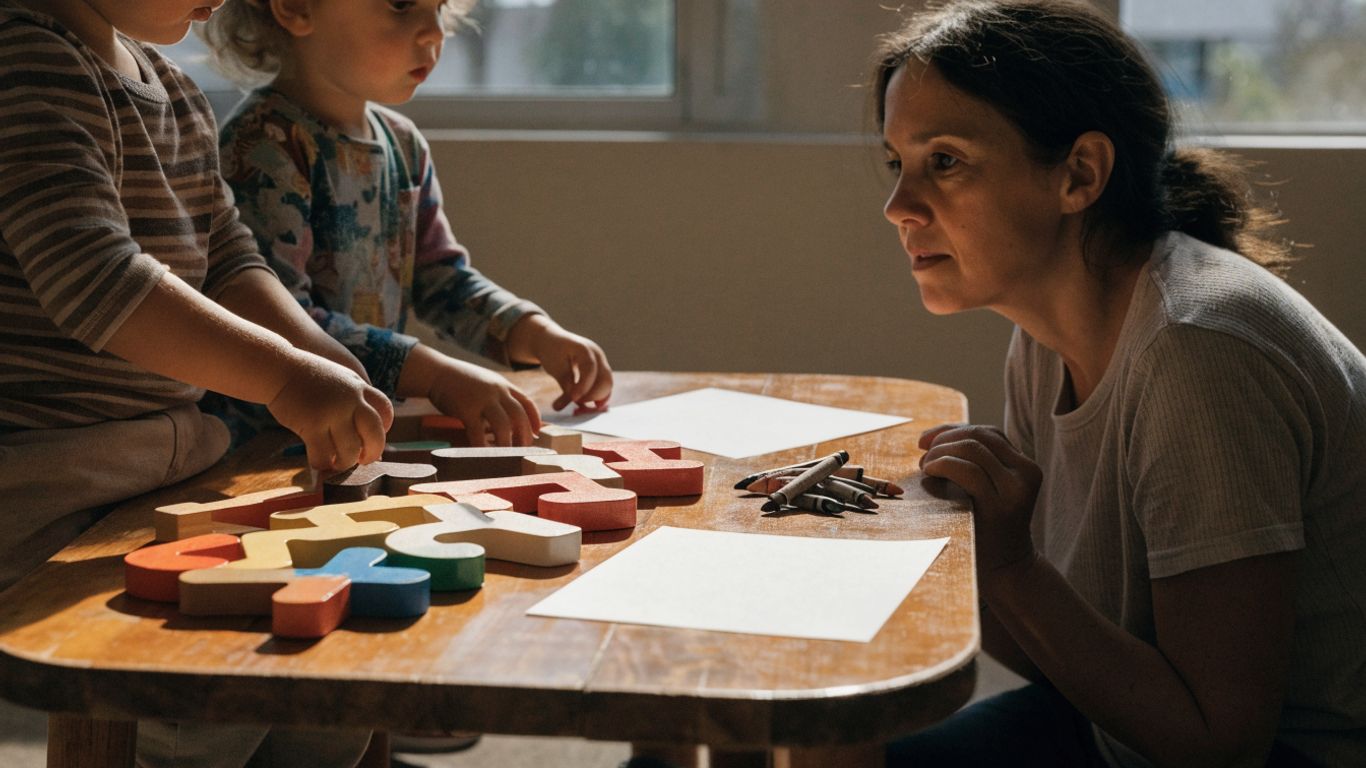
Children encounter letters and symbols throughout the day, from their cubbies to the books they choose. Pointing out print in context helps them see that marks carry meaning, without turning routines into lessons. A brief, friendly comment can be plenty.
Connect letters to children’s names and interests
A child’s name is a meaningful place to begin noticing letters. Point to the first letter on a name card or invite children to find their names among a few familiar options. Connect the activity to interests too: a child who loves buses may enjoy spotting the first letter in “bus.” Keep the invitation open so children can look, point, or move on.
Go on letter and symbol hunts around the room
Invite children to notice shapes and symbols in places they already use, such as book covers, toy packaging, or classroom materials. You might ask, “Can you find a mark that looks like this one?” without expecting a formal letter name. Keep the hunt short and follow children’s discoveries. Everyday symbols can be interesting starting points even when they aren’t letters.
Match letters with sounds using playful materials
When children show interest in letters, connect a familiar letter with a sound they can hear in a name or common word. Magnetic letters, foam shapes, or cards can make this hands-on, but the activity can stay simple: notice, say, and play. Offer a model rather than asking each child to perform on demand. A few minutes is enough, especially if the group is ready to return to play.
Point out print during routines, play, and shared reading
Print becomes more meaningful when adults connect it to what is happening. During snack, you might point out a label; during reading, you can show where the title appears; in dramatic play, you can notice a menu. Say what the print is doing in a sentence, then keep the routine moving. These small moments build familiarity without interrupting the day.
Encourage drawing, writing, and storytelling
Early writing begins with marks, pictures, pretend letters, and the stories children attach to them. Children don’t need to spell conventionally for their work to communicate something. Make room for their ideas, and let the adult’s role be to notice, listen, and help those ideas travel onto the page.
Offer varied tools for early mark-making
Put out a few accessible tools, such as thick crayons, washable markers, chalk, or chunky pencils, along with paper in different sizes. Some children will make long lines, while others may prefer dots or circular marks. Describe what you see without assigning meaning for them: “You made lots of blue lines.” Keep materials within reach when possible so drawing feels like a choice, not an activity that requires a long setup.
Invite children to dictate stories and captions
When a child tells you what is happening in a picture, ask whether they would like you to write their words down. Read the sentence back as you write, then give the child time to add more or change it. This shows that spoken ideas can become written language while keeping the child in charge of the story. Avoid tidying their wording unless they ask; the point is to capture their meaning.
Create simple books together
Fold a few sheets of paper and staple them along one side to make a small book. Children can draw a page at a time, while an adult writes down their words or helps add a title if the child wants one. A book about a recent outing or a made-up animal can be just as engaging as a polished classroom project. Keep finished books where children can browse them and share their stories again.
Support pretend play with menus, maps, and signs
Play often creates a real reason to draw or write. A pretend café might need a menu; a block-built town might call for a map; a doctor’s office could use appointment cards. Offer blank paper and a few writing tools, then let children decide what their play needs. Their marks may be pictures, symbols, or letter-like shapes, and all can support the story they are building.
Make literacy activities inclusive and easy to sustain
A workable literacy routine should fit the children and the adults who are there, not depend on elaborate materials or perfect timing. Keep invitations flexible, and remember that listening, watching, moving, and speaking are all ways to join in. A small idea that can be repeated is often more useful than a complicated plan that rarely gets used.
Adapt activities for toddlers and preschoolers
Children at different ages may enjoy the same book or materials in different ways. Toddlers might turn pages, point, or repeat a sound, while preschoolers may retell an event or notice a letter. Use these possibilities as starting points rather than strict expectations:
| Age or stage | Possible invitation | Adult support |
|---|---|---|
| Younger toddlers | Name a picture or turn pages together | Keep the book short and allow movement |
| Older toddlers | Repeat a sound or point to a familiar object | Model language and leave time to respond |
| Preschoolers | Retell a scene or make marks for a story | Ask open questions and follow their ideas |
The ages are only a guide; children develop at different paces and may engage differently from day to day. Choose the version that feels comfortable for the child in front of you, and change course when interest shifts.
Include home languages and familiar family stories
A child’s home language is part of what they bring to the classroom, not a barrier to literacy. Invite families to share a favorite song, saying, or story if they wish, and include books or recordings in languages children know. Adults can learn a few familiar words and welcome children’s own ways of telling a story. No one needs to be an expert in every language to show that it belongs in the room.
Use everyday materials to keep activities low-cost
A literacy invitation can start with scrap paper, a reused box, or a few objects already in the play area. Children can make a map with crayons, turn a box into a pretend shop, or dictate a story during a walk around the room. Reusing materials keeps preparation manageable and leaves more room for children’s ideas. The activity does not need a special kit to feel worthwhile.
Observe children’s interests to guide next steps
Notice what children choose, repeat, and talk about, then use those observations to plan a small next step. If a group is fascinated by trains, bring out a related book, invite them to draw a route, or listen for rhyming words in a train song. When interest moves elsewhere, let the plan move too. This keeps literacy connected to play rather than making adults carry a rigid schedule.
Conclusion
Daycare classroom activities for early literacy work best when they make space for children’s real interests and everyday ways of communicating. A shared book, a song, a name card, or a page of child-drawn marks can each open the door to language and storytelling. Keep the invitations simple, follow children’s cues, and let playful repetition do its work.
Frequently Asked Questions
What counts as early literacy in a daycare classroom?
Early literacy includes the everyday experiences that support listening, speaking, storytelling, noticing print, and making marks. It can happen during play, routines, songs, and shared reading—not only in a formal lesson.
How can I support literacy without worksheets?
Talk about what children are doing, read together, sing, tell stories, and make drawing and writing tools available. These activities offer natural ways to explore language and print through play.
How long should a literacy activity last?
There is no required length. Follow the group’s attention and interest; a short interaction can be useful, and children may return to the same book or game later.
What books work well for young children?
Choose books with clear pictures, engaging rhythms, familiar subjects, or repeating phrases. Children’s interests and willingness to revisit a story are good guides.
How can toddlers join in with read-alouds?
Toddlers can look at pictures, point, turn pages, make sounds, or move in and out of the reading space. Keep the experience flexible and welcome different kinds of attention.
Should children learn letter names before they start writing?
Children can explore drawing and pretend writing before they know letter names. Offer opportunities to make marks and notice print without requiring a particular sequence or level of skill.
How can a classroom include children’s home languages?
Include books, songs, and familiar stories in the languages children use with their families. When possible, invite families to share words or stories they would like included, while respecting each family’s preferences.

Ms. Kerri’s Corner provides a exciting virtual space for preschool learning. Through a variety of engaging activities, she exposes young minds to early math, literacy, science and social-emotional skills in a developmentally appropriate way. Centers for blocks, art, books and music allow children to explore hands-on learning at their own pace. Guided lessons subtly introduce number sense, letter sounds and narrative thinking. Careful observation gives insight into each child’s progress across domains. Viewers are also invited to participate, reinforcing that their ideas are valued. By making learning fun yet purposeful, Ms. Kerri lays the groundwork for future academic success while fostering creativity and imagination. Her program offers preschoolers valuable screen-based learning experiences.