Best STEM Activities for Toddlers (2-3 Year Olds): Hands-On Learning at Home
Introduction
Your 2-year-old dumps rice all over the floor. Your 3-year-old asks “why?” about everything. They’re messy, curious, and constantly exploring.
That’s STEM in action.
STEM activities for toddlers don’t require fancy kits or complicated setups. They don’t mean sitting at a table with worksheets. STEM for toddlers means letting them explore, experiment, and discover through play—which is exactly what their developing brains need.
According to research from Zero to Three, toddlers learn best through hands-on exploration and sensory experiences. This is when critical thinking, problem-solving, and spatial awareness begin developing.
The good news? STEM activities for toddlers can happen in your kitchen right now with things you already have.
This guide covers 15+ proven STEM activities for toddlers that build real skills while keeping your little one engaged, happy, and messy (in the best way).
What Are STEM Activities for Toddlers?
STEM stands for Science, Technology, Engineering, and Math. But for toddlers, it’s simpler than that:
- Science: Exploring how things work, cause-and-effect, sensory discovery
- Technology: (Age-appropriate) simple tools, cameras, cause-and-effect toys
- Engineering: Building, stacking, problem-solving with blocks and materials
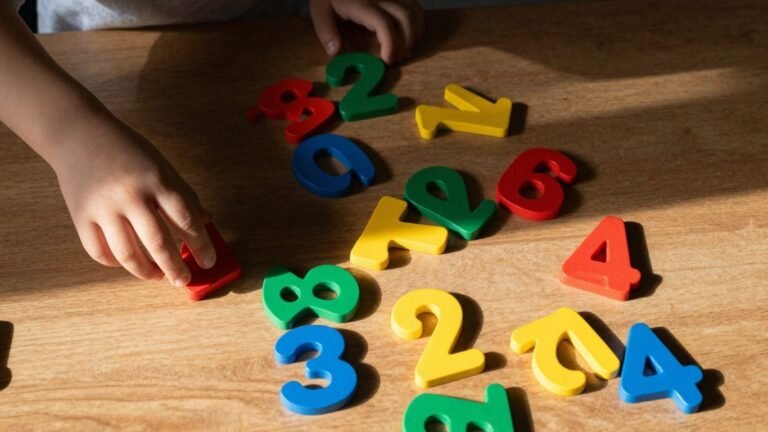
- Math: Counting, sorting, patterns, shapes, size comparison
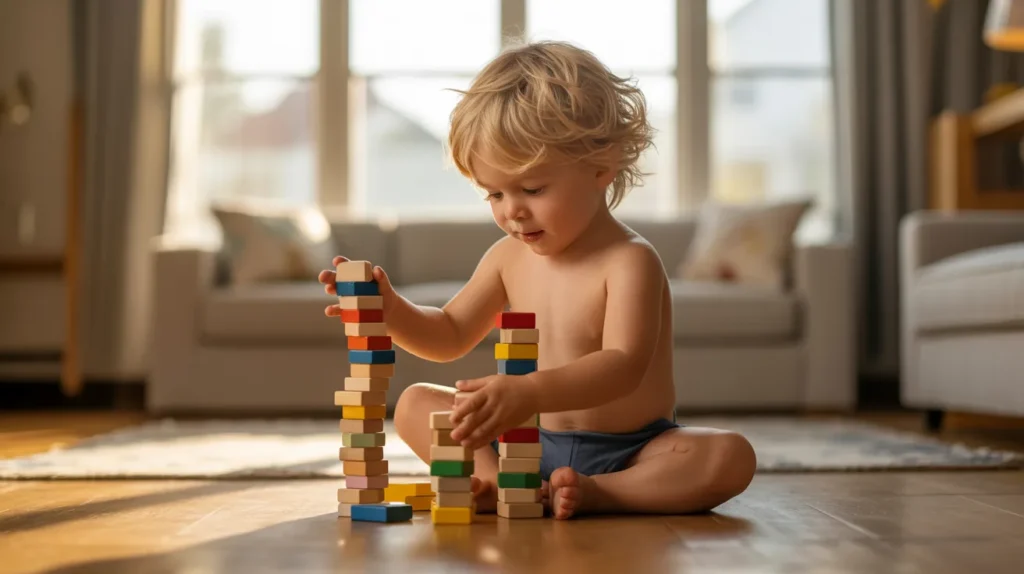
STEM activities for toddlers are really just guided exploration. You set up an interesting environment, provide materials, and let your toddler investigate. No structured lessons needed.
Research from the American Academy of Pediatrics shows that play-based learning in early childhood builds the neural pathways necessary for later academic success. When toddlers engage in hands-on exploration, they’re literally building their brains.
Why STEM Activities Matter for 2-3 Year Olds
At ages 2-3, toddlers are developing:
- Fine motor skills (using hands and fingers with control)
- Problem-solving ability (how do I get this toy to work?)
- Cause-and-effect understanding (I push this, that happens)
- Language development (naming new textures, colors, actions)
- Confidence and independence (I can figure things out myself)
STEM activities for toddlers hit all these developmental areas simultaneously. Better yet, they’re fun and require minimal setup.
15 Best STEM Activities for Toddlers (2-3 Years)
1. Water Bead Sensory Exploration
What it is: Colorful water beads that grow when soaked in water. Toddlers squish, press, and explore the texture.
Why it’s STEM: Sensory science, observation, cause-and-effect (add water = beads grow)
What you need:
- Water beads (find on Amazon or Dollar Tree)
- Shallow bin or tray
- Water
How to do it: Soak beads overnight, drain excess water, let your toddler explore. Supervise closely—these are choking hazards if your toddler still puts things in their mouth.
2. Rainbow Rice Sensory Bin
What it is: Colored rice in a bin with scoops, cups, and funnels for pouring and dumping.
Why it’s STEM: Fine motor development, color recognition, cause-and-effect (pouring = rice moves)
What you need:
- Rice
- Food coloring
- Shallow bin
- Scoops, cups, funnels, measuring spoons
How to do it: Mix food coloring with rice (let dry), pour into bin, add tools. This is messy but worth it.
3. Frozen Bead Rescue
What it is: Freeze water beads in cups overnight. Toddlers use warm water and paintbrushes to “rescue” the beads.
Why it’s STEM: Temperature science, observation (frozen vs. unfrozen), fine motor control with brush
What you need:
- Water beads
- Cup
- Warm water
- Paintbrush
How to do it: Freeze beads in water, place in cup, let toddler use warm water and brush to melt ice and free beads.
4. Building with Blocks
Why it’s STEM: Engineering basics (what stacks? what falls?), spatial awareness, problem-solving

What you need:
- Blocks (wood, foam, cardboard boxes)
- Open floor space
Best blocks for toddlers: Magna-Tiles (magnetic building), mega blocks, or simple wooden blocks.
Magna-Tiles specifically teach cause-and-effect (snap together) and spatial relationships. See them on Amazon.
5. Sink or Float Experiment
What it is: Drop different household objects in water. Does it sink or float?
Why it’s STEM: Prediction, observation, basic physics
What you need:
- Shallow bin of water
- Safe household objects (cork, plastic toy, wooden spoon, rock, sponge)
How to do it: Ask “Will this sink or float?” Let them predict, then test. Simple but powerful learning.
6. Color Mixing with Water
What it is: Drop food coloring in water and watch colors blend.
Why it’s STEM: Color science, observation, cause-and-effect
What you need:
- Clear container
- Water
- Food coloring
- Eyedropper or pipette
How to do it: Fill container with water, let toddler add drops of food coloring and watch the color change. No cleanup needed if you contain it.
7. Nature Collection Exploration
What it is: Gather rocks, sticks, leaves, pinecones outside. Sort by size, color, or texture.
Why it’s STEM: Observation, sorting, categorization, math concepts (bigger/smaller)
What you need:
- Outdoor time
- Collection basket
- Items to sort by
How to do it: Go on a nature walk, collect items, come home and sort together. Talk about what makes them different.
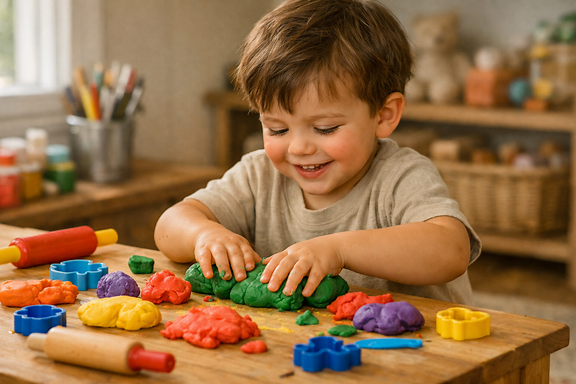
8. Playdough Construction
What it is: Simple homemade playdough + tools for building and exploring.
Why it’s STEM: Engineering (building structures), fine motor development, sensory science
What you need:
- Flour, salt, water, food coloring (no-cook recipe)
- Rolling pin, cookie cutters, plastic tools
Recipe: 2 cups flour + 1 cup salt + 1 cup water + food coloring. Mix and knead.
See detailed recipes at Scholastic Parents.
9. Ramp and Roll Experiments
What it is: Build a ramp with books or cardboard. Roll balls or toy cars down.
Why it’s STEM: Physics (gravity, motion), engineering (angle affects speed), observation
What you need:
- Books or cardboard
- Balls or toy cars
- Open space
How to do it: Build different angles, test which is faster. Talk about what you notice.
10. Sensory Bottles
What it is: Fill plastic bottles with water, glitter, beads, and food coloring. Seal securely.
Why it’s STEM: Observation, cause-and-effect (shake = sparkles move)
What you need:
- Empty plastic bottles
- Water
- Glitter, beads, food coloring
- Hot glue gun (to seal)
How to do it: Fill bottle, seal with hot glue, let toddler shake and observe.

11. Magnet Exploration
What it is: Discover which objects are magnetic and which aren’t.
Why it’s STEM: Physical science, prediction, observation
What you need:
- Magnets
- Safe household objects (plastic, metal, wood, rubber)
How to do it: Let toddler test items. “Is this magnetic? Let’s see!” Builds hypothesis and testing skills early.
12. Pattern Building with Objects
What it is: Create simple patterns with blocks, beads, or household items.
Why it’s STEM: Math concepts (patterns, sequencing), problem-solving
What you need:
- Two types of objects (blocks and buttons, beads and pasta)
- Flat surface
How to do it: Create a simple pattern (block-button-block-button). Ask toddler what comes next.
13. Pouring Practice
What it is: Transfer water, rice, or beans between containers using different tools.
Why it’s STEM: Fine motor development, math concepts (volume, more/less), cause-and-effect
What you need:
- Shallow bin
- Water or rice
- Various cups, funnels, ladles
How to do it: Let them pour freely. It’s messy and developmentally essential.
14. Shadow Exploration
What it is: Use sunlight to explore shadows. Trace them, move objects, observe changes.
Why it’s STEM: Light science, observation, spatial awareness
What you need:
- Sunny window or outdoor space
- Objects to make shadows (toys, hands, paper cutouts)
How to do it: Point out shadows. Move objects and watch shadows change. Simple but fascinating.
15. Sorting by Color, Size, or Type
What it is: Gather mixed objects and sort them into groups.
Why it’s STEM: Categorization, math concepts (grouping), observation
What you need:
- Mixed safe objects (blocks, buttons, plastic toys)
- Containers or paper divided into sections
How to do it: Ask “Can you put all the red ones here?” Develops sorting and categorization skills.
Best STEM Products to Support These Activities
You don’t need expensive kits, but these tools make STEM activities for toddlers easier:
Building & Engineering:
- Magna-Tiles – Magnetic building blocks (ages 18m+) – Develops spatial awareness and engineering thinking. Link
- Mega Bloks – Soft, safe blocks for toddlers – Classic for a reason. Link
- Wooden Blocks Set – Open-ended building – Natural, no batteries, endless possibilities. Link
Sensory & Science:
- Water Beads – Colorful, squishy sensory exploration – Safe when supervised, develops fine motor skills. Link
- Magna-Tiles with Water Beads – Combine building with sensory play – Great for combined STEM exploration.
Exploration Tools:
- Magnets for Kids – Safe, powerful magnets to test objects – Introduces physical science concepts early.
- Jumbo Pipettes/Eyedroppers – Easy for toddler hands to control – Perfect for water experiments.
DIY Alternative: You can do nearly all these activities with household items (water, rice, blocks, toys). Toddlers learn just as much.
How Often Should Toddlers Do STEM Activities?
The best frequency: Daily, but short.
Toddler attention span = 10-20 minutes. Better to do a quick water exploration most days than plan elaborate activities occasionally.
Aim for:
- 1-2 STEM activities daily (15-20 minutes each)
- Mix structured (you guide) and free play (they explore)
- Rotate activities to keep novelty
Tips for Success with STEM Activities for Toddlers
1. Keep expectations low. They won’t “do it right.” That’s the point. Exploration IS the learning.
2. Contain the mess. Use bins, trays, and towels. Makes cleanup faster, reduces parental stress.
3. Narrate what you see. “You’re pouring the water! It’s dripping!” Builds vocabulary and engagement.
4. Let them lead. If they want to do a different activity with your materials, let them. Play-based learning means they choose.
5. Safety first. Supervise always. Small items = choking hazards. Hot glue guns = adult-only. Water play = constant supervision.
6. Repeat activities. Toddlers learn through repetition. Doing the same activity 5 times teaches more than 5 different activities once.
The Bottom Line
STEM activities for toddlers build brains. They develop problem-solving, fine motor skills, confidence, and curiosity—all through play.
You don’t need fancy kits or extensive preparation. You need water, blocks, objects to explore, and 15 minutes.
Start this week with one activity. Notice what your toddler discovers. That’s real STEM learning happening.
Ready to Build Your Toddler’s Love of Learning?
Discover 50+ STEM activities, printable guides, and monthly themes designed specifically for toddlers ages 2-3.
Get instant access to our free “STEM Activities for Toddlers” guide:
You’ll get the free guide + weekly ideas for simple STEM exploration at home. No spam, just practical activities.
More Resources for STEM Learning
- PBS Learning Media – Free STEM resources and activities by age
- MsKerrisCorner.com – Classroom and home learning ideas for young learners
- Zero to Three Development – Research-backed info on early childhood development
FAQs About STEM Activities for Toddlers
Q: At what age can toddlers do STEM activities? A: 18 months+. Start simple (water play, blocks) and build from there.
Q: Do I need to buy special STEM kits? A: No. Household items work just as well. Kits can be fun but aren’t necessary.
Q: How long should a STEM activity last? A: 10-20 minutes. Keep it short. Toddler attention span is limited, and that’s developmentally appropriate.
Q: Are screen-based STEM activities okay for toddlers? A: The American Academy of Pediatrics recommends limiting screens for toddlers. Hands-on, physical STEM is better for brain development.
Q: What if my toddler just wants to dump everything? A: That IS a STEM activity. Dumping teaches cause-and-effect. Let them dump.
Your Turn
Pick one activity from this list. Set it up this week. Observe what your toddler discovers.
That’s STEM learning in action.
Did this help? Share in the comments below or save this post for later reference.


Ms. Kerri’s Corner provides a exciting virtual space for preschool learning. Through a variety of engaging activities, she exposes young minds to early math, literacy, science and social-emotional skills in a developmentally appropriate way. Centers for blocks, art, books and music allow children to explore hands-on learning at their own pace. Guided lessons subtly introduce number sense, letter sounds and narrative thinking. Careful observation gives insight into each child’s progress across domains. Viewers are also invited to participate, reinforcing that their ideas are valued. By making learning fun yet purposeful, Ms. Kerri lays the groundwork for future academic success while fostering creativity and imagination. Her program offers preschoolers valuable screen-based learning experiences.